Cultural Global
With the revenue of enterprises above designated size exceeding 200 billion yuan, how did Zhejiang's "Three New Cultural Formats" set such a remarkab

When the overseas user base of Chinese online literature exceeds 350 million, the total output value of micro short dramas exceeds 100 billion yuan, and *Black Myth: Wukong* sweeps international awards, online literature, online dramas and online games, once regarded as the "youngest players" — the "three new pillars" of culture, have grown into a new engine driving the growth of China's cultural industry and the main force of Chinese cultural products going global.
In this wave, Zhejiang has taken the lead.
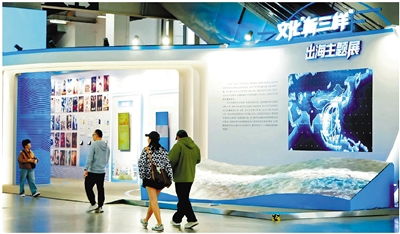
According to data from Hangzhou Municipal Bureau of Statistics: in the first half of this year, the added value of Hangzhou's cultural industry reached 181.73 billion yuan, a year-on-year increase of 6.3%, 1 percentage point higher than the growth rate of the city's GDP, accounting for 15.1% of the GDP. In 2025, the revenue of enterprises above designated size in Hangzhou's "three new cultural pillars" exceeded 200 billion yuan, reaching 201.1 billion yuan, a year-on-year increase of 11.5%, accounting for more than 80% of the province's total. At present, there are more than 530 enterprises above designated size in the "three new cultural pillars" across Zhejiang Province.
Zhejiang also occupies a key position in the national layout. As the core engine of Zhejiang's digital culture, during the 14th Five-Year Plan period, 576 online animations produced in Hangzhou obtained distribution licenses, accounting for 31% of the national total; 1008 online games were approved for version numbers, accounting for 20.1% of the national total. In the recommended drama list of the first "Micro Short Drama +" action plan in 2026, 34 works from Zhejiang were selected, ranking first in the country; in the 2026 list of "Top 30 National Cultural Enterprises", 4 enterprises from Zhejiang were selected, with the total number ranking among the top in China. Behind these figures is the synchronous force exerted by the three tracks of online literature, online dramas and online games.
Why can Zhejiang continue to take the lead in this race of digital culture going global? Its development path and experience are worth exploring.
AI Reconstruction: From "Tool" to "Productivity"
Zhejiang's core strategy is to embed AI into the whole chain of content production — not only limited to laboratories, but also rooted in the daily production of enterprises.
Walking into the AI short drama production center of Jiaxing Jiuzhou Cultural Media, you can see that "from IP acquisition, production and shooting to launch and distribution, the production cycle of AI short dramas can be controlled within 7 to 10 days". Wang Jiacheng, founder of Jiuzhou Culture, said: "China has accumulated more than 20 years of foundation in online literature, and nearly 10 million stories created by 3 million creators have formed a huge content library. Micro short dramas give us a key to turn 'text stock' into 'global traffic'."
In Hangzhou, the "Tentacle AI" platform of Shuimu Intelligence has compressed 11 links of traditional comic creation to 5, reducing the production cost by 62%, and the global play volume of its AI animation works has exceeded 1.4 billion times. In May this year, two AI short dramas produced by Shuimu Intelligence were shortlisted for the 79th Cannes International Film Festival, becoming the first Chinese works screened in this section. Suoyi Culture introduced AI tools to penetrate 13 links of animation production, shortening the production cycle by 60% and reducing the cost to half of the industry average level. The self-developed "Chinese Color Large Model" of Huace Film & TV improves translation efficiency by 50% and reduces dubbing and translation costs by nearly 60%. The self-developed AI launch and translation matching system of Rongliang Interactive Entertainment supports 20 languages, owns more than 4000 exclusive micro short drama copyrights, and has launched more than 8000 translated dramas for overseas distribution, covering more than 200 countries and regions.
In the first half of 2026, the revenue of "three new cultural pillars" enterprises in Yuhang District reached 75.482 billion yuan, with a growth rate as high as 35.8%; from January to May, the revenue of enterprises above designated size in the "three new cultural pillars" of Xihu District reached 8.32 billion yuan, and the growth rate of the online drama industry reached 54.7%; Jiaxing has gathered 282 large audio-visual enterprises above designated size, with a revenue of 59.738 billion yuan in 2025.
The relevant person in charge of the Publicity Department of Jiaxing Municipal Party Committee said: "The speed of technology implementation determines the starting height of the industry." AI is changing from a "tool" to a "reconstructor" — reshaping the whole industrial chain from creation, production to distribution.
IP Integration: From "Fighting Alone" to "Coordinated Operation"
Zhejiang is building a coordinated chain of "online literature providing IP, short dramas for rapid verification, and games for deep value precipitation".
The "Chinese Online Writers Village" has been settled in Binjiang, Hangzhou for eight years, gathering more than 350 outstanding online writers across the country, giving birth to well-known IPs such as *Joy of Life* and *The Lost Tomb*, and the English version of *Library of Heaven's Path* has been read more than 180 million times. Chen Zhenghua, chairman of Zhejiang Online Writers Association, said bluntly: "Zhejiang, especially Hangzhou, is a well-deserved highland for Chinese online literature."
Migu Digital Media has reached content going global cooperation with more than 20 platforms at home and abroad, with more than 3000 works exported overseas. Xihu District, together with Migu Digital Media and Zhijiang Screenwriter Village, launched the "Galaxy Project", selecting more than 60 screenwriter trainees to focus on online literature and script creation.
The development path of Rui'an is more of a sample significance. Relying on the intangible cultural heritage of wooden movable-type printing, Wenzhou Online Literature Village innovated the model of "promoting creation through training, producing while training". The first phase of 38 trainees has incubated 44 original IP projects in total. In the first half of this year, Rui'an has incubated more than 200 short dramas, 36 self-produced short dramas have been launched on overseas platforms, and the revenue of cultural new format enterprises above designated size has reached 154% of the whole year of last year. The local government has also built a digital cultural asset trading service platform, constructing a whole-chain service system of "copyright registration — work evidence preservation — achievement display — transaction transformation".
Zeng Fanwen, executive dean of the Institute of Cultural Industry of Renmin University of China, observed that in the past, online literature, online dramas and online games developed separately, but now they have formed a synergy of "online literature provides IP, short dramas verify quickly, and games precipitate value". From text to traffic, Zhejiang is opening up this transformation channel.
Ecological Competition: From "Product Export" to "Ecosystem Going Global"
The transformation of the government's role is the third cornerstone of the Zhejiang model.
At the beginning of 2026, the Zhejiang Provincial Conference on Publicity, Ideology and Culture clearly proposed to promote the high-quality development and high-level global expansion of the "three new cultural pillars". The provincial finance arranges 200 million yuan of special funds every year, and 9 counties (cities, districts) across the province have been selected as reform pilot zones.
Hangzhou issued the "Action Plan for Promoting the Global Expansion of Online Literature, Online Dramas and Online Games", clarifying that by 2027, more than 400 enterprises above designated size in the "three new cultural pillars" will be cultivated, the total export volume of the "three new cultural pillars" will account for more than 12% of the national total, and a 10-billion-yuan industrial fund will be established.
Yuhang released the "34 Measures for the 'Three New Cultural Pillars' to Go Global", launching the first "cultural global expansion service voucher". In 2025, there were 60 enterprises above designated size in the "three new cultural pillars" in Yuhang, with a revenue of 128.4 billion yuan and a growth rate as high as 32.5%. By the end of 2025, the business entities of the "three new cultural pillars" in Shangcheng District exceeded 600, with an annual revenue of 20.8 billion yuan, a year-on-year increase of 48.3%. Binjiang District set up a 5-billion-yuan special fund, with a maximum support of 5 million yuan for high-quality original content. The National Base for International Cultural Trade (Hangzhou) has built an integrated online global expansion service center, with 285 government service items settled in.
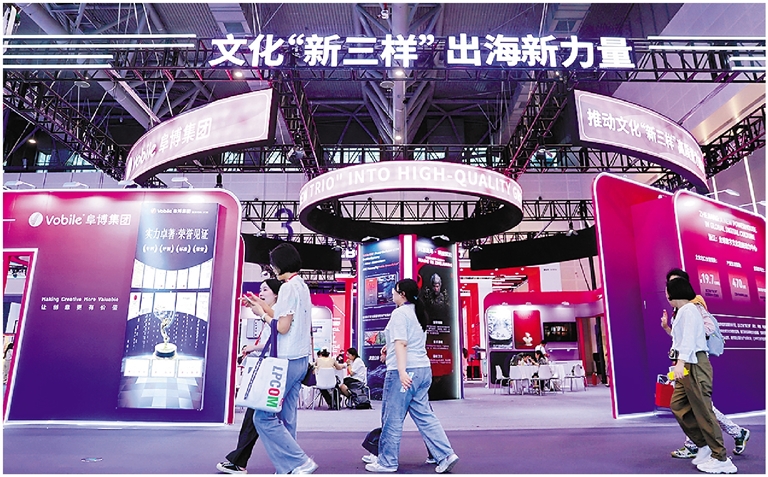
In the first half of this year, the Foreign Trade Development Bureau of the Ministry of Commerce released a three-station global expansion matrix of "first launch in Milan — expansion in Singapore — deep cultivation in Germany" in Hangzhou. Hangzhou has formed a four-in-one global expansion system of "platform + base + enterprise + IP".
As the comment from *Daily Business* said: "The role of the government is not a 'parent' who takes over everything, but a 'pusher' who builds platforms and paves the way." The competition of cultural global expansion is no longer a contest of individual products, but a competition of ecosystems.
After the Speed, What about the Quality?
On June 18, the Hangzhou Conference on Promoting the High-quality Development and High-level Global Expansion of the "Three New Cultural Pillars" was held. At the leading position, Hangzhou established the core proposition for the second half of the journey: not only pursuing "speed", but also "quality".
The cost of extensive growth has emerged. Some works "value traffic over connotation" and "value form over core content", and assembly line template creation and routine copying still exist in a considerable scope. Rui Hong, a member of the Provincial Committee of the Chinese People's Political Consultative Conference, said bluntly: "The homogenization problem in the micro short drama industry is severe. Many creators aim at chasing traffic and ignore the importance of finding the resonance point between Chinese and Western cultures."
Insufficient channel autonomy is another obstacle. Zhejiang cultural enterprises lack their own high-level broadcast and promotion platforms overseas, and their global expansion channels mainly rely on third-party platforms. From "going global by borrowing ships" to "going global by building ships", building independently controllable communication channels is still an unsolved problem. The technical threshold for small and medium-sized enterprises can not be ignored either — the effect of AI empowerment is remarkable, but it is mainly concentrated in head enterprises, and the integration of "culture + technology" in small and medium-sized enterprises remains at a shallow level.
Looking across the country, the global expansion of the "three new cultural pillars" is in a transition period from "quantity" to "quality". As of January 2026, the user scale of Chinese online literature in 20 major overseas countries has reached 537 million. In 2025, the overseas revenue of China's self-developed games reached 20.455 billion US dollars, exceeding 100 billion yuan for six consecutive years; the overseas market size of micro short dramas increased from 600 million US dollars in 2023 to 3.6 billion US dollars in 2025, with an annual growth rate of more than 5 times. In the first quarter of 2026, the overseas revenue of micro short dramas was about 1 billion US dollars, a year-on-year increase of 43%.
The market volume is growing, the competition is intensifying, and the dividend of extensive growth is fading. The outline of the 15th Five-Year Plan has included micro short dramas into the national cultural industry layout for the first time, clearly proposing to "promote the global expansion of high-quality online literature, online games, animation and films, high-quality exhibitions and other content" and "guide and standardize the healthy development of online literature, online games, online audio-visual and other fields". Shifting from "traffic-driven" to "value-led", upgrading from "product export" to "brand going global", and advancing from "technology application" to "technology leadership" is a common proposition across the country, and also the only way for Zhejiang to consolidate its first-mover advantage.
From accounting for 31% of the national online animation output, ranking first in the country in the number of micro short dramas selected into national recommendation lists, to ranking among the top in the country in the number of top 30 cultural enterprises — Zhejiang's leading position in the "three new cultural pillars" is not an accidental result of a single item, but the superposition effect of three forces: AI reconstruction, IP integration and ecological competition. When policies, technologies, industries and talents continue to resonate, time will give the answer whether Zhejiang can truly grow from a "pioneer" to a "leader".
The article is sourced from Dazhong Network