Cultural Global
From Central Asia to North Africa, Why These Four Major Overseas Industrial Parks Have Become the "First Stop" for Enterprises Going Global | Outboun

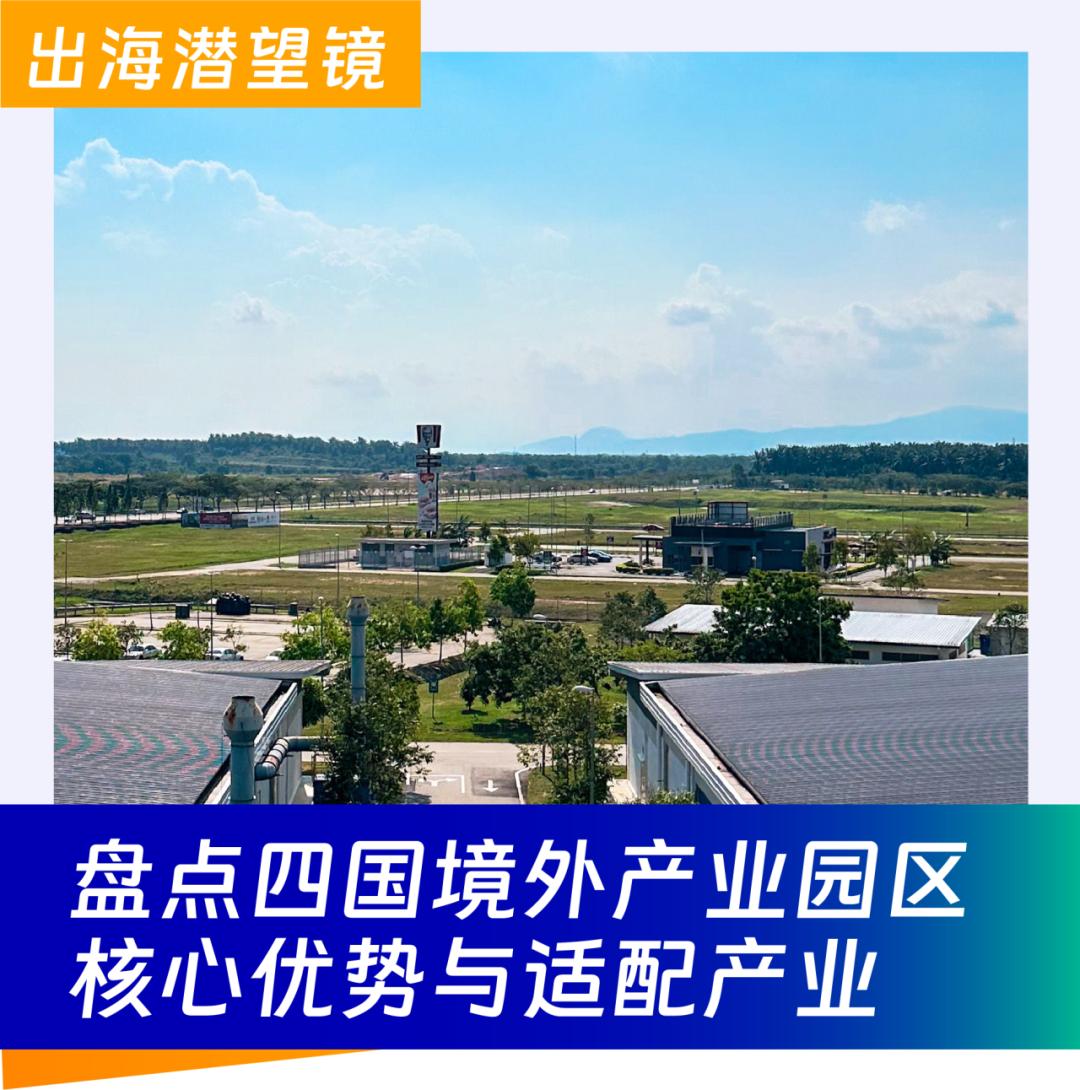
Against the backdrop of intensifying global trade barriers and rising domestic export costs, overseas industrial parks have become a high-quality path for enterprises going global to reduce compliance costs, enjoy tax incentives and adapt to local markets. This article sorts out representative Sino-foreign cooperative industrial parks located in four countries: Morocco, Pakistan, Bangladesh and Serbia, introduces the location and policy advantages of their respective regions and the parks themselves, for the reference of enterprises going global with different demands, so that enterprises can make layout according to their target markets and industries.
Generally speaking, all these parks provide relatively loose supporting financial policies: for example, foreign investment in the manufacturing industry can hold 100% sole proprietorship, funds in the parks can be freely exchanged, profits and capital can be fully remitted back, and overseas investment rights and interests are protected by bilateral agreements.
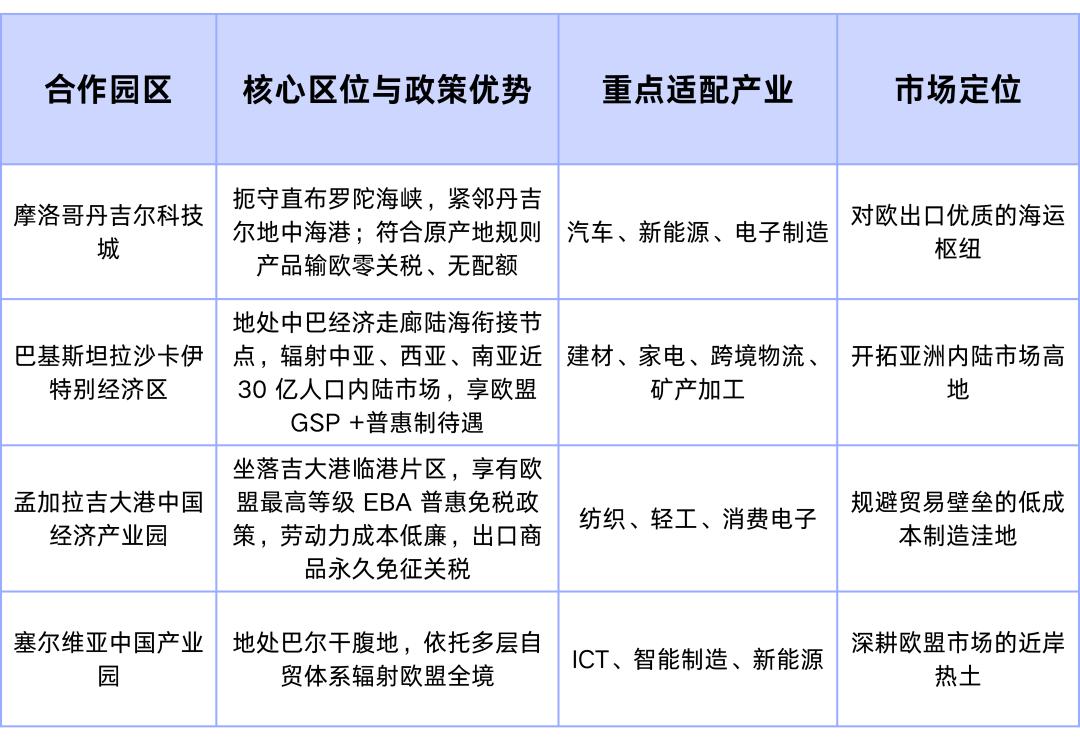
At the same time, the location, policies and factor endowments of each park are significantly different: Tangier Tech City in Morocco guards the Strait of Gibraltar, and products exported to the European Union are free of tariffs and quota restrictions, which can serve as a maritime springboard for the production capacity of automotive, new energy and electronics enterprises to export to Europe; The Rashakai Special Economic Zone in Pakistan is located at the core node of the land-sea connection of the Belt and Road, covering the vast inland market with 3 billion people in Central Asia, West Asia and South Asia, and is a highland for building materials, home appliances, logistics and mineral processing enterprises to explore the inland market; The China Economic Industrial Zone in Chittagong, Bangladesh, enjoys the EU's highest-level EBA tax exemption policy, has sufficient young labor force and permanently exempts export tariffs, making it a manufacturing lowland for textile, light industry and consumer electronics enterprises to avoid trade barriers and go global; The China Industrial Park in Serbia is located in the hinterland of the Balkans, covering the entire EU market, focusing on carrying ICT, intelligent manufacturing, new energy and other industries, and is a nearshore hot spot for in-depth cultivation of the 27 EU member states' markets.
01
Tangier Tech City, Morocco:
North Africa Free Trade Hub for Global Expansion

Morocco is located at the northwest tip of Africa, guarding the Strait of Gibraltar, only 14 kilometers away from Europe (Spain). It is a hub connecting the three major markets of the European Union, the Middle East and Africa, and also a dynamic export-oriented economy in North Africa, with its tourism industry ranking among the top in Africa. China and Morocco established a strategic cooperative partnership in 2016. In 2022, Morocco became the first country in North Africa to sign the Belt and Road cooperation plan, and is one of the four African countries that currently offer visa-free access to Chinese citizens. Enterprises that settle in Morocco can make use of the free trade agreements signed by Morocco with 56 countries and regions including the European Union and the United States, and products that meet the rules of origin enjoy tariff-free and zero-quota treatment when exported to Europe and the United States.
Tangier Tech City covers a total area of 2,167 hectares with a total project investment of about 1 billion euros, and is jointly developed and operated by Chinese and Moroccan government and enterprises. At present, the 511-hectare first phase of the industrial zone has been completed, and will be fully completed in August 2026, while the 456-hectare second phase is planned to start construction in August. More than 50 enterprises including Sentury and BTR have signed up to enter the park, 3 enterprises have been put into operation, and the main plant buildings of more than 10 enterprises have been capped, and export-oriented industrial clusters such as automobile manufacturing, electronic home appliances and new energy are gradually taking shape.
In terms of location, the park is located in the northern Tangier region, where foreign investment is highly concentrated, and the domestic expressway and high-speed railway networks are relatively developed; its supporting Tangier Mediterranean Port ranks 4th in the world in operation efficiency and 19th in the world in container throughput, connecting 186 ports around the world and covering 77 countries; the fourth-phase expansion project of the port was also fully launched in May 2026, which will greatly improve the scale and efficiency of ocean container operations.
In addition, the park also has unique talent advantages: the Tangier region has 19 universities and 61 vocational colleges, which output 12,000 college graduates and 60,000 professional skill training students every year; at the same time, the region has sufficient reserve of young labor force, with an average population age of only 27.2 years old, and the basic monthly salary in the manufacturing industry is about 500 euros, and the labor cost is significantly lower than that in Europe.
According to the public investment promotion information, settled enterprises are fully exempted from corporate income tax for the first five years, and will be levied at a preferential tax rate of 20% from the sixth year. Meanwhile, the import of production equipment and raw materials is exempt from tariffs, value-added tax, consumption tax, etc.; enterprises in the park can also enjoy land rent reduction and exemption for the first six years.
02
Rashakai Special Economic Zone, Pakistan:
Cross-border Base of China-Pakistan Economic Corridor

As the world's fifth most populous country, Pakistan is located at the junction of South Asia, Central Asia and West Asia, and is the core node of the land-sea connection of the Belt and Road, covering a regional market of nearly 3 billion people. At present, Pakistan has signed bilateral investment protection agreements (BIT) with 49 countries and double taxation avoidance agreements (DTAA) with 68 countries, enjoying the EU's Generalized System of Preferences Plus (GSP+) treatment, and more than 2/3 of the tax items of goods exported to Europe are zero-tariff.
In terms of key investment areas, Pakistan is rich in mineral resources. The Khyber Pakhtunkhwa province where the project is located has abundant mineral reserves and low development and utilization rate, and is only 110 kilometers away from the Afghanistan border, so it can access about 60 million tons of copper resources in Afghanistan nearby. Secondly, although Pakistan is rich in agricultural and sideline products, its deep processing technology is relatively backward, and there is a significant market gap in the fine processing fields such as juice and frozen food.
In terms of home appliances and building materials, Pakistan's urbanization process is relatively lagging behind, and it is estimated that the housing gap will reach 500,000 units in the next 20 years, and the rigid demand will be strong for a long time. Although the textile industry is the first pillar industry in the country, most of its products are low-end primary textiles with low added value, and there is broad space for quality improvement and upgrading. In the field of new energy vehicles, Pakistan has a low per capita car ownership, coupled with the rise in international oil prices, the sales of domestic electric vehicles and motorcycles have doubled, and the track has outstanding growth potential.
The Rashakai Special Economic Zone is 90 kilometers away from the capital Islamabad, covers a total area of 406 hectares, with an overall development investment of 128 million US dollars, focusing on the development of industries such as warehousing and logistics, mechanical equipment, household appliances, food processing, textile and leather, home building materials, etc. As of December 2025, 27 enterprises have entered the park.
The project has significant location advantages: 60 kilometers away from Peshawar, the capital of Khyber Pakhtunkhwa, and 800 kilometers away from the Khunjerab Pass, adjacent to the M1 national expressway and ML1 main railway, connecting Xinjiang of China to the north and connecting the two major ports of Karachi and Gwadar to the south, forming a two-way land and sea trade channel.
The park is fully equipped with industrial supporting facilities of water, electricity and gas and standard workshops, and implements closed-end management. All procedures such as registration, customs declaration and labor affairs can be handled in one-stop in the park, with complete supporting facilities. In terms of preferential policies, enterprises in the park are exempted from corporate income tax for 10 consecutive years from the date of production, and the tax is halved for 3 years after the expiration. The import of production machinery and equipment, raw and auxiliary materials is exempt from tariffs and sales tax; enterprises in the park also enjoy 99-year long-term land lease right, and the land payment supports installment payment.
03
China Economic Industrial Zone in Chittagong, Bangladesh:
Low-tax Lowland for Light Industry Export

Bangladesh, with an area of 147,600 square kilometers, is densely populated with 170 million people, with a huge domestic demand market and an obvious trend of younger labor force, and the demographic dividend can last for decades. China and Bangladesh established a comprehensive strategic cooperative partnership in 2024. Since December 2024, China has implemented zero-tariff preferential policies for 100% of the tax items of Bangladeshi goods exported to China, and the economic and trade cooperation between the two countries has received strong bilateral policy support.
At the same time, Bangladesh has a loose trade environment, enjoying the EU's highest-level Generalized System of Preferences (EBA) with a policy transition period extended to 2029, and preferential tariff treatment from 38 countries including Japan, Canada, Australia and Switzerland, and has signed bilateral investment protection and double taxation avoidance agreements with more than 30 countries.
After years of preparation, the China Economic Industrial Zone in Chittagong signed the development agreement in June 2026, and officially started construction on July 27. The park covers a total area of nearly 315 hectares, which is developed in three phases and is planned to be fully completed in 2031, with a 50-year franchise period. Closely following the complementary industrial pulse between China and Bangladesh, the park focuses on the development of leading industries such as textile and apparel, machinery manufacturing, electronic information, biomedicine and green energy.
Chittagong, where the park is located, is the second largest city and the largest port city in Bangladesh, and is an important transportation hub and economic center of Bangladesh. The park is 15 kilometers away from the city center, 12 kilometers away from the wharf and 6 kilometers away from the airport, with a crisscross road network and unique logistics advantages. In terms of supporting facilities, the park plans a functional structure of "one core, two centers and three zones", providing a one-stop service platform covering government affairs, finance, logistics and legal affairs for settled enterprises, with an efficient, transparent and low-cost business operation environment.
In addition, settled enterprises enjoy phased corporate income tax reduction and exemption policies — 100% reduction for the first 3 years, 80% reduction for the 4th year, and the reduction rate decreases by 10% year by year until the 10th year. Other preferential policies include exemption from tariffs on imported plant construction materials and production machinery and equipment, exemption from value-added tax for public services such as water, electricity and gas, and permanent exemption from export tariffs.
04
China Industrial Park in Serbia:
Nearshore Tax Avoidance Platform in Europe

Serbia is located in the hinterland of the Balkan Peninsula in Southeast Europe, and is an important hub connecting Central and Eastern Europe and Southeast Europe. There are diverse languages in the territory. In addition to the official language Serbian, English, German and Russian are all common languages for business. China and Serbia have long maintained a high-level friendly relationship, established a comprehensive strategic partnership in 2016, and built a China-Serbia community with a shared future in 2024. Serbia is the first European country to build a community with a shared future with China, and the free trade agreement between the two countries officially came into effect in July 2024.
In addition, Serbia has a complete trade access system, covering Eurasian markets in layers: it connects the whole European market relying on the stable access agreement with the European Union, CEFTA Central European Free Trade Agreement, and EFTA European Free Trade Association agreement; at the same time, it has signed separate bilateral free trade agreements with the United Kingdom, Turkey and member states of the Eurasian Economic Union, and the vast majority of industrial commodities can be exported with zero tariff or preferential tax rate.
The China Industrial Park in Serbia signed a memorandum of cooperation in 2015, and is expected to start construction at the end of 2026. The park covers an area of 320 hectares with a total investment of about 216 million euros, which is constructed and developed in three phases. As a key project of China-Serbia production capacity cooperation, the park is positioned as a new generation of high-tech industrial base in Serbia and a green and environmentally friendly new area with integrated industry and city, focusing on the development of industries such as communication and IT, intelligent manufacturing, new energy, biomedicine and modern logistics.
Geographically, the China Industrial Park in Serbia is located in the northwest of the capital Belgrade, on the north bank of the Danube, adjacent to the Zemun-Borca Bridge, 14 kilometers away from the old town of Belgrade and 6 kilometers away from the new town. Products in the park can be exported to surrounding countries and Western European markets conveniently via the Pan-European Transport Corridor VII and Pan-European Transport Corridor X.
In addition to complete production supporting facilities and services such as "three connections and one leveling" and "one-stop" examination and approval services, settled enterprises can also enjoy special preferential tax policies given by the Serbian government, including full exemption from corporate income tax for up to 10 years according to the investment scale; import of production equipment, raw and auxiliary materials and building materials is exempt from tariffs and value-added tax; export products are fully exempt from value-added tax; fixed asset investment can be deducted from income tax at