Cultural Global
Cultural Going Global: Eastern Beauty Boasts More Global Appeal (Timeless Oriental Charm, Top-Tier Aesthetics)

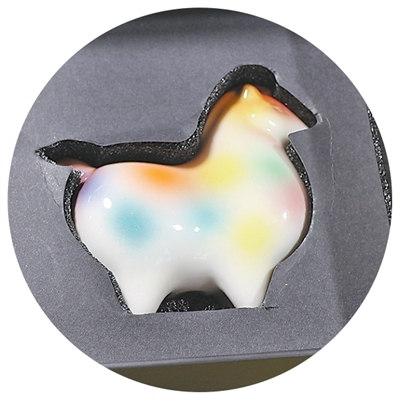
A pony ornament made with the Qiao's Fahua technique. Photo provided by Qiao Lin
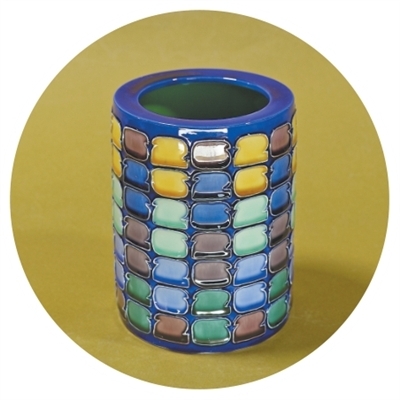
A cup made with the Qiao's Fahua technique. Photo provided by Qiao Lin
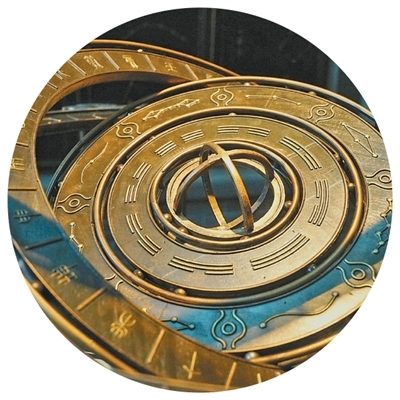
In the drama "The Legend of Hidden Sea", an astronomical observation instrument made based on the armillary sphere of Purple Mountain Observatory. Photo provided by the production team of "The Legend of Hidden Sea"
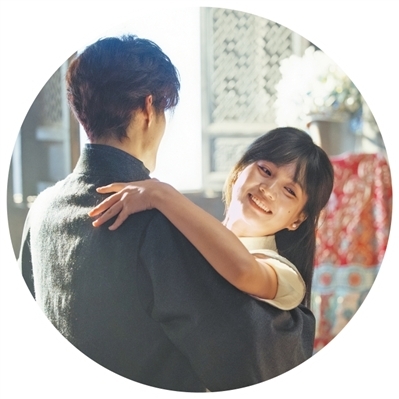
A still from the short drama "ENEMY". Photo provided by Xiaguo Film and Television (Xiamen) Co., Ltd.
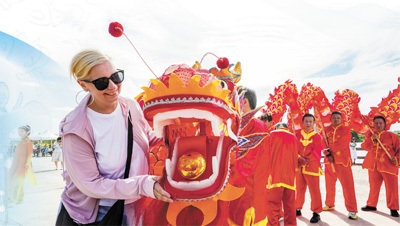
At the 2026 Shanghai Urban Amateur League "Senlan Cup" Urban Dragon Boat Race, a foreign female tourist (first from the left) takes a group photo with the dragon dance team. Photo by Li Baoyang (Image China)
"Monkey King" and "Ne Zha" are popular all over the world, trendy toys like "Awakening Lion" are selling well, and Chinese dramas like "The Legend of Hidden Sea" are going viral overseas... With richer communication carriers and a more complete industrial system, the ancient charm and Chinese style are going global, and Chinese aesthetics are amazing the world.
Behind the more international charm of the "Chinese style", what changes are taking place in the creative concept and communication carriers? What are the "new grammars" for the Eastern aesthetics to arouse emotional resonance? Exploring new paths for cultural going global adds a touch of Eastern aesthetic color to the world's cultural exchange landscape.
——Editor
Intangible cultural heritage "enters the drama", and the image intuitively presents Chinese aesthetics
Reporter of this newspaper Ren Shanshan
The shortlist for the 31st Shanghai TV Festival Magnolia Awards was recently released. The TV drama "The Legend of Hidden Sea" was shortlisted for six awards, including Best Chinese TV Drama, Best Director, and Best Actor. More than a year after its premiere, "The Legend of Hidden Sea" still maintains its popularity.
In China, "The Legend of Hidden Sea" topped the annual playback volume lists of multiple platforms, and overseas, it also showed the charm of Chinese aesthetics to attract fans. The main overseas broadcasting platforms of "The Legend of Hidden Sea" cover more than 100 countries and regions. On the day of its premiere, it entered the hot search lists of countries and regions such as Thailand, Vietnam, Malaysia, India, and Egypt. Keywords such as "Kunqu Opera", "Shadow Puppetry", and "Mortise and Tenon" became popular search terms among viewers.
From "Journey to the West" and "A Dream of Red Mansions" in the 1980s to "Nirvana in Fire", "Joy of Life", and "The Longest Day in Chang'an" in recent years, excellent traditional Chinese culture is the strong support for Chinese dramas to go global. What is the secret code for "The Legend of Hidden Sea" to go global this time?
"More than 20 intangible cultural heritage elements, such as the 'Jiaoxie' dyeing technique of the Song Dynasty that outlines the flowing lines of clothing and the pyrotechnic aesthetics of the Yaofa Puppetry in Taishun, Zhejiang, are embedded in the plot like cultural codes." In the view of Zhang Yongdi, the deputy editor-in-chief of the Chinese Social Sciences Network, the creative concept of "implanting historical genes in fiction" in this drama makes traditional culture no longer a background decoration. In the drama, the tune of "Huan Sha Ji - Hunting" in Kunqu Opera is used to imply the fate of the characters, which deeply integrates traditional culture with the dramatic tension and injects a profound texture into the drama.
"Let the fictional historical background take root and use the realistic creative method to shoot." This is the concept put forward by Zheng Xiaolong, the chief director of "The Legend of Hidden Sea" at the beginning of the creation. According to director Cao Yiwen, after deciding to adopt the texture and atmosphere of the Ming Dynasty, the creative team focused on establishing a clear and intuitive aesthetic style in the presentation of scenes, costumes, props, and etiquette, and specifically demonstrated elements such as mortise and tenon, shadow puppetry, and Kunqu Opera, presenting Chinese aesthetics through images.
The key to making overseas audiences "know" Chinese intangible cultural heritage and then "fall in love with" Chinese culture is to truly "enter the drama". He Tianping, the deputy director of the Audio-Visual Communication Department of the School of Journalism at Renmin University of China, said: "This drama weaves intangible cultural heritage into the core of the story, making it stand up to cultural research and becoming an important means to promote the narrative." Taking the use of mortise and tenon in the drama as an example, this ancient architectural component becomes an important means for the protagonist Zang Hai to resolve crises and overcome the strong with the weak. From this, the audience can intuitively feel that intangible cultural heritage is not only the inheritance of skills but also reflects the survival wisdom of balance and resilience.
The model of "drama + intangible cultural heritage" endows domestic dramas with unique cultural recognition and emotional penetration, and also expands a new broad space for domestic dramas to go global. "The display of Chinese aesthetics requires 'creating an artistic conception' rather than 'creating a scene'." He Tianping said that restoring a visual space that can be approached in a film or TV drama, which can stand up to scrutiny and be pondered, and then cooperating with the secondary creation and communication interaction of overseas audiences on social platforms, this aesthetic experience can move from the digital space to the resonance in reality, helping excellent traditional Chinese culture to better "go global".
Short dramas go viral, and the charm of the opera world enters the global vision
Reporter of this newspaper Song Haoxin
The fluttering water sleeves and a glance that lasts for a lifetime. A Chinese story full of patriotism has gone viral across the world. In May this year, the domestic short drama "ENEMY" (meaning "enemy") quickly became popular and became a phenomenon-level short drama. This drama jumps out of the entertainment narrative and focuses on patriotism. The most infectious "Two Stars in the Opera World" in it have become a hot topic among netizens. Overseas netizens commented: "Just looking into their eyes makes people burst into tears."
The ancient drama charm in the drama is skillfully integrated with the modern "infinite flow" narrative method, which not only retains the traditional cultural heritage but also suits the aesthetics of audiences at home and abroad, enabling netizens with different cultural backgrounds to understand the deep affection and charm hidden in the details.
This drama is a new work by the original creative team of the 2023 Chinese-style short drama "Escape from the British Museum", jointly created by the online bloggers "Jianbing Guozai" and "Xia Tian Meimei". It continues the "grassroots DIY" creative method, uses intangible cultural heritage aesthetics as the carrier and humanistic spirit as the core, achieving both good word-of-mouth and high traffic at home and abroad.
How popular is "ENEMY" overseas? After it was launched on overseas broadcasting platforms, the drama topped the local popular drama lists in countries such as the United States, Mexico, Thailand, Brazil, Indonesia, and Malaysia. Many netizens spontaneously carried out secondary creation, making multi-language commentaries and detailed analysis videos.
When talking about the Chinese aesthetics and intangible cultural heritage elements in the drama, "Jianbing Guozai" said that they did not deliberately pile up traditional culture in the creation. Elements such as opera, ancient architecture, and traditional clothing are presented naturally along with the plot. "There are too many highlights in the treasures of Chinese culture worth exploring. Due to the limited space, we couldn't depict them in depth. We hope to show the essence of traditional culture in more detail in the future." "Jianbing Guozai" said.
Behind the Chinese-style texture is the creative team's investment regardless of cost. To better restore the ancient charm of the opera world, the creative team abandoned the low-cost studio sets after multiple comparisons and chose to shoot on the real scene of a century-old ancient opera stage. "No matter how delicate the artificial opera stage is, it doesn't have the historical heaviness of ancient architecture." "Jianbing Guozai" told reporters that the shooting process was very difficult. After multiple coordinations, the crew could only shoot on the ancient opera stage for half a day, and there was also sudden rain and a drop in temperature on the spot. "We all gritted our teeth and persevered, and finally completed the shooting smoothly." "Jianbing Guozai" said that there was actually no open fire in the fire scene in the drama. To protect this historical relic, all the fire effects were AI (artificial intelligence) special effects.
When talking about the progress of going global, "Jianbing Guozai" revealed: "The promotion of the work to go global stems from the strong calls of overseas audiences." He said that using youthful literary forms to tell Chinese stories well and helping Chinese culture to "go global" is an important direction for the team in the future. From the patriotism of protecting cultural relics in "Escape from the British Museum" to the sincere perseverance of inheriting the charm of the opera world in "ENEMY", the creative team has won applause and good word-of-mouth with a high-precision and core-oriented creative style.
"Intangible cultural heritage is not a dusty exhibit, and Chinese aesthetics is not an old-fashioned symbol. Using youthful lenses and lightweight narratives can make traditional culture 'go global' and show the world the heritage and strength of Chinese culture." "Xia Tian Meimei" said.
Fahua crosses boundaries, and traditional handicrafts attract overseas merchants
Reporter of this newspaper Zheng Yangyang Dou Hanyang
What kind of effect will be produced when traditional handicrafts are made into cultural and creative products?
In the Fahua studio in Yangcheng County, Jincheng City, Shanxi Province, Qiao Lin, the representative inheritor of intangible cultural heritage, is busy with work. She introduced that Fahua is a ceramic decoration technique that originated in the Yuan Dynasty and flourished in the Ming Dynasty. In 2011, the "Qiao's Traditional Handicraft Technique of Fahua Ceramics" was included in the intangible cultural heritage list of Shanxi Province. "In the past, most Fahua wares were static art ornaments. This time, we actively adapted to the trend and let the ancient technique enter daily life." Qiao Lin said.
"Drawing lines and filling colors" is an important technique of Qiao's Fahua and the source of its unique recognition. Qiao Lin introduced that craftsmen use a special mud bag to squeeze out the outline of the pattern, and then dip a brush in porcelain slurry to pile up raised lines. First, it is fired at a high temperature to take shape, making the pattern three-dimensional and raised, and then filled with color materials and fired at a low temperature for the second time. The finished product has a transparent glaze surface with natural sesame crackles, presenting a bas-relief texture.
"Each of our products is handmade. Drawing lines and filling glaze are all done by hand, and there will be slight differences in each work. This is the unique warmth of handicraft skills." Qiao Lin said that the unique handmade texture and Chinese-style glaze color have made Qiao's Fahua highly recognized in the overseas market. At the overseas ordering fair, as soon as the new Fahua cultural and creative products were unveiled, they firmly attracted the attention of many overseas merchants. "Many overseas merchants were attracted by the raised three-dimensional patterns when they saw 'drawing lines and filling colors' for the first time." Qiao Lin said.
The continuous praise at the scene also made Qiao Lin truly feel the charm of intangible cultural heritage. "The most common comments I heard were: 'This is very special and beautiful. I've never seen it before.' Some people even came back to me specifically after walking around and said, 'Although it's my first time seeing Fahua, your products are the most distinctive at the whole fair.' The feeling of being recognized by international peers is really very proud."
In Qiao Lin's view, the warmth that handicrafts bring to cultural and creative products is an important competitiveness for intangible cultural heritage to go global and an advantage that industrialized cultural and creative products cannot replicate.
In order to make the ancient intangible cultural heritage truly reach the public and the world, the team made a bold breakthrough in the product shape.
"We jumped out of the traditional bottles and jars and chose contemporary daily utensils such as coffee cups, aromatherapy cups, and pen holders to integrate intangible cultural heritage into daily life. It not only has the ancient charm of the East but also meets the needs of modern life." The new product form has gradually enabled Fahua to break out of the circle of niche ornaments.
Chinese aesthetics is not about replicating ancient objects but about adapting traditional aesthetics to modern life. Fahua originated from an ancient technique but can naturally integrate into our daily lives. "This is the Chinese aesthetics we want to show - it is vivid, it is 'used', and it is a beautiful way of life." Qiao Lin said.
Source: People's Daily (June 17, 2026, Page 13)