Cultural Global
Short Drama Series Unlocking a Huge Market: The Global Breakthrough Journey of Chinese Micro-Dramas

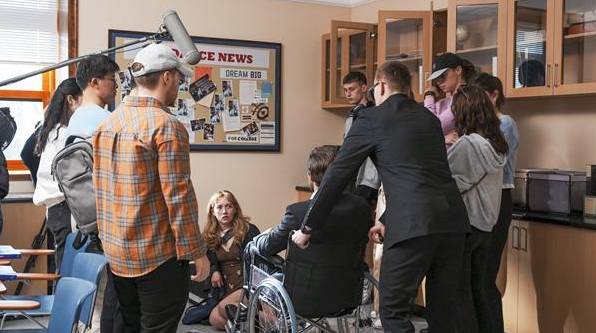
Inside the campus set, the crew is adjusting the camera positions, lighting, and sound equipment around the actors. Photo provided by Hengqin International Film and Television City.
In late May, in the Hengqin International Film and Television City, Natalie, a New Zealand actress with gray hair, was particularly eye - catching. "My hair is brown. I dyed it white specifically to fit the character's temperament," Natalie said with a smile as she stroked her hair.
Five years ago, Natalie came to China originally just to accompany her daughter who was admitted to Xiamen University to study biology. Originally fully focused on taking care of her family, she accidentally walked into the short - drama filming set. She has been playing older female roles for years and unlocked a new life track in a strange country.
Such warm and inclusive stories on the filming set are common in the Chinese short - drama overseas market. Bai Duofu, a 90s - born American youth with albinism, has turned his "defect" of white hair and skin into a scarce professional advantage in the crew, allowing him to play special - type characters like "werewolves"; Platinum, an American youth who was once caught in the involution of the US IT industry and lost his job, came to China and transformed into a short - drama actor, gaining relaxation and growth in this new track...
Behind the stories of these ordinary people chasing their dreams is the leap - forward rise of the Chinese short - drama industry. In just three or four years, this emerging industry, which originated from online literature and is rooted in the Chinese Internet ecosystem, has strongly rewritten the global entertainment landscape. It stands side by side with American movies, Korean dramas, and Japanese comics, ranking among the world's four major cultural phenomena.
Data confirms this miracle of the industry going global. According to DataEye, a research company on overseas short - drama data, the overseas micro - short - drama market size was about $4 billion in 2025 and is expected to exceed $5 billion in 2026, with the industry maintaining a stable annual compound growth rate of about 25%. In the first quarter of 2026, the in - app purchase revenue of overseas micro - short - drama apps on both platforms (that is, the total revenue generated by apps through in - app purchases on both the Apple and Android platforms - Editor's note) reached $602 million, and the number of downloads was about 689 million. Wang Xiangbin, the CEO of the company, said that Chinese overseas short dramas account for more than 70% of the global market, firmly dominating the global short - drama track.
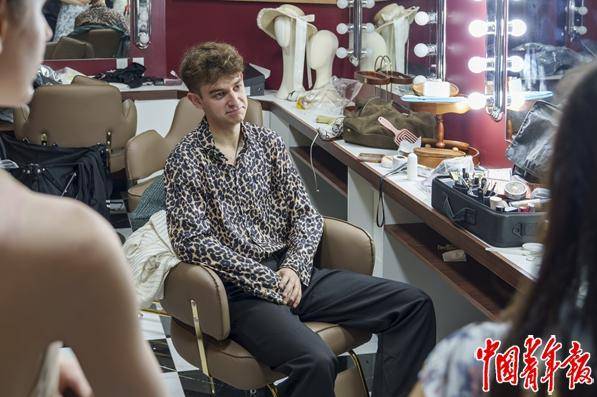
Ma Yusi, a French short - drama actor, in the dressing room during a filming break. Photo by Wang Ziyuan, reporter of China Youth Daily and China Youth Net.
Why Are Chinese Short Dramas So Popular Globally?
"I often come across short dramas when I'm scrolling through TikTok. They appear very frequently on the recommendation page," said Mbola, a South African self - media blogger.
"I really like watching these short dramas and often can't stop," added Haleb, an Ethiopian self - media blogger.
"The content form of global micro - short dramas essentially comes from Chinese online literature," Wang Xiangbin introduced. After more than a decade of development, Chinese online literature has accumulated a large number of mature IPs and a narrative system, laying a unique content advantage for short dramas to go global. The core themes of early short dramas, such as cultivation and romance, are all visual transformations of classic online - literature content.
The entertainment "pleasure points" of global netizens are highly similar, which is the underlying logic of the cross - cultural communication of short dramas. The werewolf and vampire themes that Bai Duofu plays in correspond to the traditional Chinese cultivation settings; the plot routines of rebirth, counter - attack, and reversal are suitable for audiences of all regions and ages around the world.
The extreme reversals in short dramas are reflected in Bai Duofu's recent works. In the drama, he portrays a bullying lawyer who deliberately makes things difficult for the female lead in the early stage, but then the plot reverses and he "falls from grace." During the filming, in the face of the female lead's humiliation of "You're just a stray dog," Bai Duofu improvised and immersed himself in the role's humility. "This huge contrast in characters and dramatic impact is really enjoyable to act out, and this is also the core feature that makes short dramas attract audiences."
If content is the core confidence for short dramas to go global, then the extremely efficient Chinese industrial efficiency is their core competitiveness in seizing the global market. Wang Wenjin, the general manager of Haoli Media, has been deeply involved in the cross - border entertainment industry for many years, experiencing multiple waves of games and short dramas going global, and has a deep understanding of the "Chinese speed."
"Previously, when we filmed a drama in Los Angeles, it took a month just for the preparation. In China, it basically takes less than half a month to get ready," Wang Wenjin said. The efficient and practical work rhythm of the Chinese team has significantly compressed the production cycle. She once prepared two projects simultaneously at one base, and it only took a total of 10 days.
The efficient team execution depends on the support of industrialized facilities. Professional film and television bases have improved the industrial closed - loop for short dramas to go global. Take the Hengqin International Film and Television City of Chinese Online as an example. When an overseas short - drama crew comes here, they can quickly find overseas shooting scenes such as American - style offices, families, hospitals, and restaurants.
Li Ming, the person - in - charge of the film and television city, introduced that in March this year alone, more than 10 overseas short dramas were filmed here. "Here, we can provide one - stop services for the entire industrial chain, which means a shorter preparation cycle, lower communication costs, and more stable output capabilities."
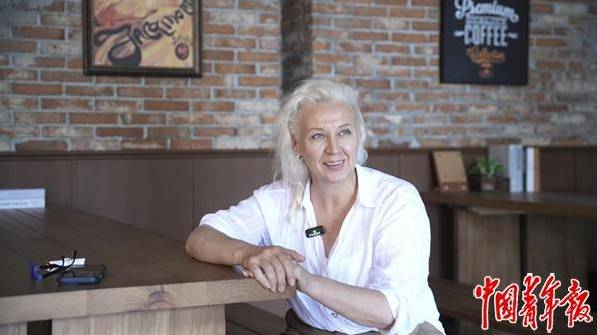
Natalie, a New Zealand short - drama actress. Photo by Li Yuanyuan, reporter of China Youth Daily and China Youth Net.
Business and Technology Drive the Development of Overseas Short Dramas
A diverse and mature business model has laid a solid foundation for Chinese short dramas to go global.
Wang Wenjin introduced that most overseas short dramas currently adopt a dual - track monetization model of "pay - to - unlock + traffic advertising." The dramas can not only obtain stable income through the platform's top - up payment model but also monetize through free viewing and converting traffic into advertising fees. "Compared with the single models of selling copyrights and pay - per - view in traditional film and television, the monetization channels of short dramas are more diverse."
Hu Wenjie, the founder of Beijing Yinian Wanxiang Technology Development Co., Ltd., which is engaged in AI short - drama production, added that now the industry has formed a diverse and mature business system, which effectively reduces the creation risk and broadens the profit path. Take the customized dramas on overseas platforms as an example. "Customized dramas include customization fees and subsequent traffic revenue sharing, and some projects have a guaranteed minimum return, which allows producers to produce with confidence."
The stable and diverse commercialization system enables the short - drama industry to achieve a virtuous cycle and continuous self - improvement. On this basis, the iterative upgrade of AI technology has further reconstructed the industry's production logic, breaking the production capacity bottleneck through cost - reduction and efficiency - improvement.
Data from DataEye shows that during the Spring Festival season in 2026 alone, the total playback volume of short dramas reached 8.67 billion times, among which AI comic dramas accounted for as high as 29.4%.
In the past, producing a micro - short drama still relied on the traditional film and television industrial process: costumes, makeup, props, shooting, editing... Now, with the support of AI technology, one person + one computer can complete a short drama.
"The cost of producing an AI short drama for the overseas market is only a fraction of that of a live - action drama," said Hu Wenjie, who has been deeply involved in the AI short - drama production track and has directly witnessed this industry transformation. She recalled that around October last year, the capabilities of AI video tools were significantly improved, and technical problems such as facial expressions, audio - video synchronization, and smoothness of movements were gradually improved.
AI first impacts those "most time - consuming and costly" links. Hu Wenjie told reporters that for themes such as science fiction, xianxia, and fantasy, which used to require wire - work and special effects, AI can now directly complete the visual expression. "This is not only about cost - reduction but also means that the imagination that was previously constrained by the budget is starting to be released."
In addition to the opportunities and challenges brought by technology, the short - drama industry has always been accompanied by content - related controversies since its birth. "I think short dramas are too dramatic and not quite the same as the Chinese culture I've actually experienced," Mbola said.
Problems such as exaggerated plots and weak artistic quality once labeled short dramas as "fast - food entertainment" and even criticized them as "digital swill." Many people asked, "Would you let your children watch short dramas?"
In response, Xia Ruochen, an American actress who has been deeply involved in the short - drama industry for many years, has a rational understanding. "Currently, the general public is under great pressure in life and needs entertainment that doesn't require in - depth thinking. Short dramas have simple plots, fast - paced rhythms, and can help people relax after watching. This is their core value," she said. "Fast - food content" does not mean low - quality content. It precisely matches the public's entertainment needs. "Existence is reasonable. I think this is the normal and healthy development form of the industry at present."
"No literary and artistic form has extremely high artistic value from the very beginning," Wang Xiangbin said. The short - drama industry is still in its early growth stage. In the early stage, using mature and routinized content to seize the market and ensure the survival of the industry is an inevitable choice for the industry's development. "The audience's aesthetic level is irreversible and will only continue to improve, which also forces the industry to continuously innovate and polish high - quality works." Wang Xiangbin said that the artistic quality, content depth, and value expression of short dramas are continuously advancing.
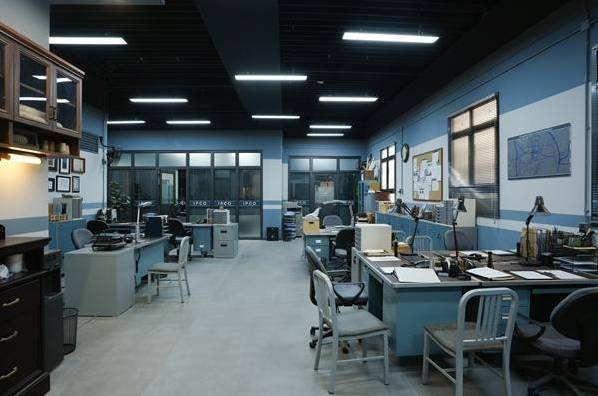
A shooting set for an overseas short drama simulating a police office. Photo provided by Hengqin International Film and Television City.
"This Is a Two - Way Cultural Exchange"
In the process of Chinese short dramas going global, the industrial advantages are not only reflected in the leading production capacity and market share but also in an open and inclusive international creative pattern.
In Li Ming's view, the domestic short - drama filming sets have already formed a diverse and inclusive international creative community. "I've seen Australians, Russians, French people, Turks, and people from all over the world at the Hengqin International Film and Television City."
Wang Wenjin introduced that her team's crews always adopt a multi - integrated creative leadership model, actively absorbing excellent practitioners from around the world to participate in the creation. "We have a French executive director who is proficient in Chinese, English, and French, and also an American executive director." This Chinese - foreign mixed and complementary cooperation method effectively improves the efficiency of cross - border shooting and better meets the local creative needs of different regions.
For many foreign actors and audiences, the Chinese short - drama industry provides a high - quality communication platform to break prejudices, eliminate barriers, and deeply understand China.
"The advantage of short dramas is that they arouse the audience's interest," Haleb said. "Through these short clips, people can not only feel the charm of Chinese culture but also have the curiosity of 'Is it really like this?' This is what makes short dramas attractive."
Bai Duofu observed on the filming set that many young American actors came to China with a sense of distance and fear due to stereotypes. "They were afraid of China, thinking it was strange, far away, and full of threats," Bai Duofu said.
However, day - to - day co - existence on the filming set gradually melted away this barrier and prejudice. Sharing simple work meals and repeatedly polishing the details of the scenes, the cold geographical labels were gradually replaced by vivid and warm daily interactions. Bai Duofu said, "When they experience the work and life here in person, that sense of fear naturally disappears."
"The Chinese team has a foundation in Eastern culture, and we foreign actors bring a Western perspective. What we shoot together is itself a cultural integration," Xia Ruochen said.
In the past, cultural going - global was often understood as "telling Chinese stories to foreigners." However, the going - global of short dramas has opened up a new communication path: relying on China's mature content industrial system, it builds an open creative stage and invites global actors to participate in story creation and performance together. "This is not a one - way cultural output but more like a two - way exchange," Xia Ruochen said.
Source: China Youth Daily (June 10, 2026, Page 08)