Cultural Global
Multiple Chinese companies, including Sanhua Intelligent Controls, have set up operations in Thailand. The core supply chain of humanoid robots has g


Introduction:
Looking at the global market and exploring the second growth curve is already a definite direction. However, how to expand overseas still tests the wisdom and courage of every Chinese enterprise. There are numerous paths for going global, such as brand expansion, supply chain expansion, and cross - border e - commerce, but there is never a one - size - fits - all answer. North America, Southeast Asia, the Middle East, Latin America... The markets are vast, but each has its own challenges. Behind every long - distance expedition is the exploration of Chinese enterprises. More and more Chinese figures are emerging on every distant coastline.
The "Overseas Pioneers" column aims to visit overseas benchmarks in different fields, analyze practical cases from a professional perspective, precipitate methodologies in common understandings, and discover new possibilities in differences.
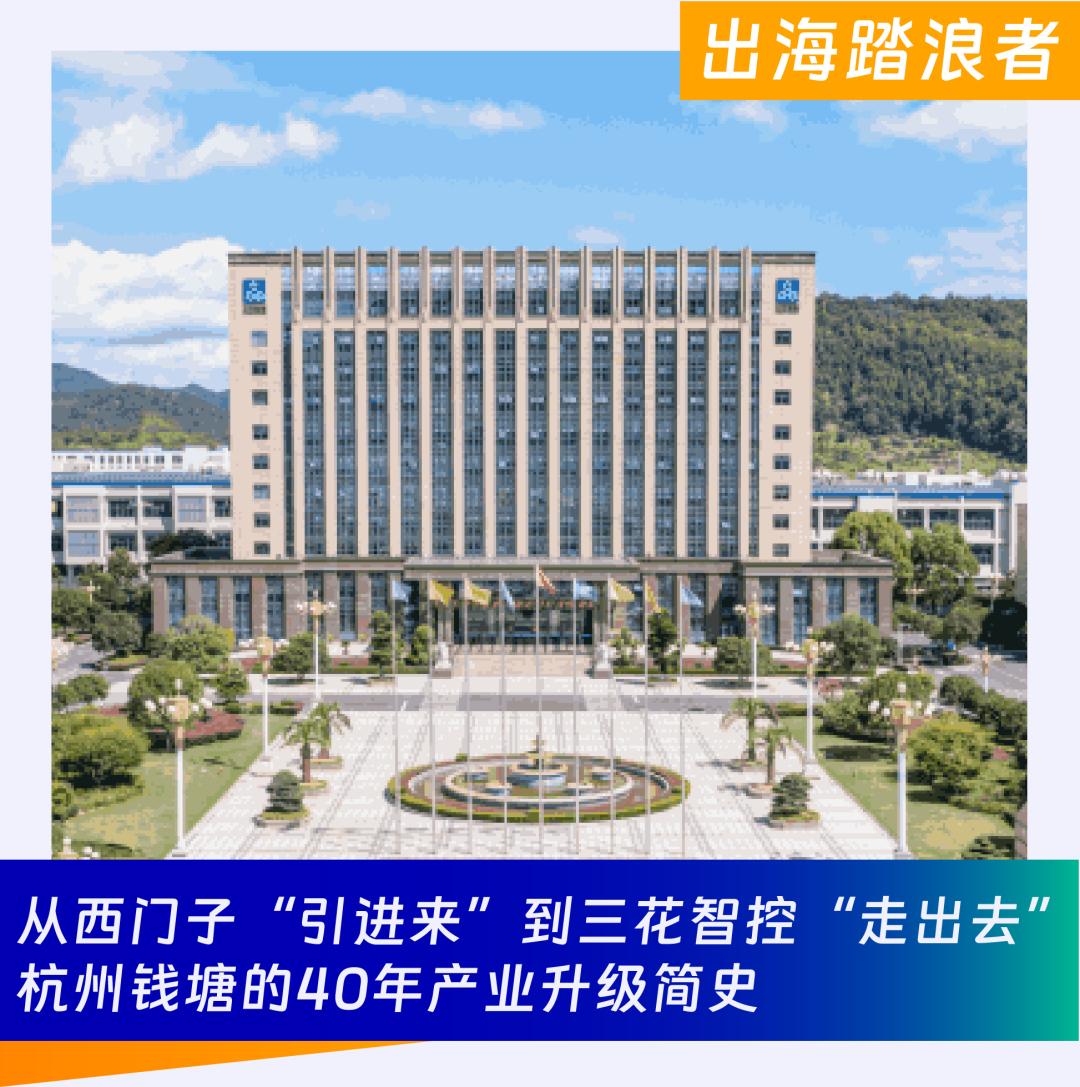
Recently, Zhejiang Sanhua Intelligent Control Co., Ltd. (hereinafter referred to as "Sanhua") has achieved another breakthrough in the overseas expansion track. On February 23, Nalith, the Secretary - General of the Board of Investment of Thailand (BOI), announced the approval of five Chinese enterprises, including Sanhua, to invest in the construction of a production base for humanoid robot components in Thailand. This is also Sanhua's first mass - production of humanoid robot components outside China.
After 40 years of development, Sanhua has firmly established itself as a leader in the fields of refrigeration and air - conditioning components and automotive thermal management, providing core components for almost all leading enterprises in the global air - conditioning and automotive industries. However, the management of Sanhua has long set its sights on another more imaginative field - embodied intelligence. It has been mentioned several times in the financial reports of the past two years that embodied intelligence has broad prospects, and Sanhua will invest more R & D efforts.
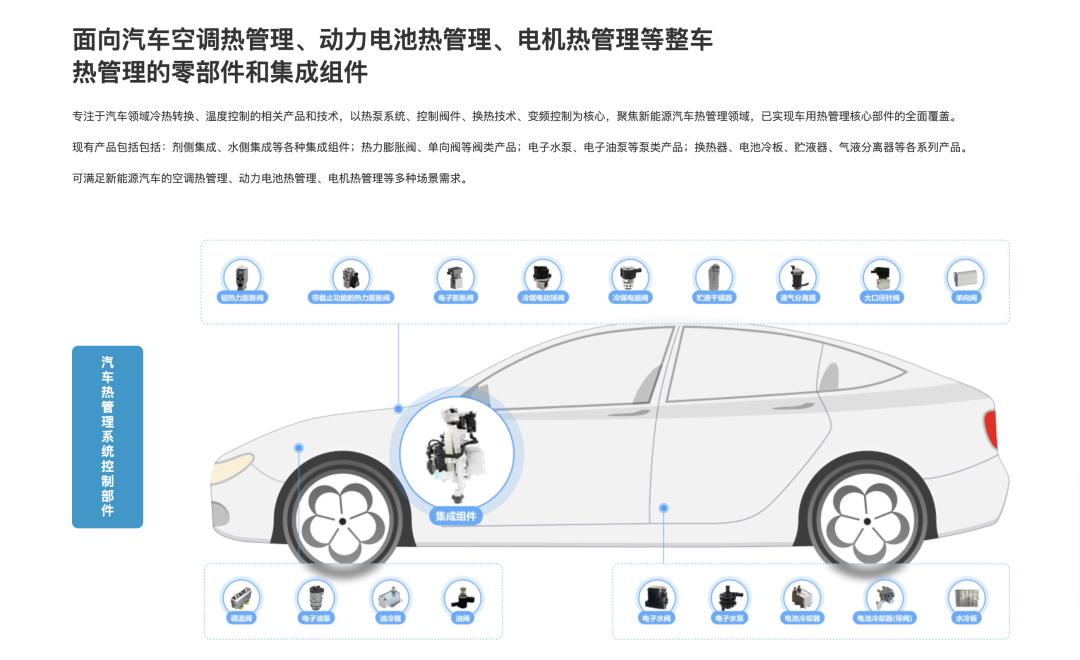
Relying on its technological accumulation in the new energy vehicle field, Sanhua has chosen the production and R & D of robotic electromechanical actuators as the key to enter the embodied intelligence track. An electromechanical actuator is a complex hardware that integrates a motor, a reducer (or screw), a sensor, an encoder, and a controller. If a humanoid robot is compared to a human, the electromechanical actuator is its "joints" and "muscles", responsible for converting the instructions issued by the "brain" into specific actions. Precisely because the electromechanical actuator is a complex hardware that requires the integration of various components, this happens to be the technological field in which Sanhua excels.
In the embodied intelligence industrial chain, Sanhua continues to position itself as a Tier 1 (first - tier supplier) and transfers the cooperative relationships accumulated in the new energy vehicle field to the robot track. This means that Sanhua can leverage its advantages in system integration and precision manufacturing to directly cooperate with leading customers such as Tesla.
In 2023, Sanhua officially cooperated with Green Harmonic to build a factory to promote the production and R & D of harmonic reducers. The harmonic reducer is an important part of the electromechanical actuator and was a short - board that Sanhua had not involved in the past. In January 2024, Sanhua announced an investment of 3.8 billion yuan in Qiantang, Hangzhou, to build a R & D and production base for robotic electromechanical actuators and domain controllers. In June 2024, it established an intelligent drive company to accelerate the mass - production of actuators. In October 2025, Sanhua officially established a robot division to speed up the development efficiency of the embodied intelligence business from the organizational structure.
Interestingly, Sanhua's move from Qiantang to Thailand at present is very much like Siemens' move from Germany to Qiantang 20 years ago, echoing that era.
In 1995, the area along the Qiantang River in Hangzhou (the then Hangzhou Economic and Technological Development Zone) where Sanhua is now located was still a tidal flat. With the efforts of the management committee of the development zone, Siemens chose to build a factory here, kicking off the prelude of foreign investment in Qiantang. Subsequently, foreign enterprises such as Huayin and Panasonic settled here one after another, successfully attracting the agglomeration of upstream and downstream enterprises in the supply chain. Through industrial chain - style development, it promoted the improvement of local and even the entire Zhejiang's industrial supporting facilities and infrastructure, gradually cultivating local enterprises like Sanhua based on high - end manufacturing.
In February this year, during German Chancellor Merz's visit to China, he specifically set aside one day for Hangzhou and made a special visit to Siemens Energy. When meeting with the leaders of the Zhejiang Provincial Party Committee, he said, "This is my first visit to Zhejiang, and I have felt the vigorous vitality of Zhejiang's economic development here."
Chinese manufacturing enterprises that have grown strong and mastered advanced technologies not only take root in groups in Qiantang but also start to go abroad with their independently developed core technologies and blossom all over the world. The enterprises approved to build a production base for humanoid robot components in Thailand together with Sanhua also include three Zhejiang enterprises: Hangzhou Xinjian Electromechanical Transmission Co., Ltd., Ningbo Tuopu Group Co., Ltd., and Ningbo Xusheng Group Co., Ltd.
Among them, Xinjian Electromechanical focuses on the R & D and manufacturing of planetary roller screws, providing transmission components that determine the precision of movement for embodied robots. Tuopu Group masters the core technologies of motors, reduction mechanisms, and sensors and deeply deploys in the actuator field. Xusheng Group is committed to using lightweight materials to build the "skeleton" for robots, effectively reducing the weight of robots.
From attracting foreign - funded enterprises to actively going abroad with independent core technologies, Zhejiang's high - end manufacturing enterprises represented by Sanhua are completing the transformation from technology followers to technology exporters.
*The information and views contained in this article do not constitute any investment advice and are for reference only.
This article is from the WeChat official account "Zhejiang Enterprises Overseas Comprehensive Service Port", author: Zhejiang Enterprises Going Global.