Cultural Global
Pinlan Technology: Helping 20 Million Engineers Build AI Assistants, Expanding into Japan with the "ODM" Model | Overseas Pioneers


Introduction:
Looking at the global market and exploring the second growth curve has become a definite direction. However, how to go global still tests the wisdom and courage of every Chinese enterprise. There are numerous paths for going global, such as brand expansion, supply chain expansion, and cross - border e - commerce, but there is never a one - size - fits - all answer. Markets in North America, Southeast Asia, the Middle East, and Latin America are vast, yet each has its own challenges. Behind every long - distance expedition is the exploration of Chinese enterprises. More Chinese figures are emerging on every distant coastline.
The "Global Pioneers" column aims to seek out global benchmarks in different fields, analyze practical cases from a professional perspective, precipitate methodologies through consensus, and discover new possibilities in differences.
In 2026, the global AI industry reached a critical turning point. The frenzy of large models gradually subsided, and the core narrative shifted from the technological arms race to commercial realization.
In such a cycle, the AI + CAD platform company "Pinlan Technology" chose a relatively alternative development path: it didn't chase the large - model trend, didn't create a hit product for the consumer market, and didn't want to tell the story of AI replacing human labor. Instead, it delved into the pile of blueprints and entered the less "sexy" niche field of industrial design.
Pinlan Technology was founded in 2018 and focuses on the R & D and industrial application of the AI + CAD core platform, providing overall AI design solutions for the AEC engineering design and MFG industrial design industries. The founder, Li Yifan, graduated from the Department of Electronic Engineering of Tsinghua University and later pursued a master's degree at Carnegie Mellon University. During his entrepreneurship in Silicon Valley, he participated in multiple startup projects, served as a member of the founding team of MailTime and the person - in - charge of industry AI at Caicloud, and led the development of multiple AI - related products and solutions.
In recent years, leading CAD manufacturers such as AutoDesk have also started to layout AI capabilities. However, Li Yifan doesn't want to be the "Chinese version of AutoDesk." Instead, he wants to build an "AI engineer" that can accept natural - language tasks, understand design intentions and physical laws, and be capable of autonomous planning and continuous self - evolution.
01
Product evolution from blueprint recognition to "AI engineer"

After Li Yifan returned to China from Silicon Valley to found Pinlan Technology in 2018, he spent a year looking for application scenarios suitable for AI technology implementation in different industries. It wasn't until 2019 that Pinlan Technology's speech at a Microsoft forum caught the attention of the Vanke team.
After several months of communication and discussion, Li Yifan learned that architectural design requires a large amount of drawing work. On average, each blueprint needs to be modified 10 times, and repetitive labor accounts for over 80%. Just the construction drawings for pipeline layout require half a month of repeated verification. Meanwhile, a large number of digital blueprints, specifications, and experiences precisely provide the core data foundation for AI technology implementation. This made Li Yifan see the possibility of technology implementation, and Pinlan Technology reached a cooperation with Vanke to develop an AI blueprint review system.
Different from simple image recognition, the complexity of blueprints far exceeds that of natural images. Blueprints contain highly structured professional expressions such as layer information, professional symbols, dimension markings, and multi - page associations, and there are complex logical relationships among hundreds of blueprints. "Although the so - called 'Four AI Dragons' at that time could do image recognition, no enterprise other than us can recognize design blueprints even today," Li Yifan said.
Pinlan Technology's algorithm team started from basic knowledge such as geometric principles and structural mechanics to disassemble the drawing logic, built the underlying model algorithm, and the design department provided industry know - how. The two teams cooperated and complemented each other. From the smallest module of a lightning rod to the electrical system of an entire residential building, and then to the design requirements of various non - architectural industries, they gradually built a design model suitable for engineering scenarios that designers can use, thus continuously polishing and optimizing the capabilities of the company's AI CAD core product, Zhuhuitong.
The core logic of this technology architecture is to use the general underlying algorithm as the "internal strength" to respond to the "moves" of different industry scenario requirements.
"Customers don't need to reinvent the wheel. They only need to train their own exclusive models on the platform." Li Yifan explained, which can increase the drawing efficiency by 10 times and reduce the rework rate by 90%.
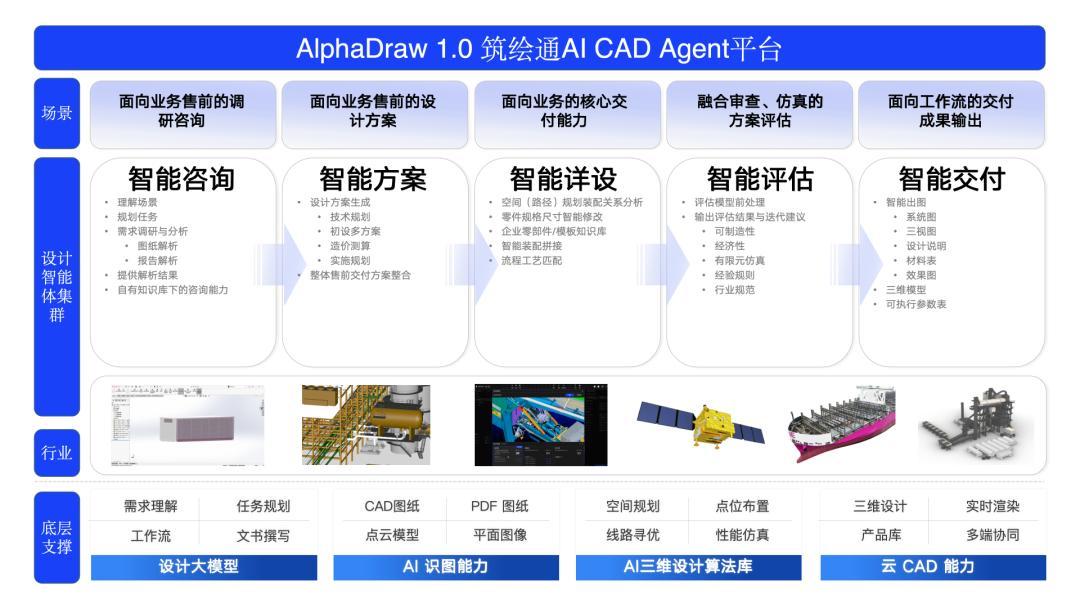
Currently, Zhuhuitong has undergone seven key iterations. Based on the technical foundation of large - language models, deep - learning image - recognition engines, generative design engines, and cloud - based modeling engines, it has the capabilities of cloud CAD, AI image recognition, large design models, and AI design agents, and is now applied to the layout design and blueprint drawing of engineering projects such as architecture, power engineering, and ships.
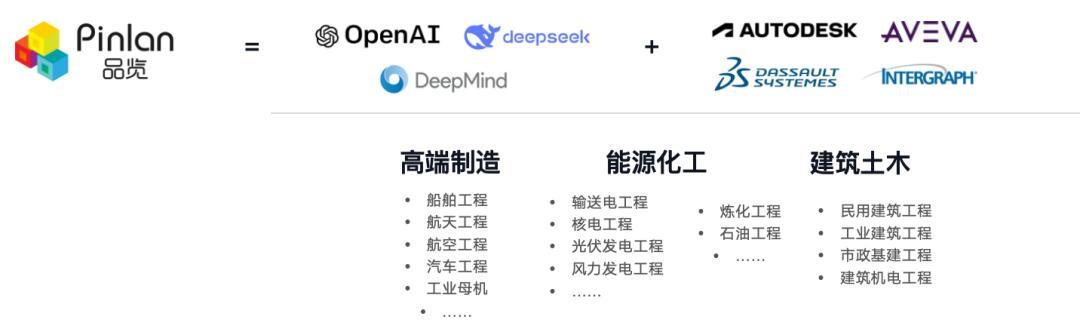
"Foreign traditional manufacturers have noticed our products, but the ones more likely to pose a threat to us are actually the large - model giants. However, there are no such signs yet, as large models are still unable to handle design blueprints in this form," Li Yifan said.
02
Shifting from vertical application to platform - based strategy and going global to Japan in the "ODM" mode

In 2023, the Chinese real - estate industry experienced fluctuations, and the annual development volume of commercial housing dropped sharply, which directly affected Pinlan Technology's original strategy focused on residential AI design.
"The market environment has made us realize a fact that our advantage lies not in being industry experts but in being AI technology experts. So we should focus on building a technology platform, and leave the industry - related matters to our partners and customers, as they know better than us," Li Yifan said. "Just like Huawei makes base stations but doesn't sell SIM cards."
Currently, Zhuhuitong is positioned as an "AI + CAD core platform provider" and adopts the service model of "software license + implementation service" (License + Service). It can also co - develop customized versions with customers. As of March 2026, the number of Zhuhuitong's B - end customers has exceeded 300, and it has achieved annual operating profit.
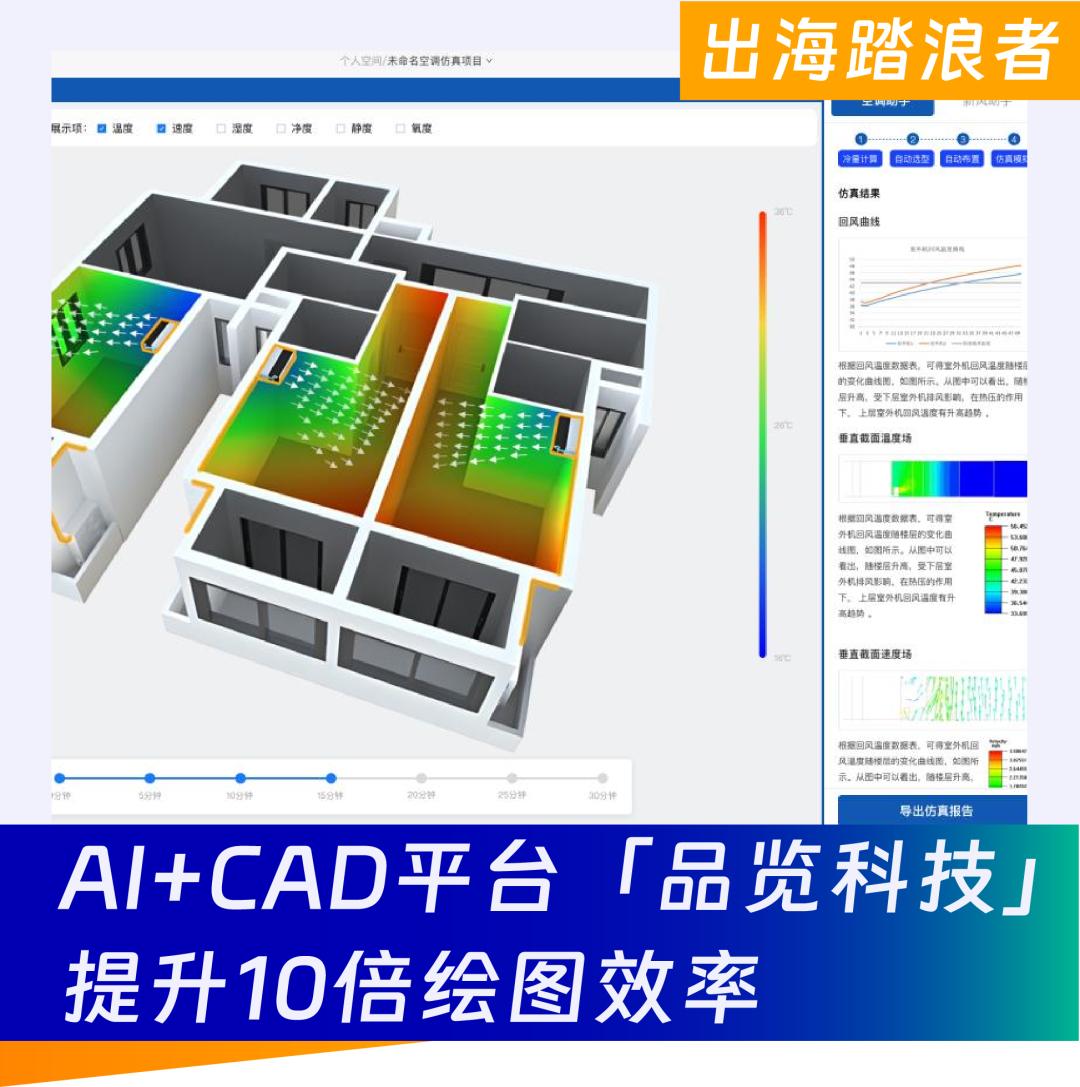
For example, Haier's air - conditioner design application "Haizhuhui" developed based on Zhuhuitong has actually saved 70% of the design time compared with the past. A chain hotel used Pinlan Technology's AI platform to layout hotel rooms, quickly generated architectural floor plans and bill of quantities that meet brand standards, and reduced the original 4 - hour design time to 1 hour, increasing efficiency by about 75%.
Originally, Pinlan Technology didn't have a clear plan for going global. A Japanese customer extended an olive branch of cooperation after seeing 36Kr's report on Pinlan Technology during the process of looking for a supplier.
From receiving the inquiry to officially launching the cooperation, Pinlan Technology spent half a year conducting research and finally chose the cooperation model of joint co - creation: Pinlan Technology provides the technology, and local partners provide local industry experts and sales channels to jointly develop an industry - specific AI design tool for the Japanese market.
This ODM - like path for going global is different from the popular SaaS going - global model in recent years. It doesn't involve simply translating the product into the local language and then selling it directly. Instead, everything from technology adaptation to product definition needs to be "redone."
Li Yifan explained, "Our past experience is that we shouldn't rush to expand on a large scale and have awkward conversations with C - end users. Instead, we should first choose a partner with industry know - how for in - depth co - creation and penetrate deeply from a professional direction. Once the pilot is successful and we prove our capabilities to customers, it's just a matter of time before we expand further."
"In highly developed local markets like Japan and South Korea, it must be the locals who do local things." After the cooperation was launched, Li Yifan quickly realized the "difference" of the Japanese market. The unique architectural form in Japan is mainly single - family "detached houses," with fewer centralized apartments, and the design specifications and standard systems are also completely different. Therefore, the model algorithm needs to be comprehensively modified and adapted.
Secondly, the Japanese market has high requirements for product reliability and is more conservative about trial - and - error. It hopes that the AI products on the market must be mature enough. "So we must take our time to polish our products," Li Yifan said. This "meticulousness" is reflected in all aspects, such as higher seismic design requirements, the model being able to interface with commonly used local design software, and conforming to the work processes and usage habits of Japanese engineering designers.
To solve these problems, Pinlan Technology adopts the two - location collaboration model: part of the team stays in Japan, and part stays in China, and the development is promoted through online collaboration. "Going global can't be rushed. After all, we're not a giant enterprise. First, we need to take the first step well in Japan. In the future, whether we go to South Korea or Europe and the United States, we'll gradually expand from point to area," Li Yifan said.
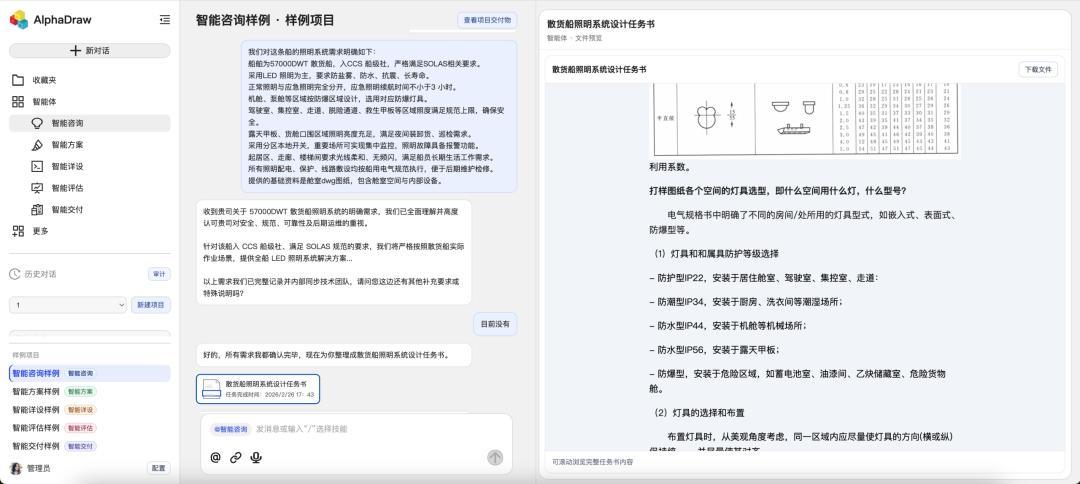
This "slowness" may be the essence of the engineering technology application track, which requires time to accumulate industry understanding and patience to build trust relationships. When asked about the ultimate vision, Li Yifan said: "Let AI be able to do engineering design and create a better world." This vision is grand, but the implementation path is simple. Starting from the AI design of a lightning rod to the cable system of a nuclear power plant, while others are doing "sexy" things, Pinlan Technology chooses to slowly accumulate internal strength and wait for time to give an answer.
*All the views expressed are from the interviewed institutions or individuals and are for reference only.
This article is from the WeChat official account "Comprehensive Service Port for Zhejiang Enterprises Going Global," author: Zhejiang Enterprises Going Global.