Cultural Global
Zhejiang Sees the First Listed Company in the Light Industry Robotics Sector, with Overseas Revenue Soaring 20-Fold in Three Years | Overseas Insight


On May 18, Zhejiang Yifei Intelligent Technology Co., Ltd. (hereinafter referred to as "Yifei Technology") was officially listed on the Hong Kong Stock Exchange. The IPO issue price was HK$30.50. On the first day of trading, the stock price soared by 88.85%. As of press time, it was reported at HK$57.60, with a market value of HK$14.109 billion. According to ASTOCKS data, the public offering part recorded nearly 14,900 times oversubscription, making it the new "Oversubscription King" in the history of the Hong Kong stock market.
Founded in 2012, Yifei Technology has been deeply involved in the industrial robot track for more than a decade. It is a national-level specialized and sophisticated "little giant" enterprise. Its business covers the midstream ontology manufacturing and downstream system integration of the industrial robot industry chain, focusing on thousands of light industrial scenarios such as electronic product assembly and product packaging.
According to the Frost & Sullivan report, based on the revenue in 2025, Yifei Technology is the fourth-ranked domestic enterprise among industrial robot and robot solution providers focusing on light industrial application scenarios in China, and is also one of the few robot enterprises with large-scale coverage capabilities.
It is worth noting that Yifei Technology's listing this time is carried out in accordance with Chapter 18C. Chapter 18C is a listing rule introduced by the Hong Kong Stock Exchange for "specialized technology companies", mainly providing a listing channel for technology companies that are still in the early stage of commercialization and do not meet the financial requirements of the main board. Previously, enterprises such as Mini Max, Biren Technology, and Zhipu have successfully listed on the Hong Kong Stock Exchange through this channel.
The prospectus shows that from 2023 to 2025, Yifei Technology's revenue increased from 201 million yuan to 387 million yuan, with a compound annual growth rate of 38.76%, and the gross profit margin climbed from 18.30% to 24.80%.
Under the industry trend of Chinese robots going global, overseas business is becoming an important supplement to Yifei Technology's revenue growth. From 2023 to 2025, the company's overseas revenue increased by about 20 times, and the proportion of overseas revenue increased from 0.90% to 9.80%. Its business covers 25 overseas countries and regions in Europe, North America, Latin America, and Southeast Asia.
01
From hardware R & D to providing solutions
And then back to standardized delivery of the ontology

Yifei Technology's business mainly covers the midstream and downstream of the industrial robot industry chain. It not only engages in the R & D and manufacturing of robot ontologies but also delivers relevant robot solutions according to different application scenarios. In 2025, the revenue proportions of ontology hardware and solutions were 31.90% and 68.10% respectively.
Over the past more than 10 years, Yifei Technology has gone through a development process of shifting from focusing on the ontology to implementing solutions and then back to ontology R & D.
In 2012, Yifei Technology was registered and established. In the same year, it developed the first parallel robot prototype and was one of the earliest enterprises in China to develop parallel robots. The prospectus shows that in 2014, Yifei Technology sold its first parallel robot.
After 2017, Yifei Technology began to transform into a solution integrator. It packaged and sold robot products, helped customers with system integration, matched peripheral equipment, and carried out non-standard development. Zhang Sai, the founder, once revealed in a public interview: "Yifei Technology initially wanted to become a robot ontology provider, but since we are a startup, integrators were not willing to buy from us easily."
In terms of application scenarios, Yifei Technology chose to avoid areas dominated by giants such as automobile manufacturing and focused on niche light industrial markets such as product packaging and consumer electronics assembly. For example, the screen assembly production lines of Lens Technology, and the hyaluronic acid and mask packaging production lines of Bloomage Biotechnology and Giant Biogene were all delivered by Yifei Technology.
Since providing customized robot solutions requires a large amount of manpower, while the ontology can be delivered in batches and in a standardized manner with higher profit margins. From 2019 to 2022, Yifei Technology returned to the development of ontology products and successively launched planar joint robots and wafer handling robots. In 2023, Yifei Technology separated its industrial robot business and established a subsidiary called "Yifei Robotics".
Currently, Yifei Technology's industrial robot product portfolio includes parallel robots (Bat series), AGV/AMR mobile robots (Camel series), planar joint robots (Python series), wafer handling robots (Lobster series), and six-axis industrial robots (Mantis series). At the same time, it has independently developed core control and vision systems (Gorilla and Kingkong series).
In the light industrial field, industrial robots have long been unable to solve two types of problems. One is that flexible assembly needs to consider material deformation, which may cause the robot to malfunction. The other is the limited ability to visually recognize and operate soft materials such as clothing fabrics.
"With the development of large models and deep learning, there is hope to solve these problems." At the 2025 annual meeting of Yifei Technology, Zhang Sai announced that the company would enter the field of embodied intelligence.
In November 2025, Yifei Robotics released an industrial scenario embodied intelligence demo called "Hongjun", which is equipped with the self-developed multi-modal large model system YiBrain and can understand "natural language instructions" and automatically plan tasks. It is reported that this industrial robot can independently perform various complex processes such as screwing, cable insertion, and precision assembly. When there are deviations in incoming materials during production, it can capture deviation data through the perception system and adjust the motion trajectory and force in real-time to complete "fault-tolerant assembly".
02
Accelerating overseas expansion
Overseas revenue soars 20 times in 3 years

The industrial robot industry has long been monopolized by the "Four Giants" of global industrial robots - Fanuc and Yaskawa Electric from Japan, ABB from Switzerland, and KUKA from Germany.
In recent years, domestic industrial robots have begun to rise, and the domestic substitution is reaching an inflection point. Domestic robots are accelerating their transformation from "followers" to "peers". According to data from the General Administration of Customs, the export market share of industrial robots reached the second place in the world in 2024, and the export continued to grow by 61.5% in the first half of 2025.
Meanwhile, the growth of domestic market demand has declined, and the market competition has entered a stage of stock game. According to statistics from GGII, in the first half of 2025, the supply prices of some leading manufacturers to major customers in industries such as automobiles and 3C reached new lows. For example, the price of a single planar joint robot (SCARA) dropped to about 10,000 yuan, a decrease of 50% in one year; the price of a 6kg load six-axis industrial robot reached more than 20,000 yuan; the bottom price of products of some collaborative robot manufacturers was already less than 20,000 yuan per unit.
As more and more robot manufacturers are trapped in the dilemma of increasing volume without increasing revenue or increasing revenue without increasing profit, going global naturally becomes a new expansion direction, and Yifei Technology is no exception.
Yifei Technology's journey of going global is, to some extent, a vivid microcosm of Chinese enterprises' transformation from "product going global" to "productivity going global".
Yifei Technology's overseas expansion strategy can be summarized into two types: One is to "hitch a ride" with major customers such as Lens Technology. In recent years, these customers have successively built factories in Vietnam, Thailand, India, Mexico and other places. As a supplier, Yifei Technology naturally follows the customers overseas for "close service".
The second is to build its own sales channels. It first obtains early orders through overseas offline exhibitions and online channels such as LinkedIn, Google SEO, and Alibaba International Station, and then establishes agency sales cooperation with some customers. Zhang Sai once said in a public interview: "Yifei Technology has established an agent network in regions such as Southeast Asia, Europe, North America, and South America. Now these agents are actively taking orders and shipping goods."
To facilitate the rapid implementation of products in the overseas market and ensure service quality, on the one hand, Yifei Technology makes its products as "foolproof" as possible so that customers can assemble the equipment independently; on the other hand, it has established an independent overseas operation team. The team members have multilingual abilities in Japanese, English, Spanish, etc., and are ready to travel overseas to respond to overseas needs at any time.
From 2023 to 2025, Yifei Technology's overseas revenue increased by about 20 times. In 2025, the overseas revenue reached 37.959 million yuan, accounting for 9.80% of the total revenue. Its business covers 25 overseas countries and regions in Europe, North America, Latin America, and Southeast Asia.
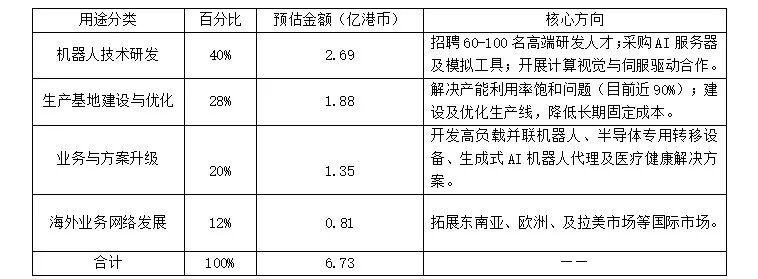
The prospectus shows that Yifei Technology plans to use a part of the financing funds to expand the overseas market, and the other part to conduct R & D cooperation with companies in the field of artificial intelligence to promote the intelligence of robots. Yifei Technology plans to appoint distributors in 9 countries and regions including Italy, France, the United Kingdom, the Czech Republic, Poland, Spain, Hungary, the Benelux Economic Union, and Romania by 2029, and to achieve a 5% market share in the European light industrial robot market by 2030.
*The information and views contained in this article do not constitute any investment advice and are for reference only.
This article is from the WeChat official account "Comprehensive Service Port for Zhejiang Enterprises Going Global". Author: Zhejiang Enterprises Going Global. Republished with permission from Qian Tang.