Cultural Global
From site selection to operation, how to build a secure overseas tax structure? | Overseas Practical Training Camp


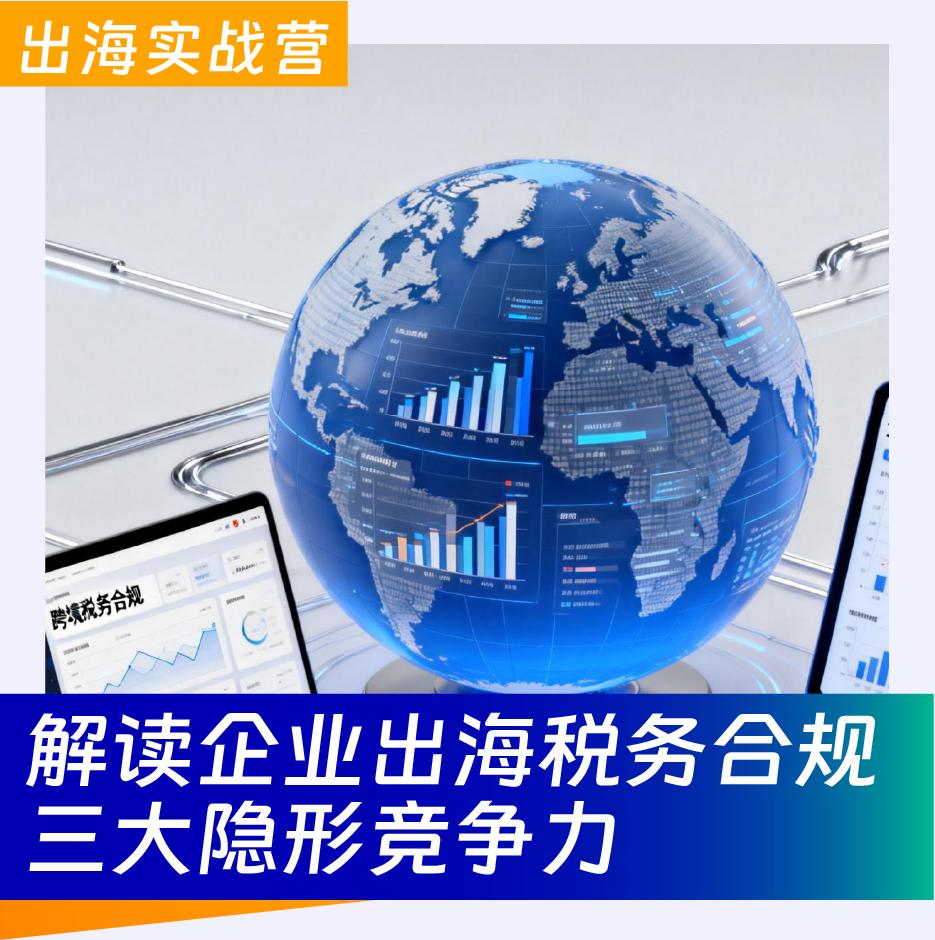
As more and more Chinese enterprises set their sights on overseas markets, the tax risks of overseas investment have become an important challenge for many enterprises. Tax compliance has gone beyond the scope of traditional financial management and become a core issue affecting the safety and efficiency of overseas investment. How to build a scientific and perfect enterprise structure, continuously optimize the tax compliance system in actual operations, and effectively apply the rules of the global compliance system are crucial for enterprises to optimize tax costs and achieve a smooth entry into overseas markets.
01
Scientific Location Selection and Structure Design
Build a Solid Risk Boundary

At the initial stage of overseas investment, the investment location selection and structure design of an enterprise often affect its future risk boundary and development space. Precise investment location selection and scientific holding structure will build a solid "risk firewall" for the enterprise.
Location selection is not just about finding land and labor; it is a strategic layout for long - term tax costs. Enterprises need to go beyond traditional geographical and cost factors and conduct in - depth tax due diligence:
Evaluate regional tax burden differences: Take Brazil as an example. There are significant differences in the Goods and Services Tax (ICMS) among its states, which may lead to a considerable difference in the annual tax burden of enterprises.
Study local preferential policies: Actively negotiate with local governments to争取substantial support such as tax relief.
Analyze the synergistic effect of the supply chain: Comprehensively evaluate the radiation ability of the selected destination to the surrounding markets and the utilization space of relevant agreements.
Secondly, enterprises face the choice between direct investment and indirect investment in overseas investment. Although direct investment seems flat, it has certain limitations in tax optimization and risk isolation. Through an intermediate holding platform, enterprises can not only enjoy the preferential tax treaties with the target investment country but also optimize tax treatment and achieve more possibilities. It should be noted that the choice of the holding platform varies according to the investment destination, target industry, and specific project background.
With the advancement of the BEPS (Base Erosion and Profit Shifting) plan, countries have become more and more strict in their requirements for "economic substance". A company with only a registered address but no actual business is difficult to get tax recognition. Therefore, when enterprises choose a holding platform for tax planning, they must ensure that the platform has real personnel, assets, and business activities to avoid being regarded as a "conduit company" and unable to enjoy tax incentives.
02
Upgrade the Business Model
Control Operational Risks

The business operation model of an enterprise will affect the size and nature of tax risks. Reasonable business arrangements can effectively control risks.
Some enterprises only send sales representatives to the local market to expand business in order to save costs when they first enter the overseas market. This approach seems economical but actually hides risks. In countries such as India and Australia, if the activities of sales representatives reach a certain scale, it may constitute a "permanent establishment" of the parent company in the local area, resulting in part of the profits being taxed locally. For example, the Indian tax authorities once directly entered the photovoltaic exhibition site and seized the equipment of Chinese enterprises on the grounds of a permanent establishment. This case reminds enterprises going global that they must evaluate the dispatch arrangements in advance and, if necessary, actively establish a legal entity in the local area.
For Chinese enterprises that are accelerating their "going - out" pace, the tax optimization of the supply chain is also a key link to enhance their competitiveness. How to identify and control potential trade compliance risks from multiple perspectives such as customs, transfer pricing, and international taxation has become an important issue for enterprises:
Optimize the classification of commodity codes: Reasonably adjust the product form to apply a lower tariff rate.
Plan customs valuation: Use mechanisms such as the "first - sale rule" to reasonably reduce the declared value.
Reshape the origin: Change the origin attribute of products through substantial processing in a third country.
As enterprises expand their overseas business, related - party transactions have become increasingly complex. From the pricing of intangible assets to the determination of technical service fees, they all need to comply with the "arm's - length principle". Therefore, enterprises need to establish a perfect transfer pricing documentation preparation mechanism to avoid the risk of double taxation due to unreasonable pricing.
03
Utilize the Support of the Global Compliance System

To avoid the lack of headquarters control caused by relying on scattered small local intermediaries, which may lead to tax inspections in multiple countries, it is recommended that enterprises going global establish a global tax control system led by the headquarters. Through unified policies, processes, and standards, ensure the consistency of global compliance. The headquarters tax department should have a global perspective, coordinate and manage overseas compliance, and cultivate an in - house professional team. The development of modern digital technology also provides new possibilities for tax management. By building a digital management platform, achieve centralized and visual management of global tax declarations, tax payments, and risk indicators.
International tax rules are in a period of rapid iteration. Enterprises with foresight can turn passive compliance into active planning. First, they need to deeply understand the far - reaching impact of "Pillar Two". Pillar Two is a global tax reform plan proposed by the Organization for Economic Co - operation and Development (OECD) to address the issues of base erosion and profit shifting. At present, China has not introduced special legislation for Pillar Two, but many other countries and regions have completed the relevant legislative implementation, which is closely related to enterprises going global.
The tax rules of Pillar Two require that for enterprises with a global consolidated revenue of more than 750 million euros for two consecutive years, the tax - exempt profits in low - tax regions may need to be supplemented to meet the global minimum standard of 15%. This requires enterprises to re - evaluate the group's global effective tax rate, review the investment structure in low - tax regions, and promote the adaptation of the investment structure to the tax rules of Pillar Two.
In short, enterprises should regard overseas tax risk control as a dynamic and continuous process. Plan the structure in the early stage to lay the foundation, conduct regular compliance monitoring during the operation stage, and regularly review and adjust strategies to build a sustainable risk control system for overseas investment.
* The above content does not constitute any investment advice and is for reference only.
This article is from the WeChat official account "Zhejiang Enterprises Going Global Comprehensive Service Port", author: Zhejiang Enterprises Going Global.