Cultural Global
Unveiling the 2025 Overseas-Expanding Brand Listing Legion: Who's Making Profits? Who's Undergoing Transformation? | Overseas Expansion Insights


Author | Han Xiao
Editor | He Yang
Source | ebrun.com
For many Chinese enterprises, going global has evolved from a strategic option to a collective destiny and a narrative of the era. In the past 2025, this track, despite various setbacks, reached a landmark "harvest period".
On the macro level, according to data released by the General Administration of Customs, despite facing US tariff policies and continuous trade pressure, China's export performance in 2025 remained strong, achieving a record trade surplus of $1.189 trillion for the whole year. On the micro level, the "wave of overseas - going brands going public" formed in the face of turmoil and uncertainty not only demonstrated the vitality of Chinese overseas - going enterprises but also sent a clear signal from the capital market - the industry valuation system is being recalibrated. Only those enterprises with a clear profit path, sustainable brand barriers, and cross - regional operational resilience can become benchmarks in the new era of navigation.
In 2025, we witnessed that from consumer electronics, smart hardware to home furnishings, storage, mother - and - baby products and other industries, a group of overseas - going brands gathered at major exchanges. In June, Insta360 landed on the Science and Technology Innovation Board, becoming the "first stock in the intelligent imaging field". Its founder, Liu Jingkang, also became the first post - 90s chairman on the Science and Technology Innovation Board. In August, the established 3D printing enterprise Creality3D submitted its prospectus to the Hong Kong Stock Exchange and is expected to become the "first stock in the consumer - grade 3D printing field". In November, "the king of African diapers", Le Comfort, was listed on the Hong Kong Stock Exchange. In December, the AI embodied home robot enterprise Woan Robot landed on the Hong Kong Stock Exchange, becoming the "first stock in the AI embodied home robot field"...
Meanwhile, many leading overseas - going enterprises already listed on the A - share market chose to conduct secondary listings in Hong Kong. Enterprises such as Anker Innovations, Roborock, Transsion Holdings, and Ugreen Technology successively submitted their prospectuses to the Hong Kong Stock Exchange. The Hong Kong stock market is becoming an important part of their international narrative. In addition, enterprises such as Amos, Tairly Technology, and Hansang Technology, which originated from large cross - border sellers or foreign trade factories, are also actively entering the capital market while breaking through growth bottlenecks and achieving brand transformation.
Here, this article conducts a review of the overseas - going brands that went public or are in the process of going public in 2025, attempting to explore their current survival status, the problems they face, and the reference significance of their development paths for other overseas - going enterprises.
01
7 Successfully Listed
5 Conducted Secondary Listings in Hong Kong

Slide left and right to view more
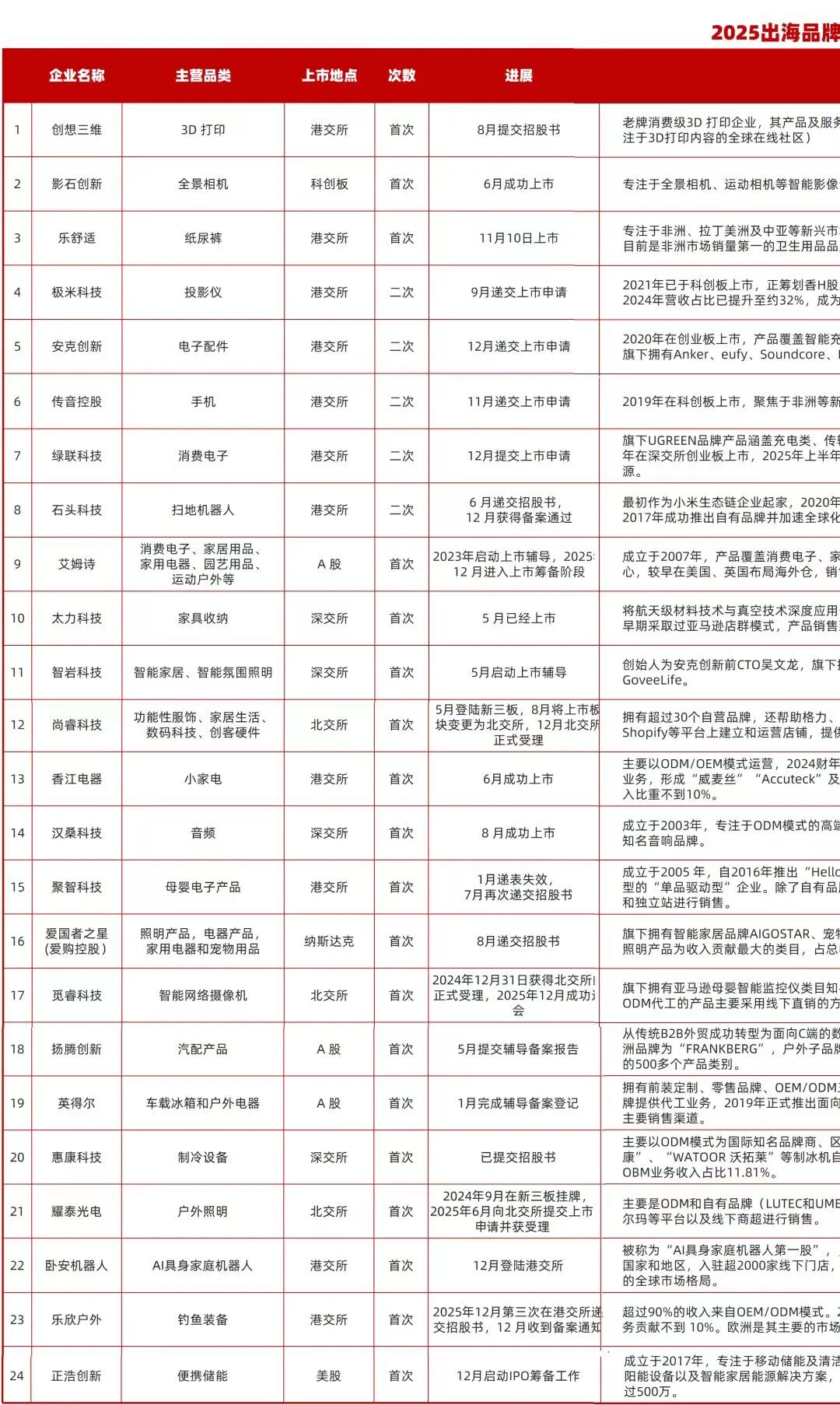
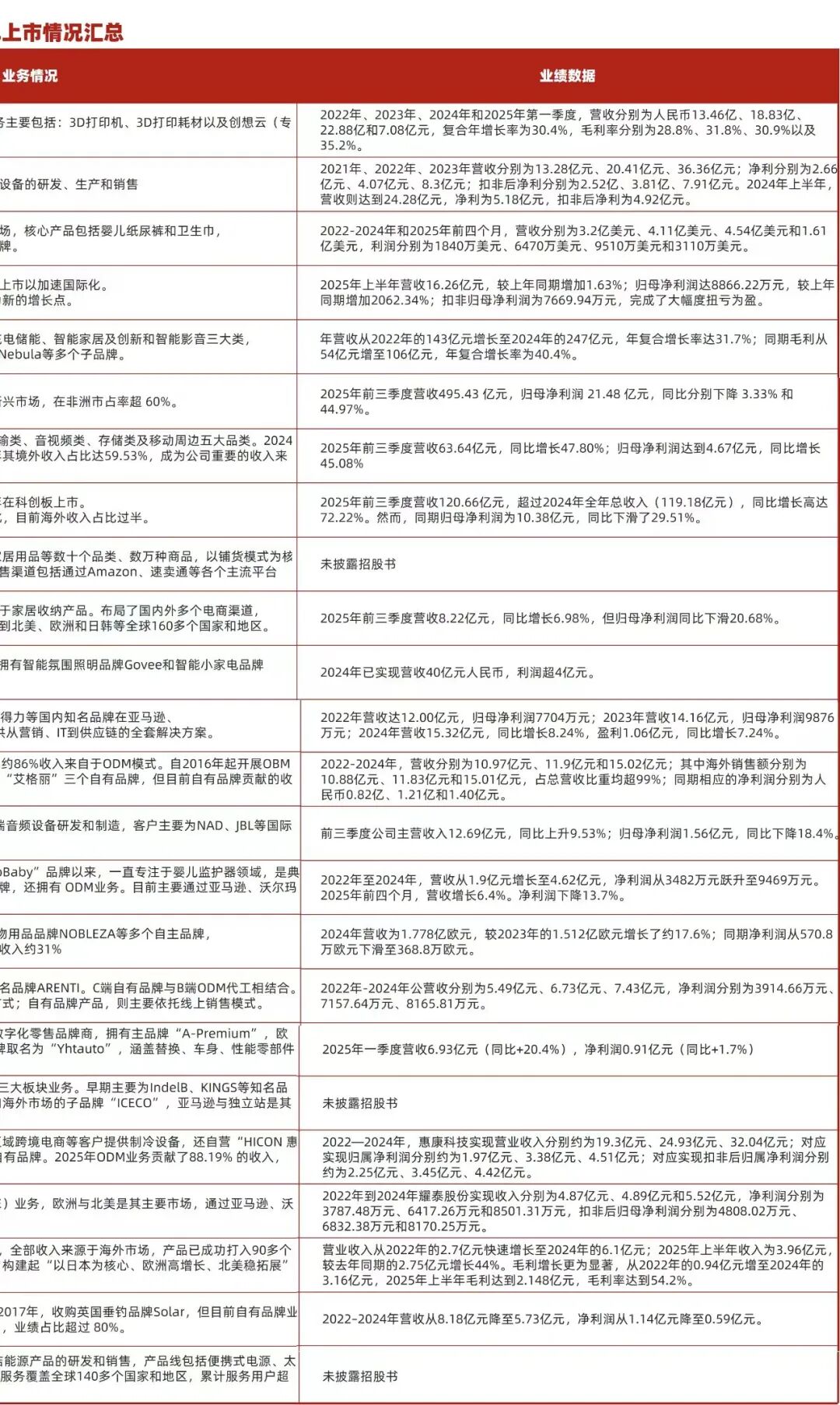
According to incomplete statistics, at least 24 overseas - going brands and foreign trade enterprises went public in 2025 (including those already listed, those that have submitted prospectuses, and those that have started listing guidance). They cover industries such as consumer electronics, smart home appliances, mother - and - baby products, auto parts, and outdoor products. In terms of listing locations, 11 are listed on the A - share market, 11 on the Hong Kong stock market, and 2 on the US stock market.
Among the 11 brands listed on the Hong Kong stock market, 5 conducted secondary listings, promoting the "A + H" strategic layout, including XGIMI Technology, Anker Innovations, Ugreen Technology, Transsion Holdings, and Roborock. For these enterprises that highly rely on overseas markets, listing in Hong Kong not only helps to broaden financing channels through the overseas capital market but also attracts more international investors' attention, which is expected to improve the market valuation level and international image.
Anker Innovations stated that after listing on the Hong Kong stock market, it will increase R & D investment, promote the globalization strategy, optimize business layout, and enhance the international brand image. Transsion Holdings, in order to cope with the fierce competition in emerging markets such as Africa, raised funds for AI technology R & D and the construction of the Internet of Things ecosystem, seeking business transformation.
For XGIMI Technology, although its overseas business accounted for about one - third in 2024, it has become an important growth pole. XGIMI's overseas revenue in 2024 increased by about 513.56% compared with 177 million yuan in 2020, and the gross profit margin of its overseas business has remained above 40% for five consecutive years, significantly higher than that of the domestic market. A secondary listing in Hong Kong can provide special financing for its overseas expansion.
XGIMI Technology officially said, "Planning to list on the Hong Kong stock market is to meet the needs of the company's internationalization strategy and overseas business layout, enhance the company's international brand awareness, and strengthen the company's comprehensive competitiveness." In addition, its production base in Vietnam was put into operation in August 2025, with an annual production capacity of one million units. The funds raised from the listing can also be used to support the capacity building and ramp - up of its Vietnam factory to optimize the global supply chain layout.
In terms of the listing progress, 7 overseas - going brands were successfully listed in 2025, including Insta360, Le Comfort, Tairly Technology, Shangrui Technology, Hansang Technology, Xiangjiang Electric Appliance, and Woan Robot.
Shangrui Technology was listed on the New Third Board in May 2025. It started as a large cross - border seller. The Amazon platform contributed about 70% of its operating income. It owns 30 brands and mainly operates in four categories: functional clothing, home life, digital technology, and maker hardware.
Tairly Technology was listed on the Shenzhen Stock Exchange in May 2025, becoming the "first stock in the cross - border home storage field". In 2024, its overseas business accounted for 32.36%. In the early days, it adopted the Amazon store group model and sold products to more than 160 countries and regions around the world, including North America, Europe, Japan, and South Korea.
Insta360 was listed on the Science and Technology Innovation Board in June 2025. Currently, the company's main product types include consumer - grade intelligent imaging devices, professional - grade intelligent imaging devices, accessories, and other products. Among them, the revenue from consumer - grade imaging devices accounts for more than 80%.
Xiangjiang Electric Appliance was listed on the Hong Kong Stock Exchange in June 2025. It mainly engages in small household appliances and operates mainly in the ODM/OEM mode. In 2024, about 86% of its revenue came from the ODM mode. The company started its OBM business in 2016 and formed three self - owned brands, "WIMAX", "Accuteck", and "AIGLE". However, the revenue contributed by self - owned brands currently accounts for less than 10%.
Hansang Technology was listed on the Shenzhen Stock Exchange in August 2025. The company was established in 2003 and is a manufacturer of audio equipment. Its customers are mainly international well - known audio brands such as NAD and JBL.
Le Comfort was listed on the Hong Kong Stock Exchange in November 2025. Its core products include baby diapers and sanitary napkins. It focuses on emerging markets such as Africa, Latin America, and Central Asia and is currently the best - selling brand of baby diapers and sanitary products in the African market. As of April 2025, the company has successively set up production factories in 8 African countries, including Ghana and Kenya, covering 51 production lines.
Woan Robot was listed on the Hong Kong Stock Exchange in December 2025. It is a provider of AI embodied home robot systems. All of its revenue comes from overseas markets. Its products have successfully entered more than 90 countries and regions and over 2000 offline stores, establishing a global market pattern of "centered on Japan, with high growth in Europe and stable expansion in North America".
In addition, about 17 overseas - going brands that submitted prospectuses or started listing guidance in 2025 include Creality3D, XGIMI Technology, Anker Innovations, Transsion Holdings, Ugreen Technology, Roborock, Bluetti, Amos, Zhiyan Technology, Juzhi Technology, Patriot Star (Aigou Holdings), Mirui Technology, Yangteng Innovation, Indel, Huikang Technology, Yaotai Optoelectronics, Woan Robot, and Lexin Outdoor.
02
Brands, Factories, and Big Sellers
"Three Kingdoms"

Wei Zhe, the founder and chairman of Joy Capital, predicted a few years ago that "China's capital market will soon see a sector of cross - border e - commerce overseas - going brands." This was further verified in 2025. In terms of enterprise types, these 24 enterprises can be roughly divided into three categories: global brands, large sellers with a wide product range, and enterprises integrating industry and trade. If a few years ago, large sellers with a wide product range were the main force in the IPO army of the cross - border track, now, brand - type enterprises have occupied half of the market, and enterprises integrating industry and trade account for up to one - third.
1. Brand Players: Leading in Consumer Hardware
Among the 24 enterprises that went public in 2025, brand - type enterprises are the most common, including Creality3D, Insta360, Le Comfort, XGIMI Technology, Transsion Holdings, Ugreen Technology, Roborock, Bluetti, and Woan Robot.
The common features of these enterprises are global product positioning and technology - driven development. The core lies in the fact that their products have technological barriers or strong brand attributes. For example, Insta360 entered the global market with panoramic cameras and has surpassed GoPro to become the world's number one in the action camera field. Transsion Holdings, with mobile phones and ecological devices customized for African users, has long maintained a leading position in the African smartphone market. Its multi - brand matrix includes TECNO, itel, Infinix, etc., and forms a closed - loop ecosystem from devices to services.
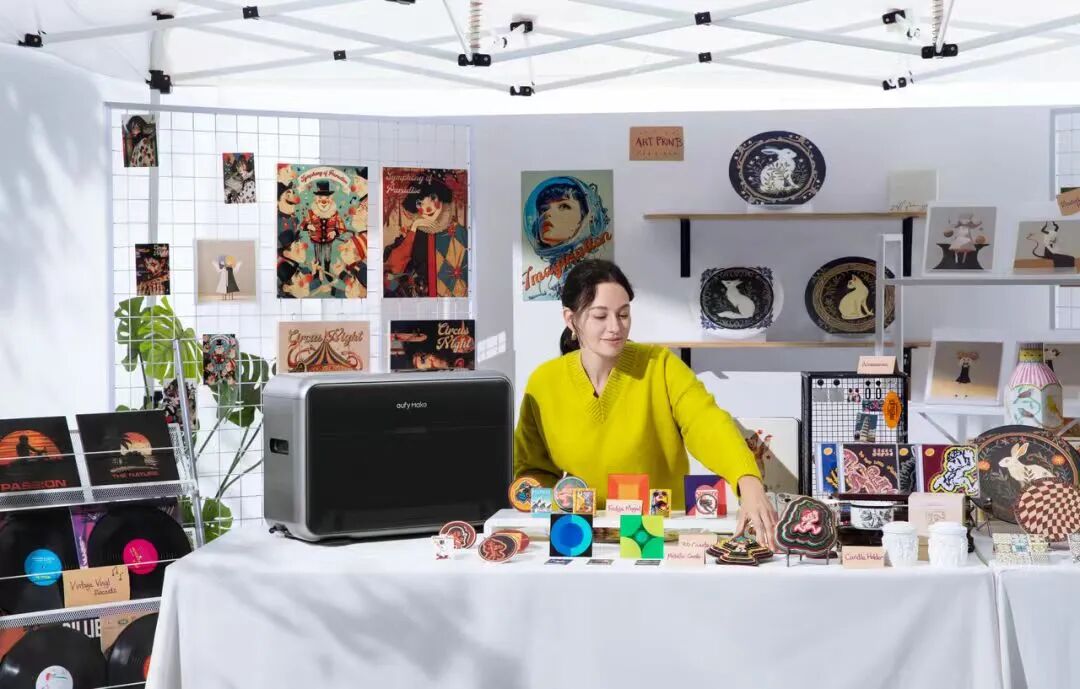
As the "first stock in cross - border e - commerce", Anker Innovations has long adhered to the "shallow - sea strategy", focusing on niche categories with a market size of less than $80 billion. Its products cover three major categories: intelligent charging and energy storage, smart home appliances and innovation, and intelligent audio - visual products. It owns several sub - brands such as Anker, eufy, Soundcore, and Nebula. In recent years, both its revenue scale and profitability have been growing simultaneously. Its annual revenue increased from 14.3 billion yuan in 2022 to 24.7 billion yuan in 2024, with a compound annual growth rate of 31.7%. During the same period, its gross profit increased from 5.4 billion yuan to 10.6 billion yuan, with a compound annual growth rate of 40.4%.
The 3D printing field that Creality3D focuses on is a characteristic category for going global. In addition to 3D printers, the company's products also include 3D printing consumables and the 3D printing community "Creality Cloud". Last year, it also launched the overseas e - commerce platform Nexbie for 3D creative finished products, aiming to build a closed - loop 3D creative ecosystem of "creative generation → printing/carving → finished product circulation". In recent years, its performance contribution from North America and Europe has been continuously increasing. From 2022 to the first quarter of 2025, the proportion of North American revenue increased from 16.6% to 33.3%, and the proportion of European revenue increased from 17.7% to 25.8%, both exceeding the sales revenue in China.
2. Foreign Trade Factories: The Road from OEM to Self - owned Brands
In addition to brand - type enterprises, enterprises integrating industry and trade also account for a significant proportion in the cross - border e - commerce IPO army, mainly including Xiangjiang Electric Appliance, Hansang Technology, Juzhi Technology, Mirui Technology, Yangteng Innovation, Indel, Yaotai Optoelectronics, and Lexin Outdoor.
These enterprises are usually based in manufacturing clusters such as the Yangtze River Delta and the Pearl River Delta, with a solid factory background and supply chain management experience. They generally start from the OEM and ODM models and have long been subcontractors for international and domestic big brands. However, with the development of cross - border e - commerce and the decrease in the profit margin of subcontracting business, such foreign trade factories are gradually cultivating and operating self - owned brands to increase profit margins and gain the initiative in market competition.
A typical enterprise that transformed from subcontracting to an independent brand is Roborock. It was initially a company in the Xiaomi ecosystem. In 2017, it successfully launched its self - owned brand and accelerated globalization. The proportion of self - owned brand sales increased rapidly from nearly 10% in 2017 to 98.23% in 2021, basically completing the transformation. It successfully landed on the Science and Technology Innovation Board in 2020. In 2024, its overseas revenue exceeded domestic revenue for the first time, accounting for 53.5%. In 2025, it topped the global market with a 20.7% market share.

In contrast, the enterprises on the 2025 listing list are still in the process of transformation. For example, Huikang Technology, a manufacturer of ice - making equipment, although it owns ice - maker brands such as "HICON Huikang" and "WATOOR Wotuolai", its ODM business contributed 88.19% of its revenue in 2025, and the revenue from the OBM business accounted for only 11.81%. Lexin Outdoor, a manufacturer of fishing equipment, also has more than 90% of its revenue from the OEM/ODM model. It acquired the British fishing brand Solar in 2017, but currently, the self - owned brand business contributes less than 10%.
3. Cross - border Big Sellers: Mass - selling is Unsustainable, Beware of "Increasing Revenue but Not Profit"
In the cross - border e - commerce IPO team, large sellers with a wide product range were the main force in the early days. Enterprises such as LightInTheBox, Starway, Huading Co., Ltd., Huakai Yibai, Youkeshu, and CBIT Co., Ltd. went public successively between 2010 and 2022. However, in the recent wave of listings, brand - type enterprises are becoming more and more prominent, while large sellers with a wide product range seem to be losing their luster. The cross - border big sellers that started the listing process or were successfully listed in 2025 include Amos, Tairly Technology, Shangrui Technology, and Patriot Star.
Amos is a typical large seller with a wide product range. Its products cover dozens of categories and tens of thousands of commodities, including consumer electronics, computer office supplies, household items, household appliances, gardening supplies, sports and outdoor products, etc. In 2011, it established an 800 - square - meter overseas warehouse in the United States, and in the following year, it set up a 1200 - square - meter overseas warehouse in London, UK. Its sales channels include various mainstream e - commerce platforms such as Amazon, AliExpress, Lazada, Shopee, and eBay.
Patriot Star mainly deals in lighting products, electrical products, household appliances, and pet supplies. It owns several self - owned brands such as the smart home brand AIGOSTAR and the pet supplies brand NOBLEZA. It launches more than 3000 new products every year, and its products are mainly sold to the European and American markets. It has also opened more than 20,000 offline stores in Europe. Although the company has achieved a turnover growth of more than 25% for nine consecutive years, in recent years, it has faced the problem of weak profit growth. In 2024, its net profit was 3.688 million euros, a year - on - year decline of 35.39%.

With the increasing instability of the global trade environment, changes in platform policies, rising logistics costs, and soaring customer acquisition costs, the growth dividends of large sellers with a wide product range are gradually fading. Many established large sellers with a wide product range, after experiencing the capital boom, are facing the dilemmas of "increasing revenue but not profit", "declining profit margins", and "shrinking revenue". The consensus in the industry is that "big sellers are on the decline, while brands are on the rise". For large sellers with a wide product range, how to transform and find new growth points has become an urgent issue.
03
Three Key Strategies for Growth:
Markets, Channels, and Product Categories

Different types of enterprises face significantly different market situations and operational pressures during the process of going global. Whether they are brand - type enterprises, enterprises integrating industry and trade, or once - popular large sellers with a wide product range, after experiencing rapid growth, they will, to varying degrees, hit the growth ceiling and face challenges such as declining profit margins or intense competition.
For example, Juzhi Technology, with baby monitors as its core product, experienced the phenomenon of "increasing revenue but not profit" in the first four months of 2025. Its revenue increased by 6.4%, while its net profit decreased by 13.7%. Transsion Holdings saw a decline in both revenue and profit. In the first three quarters of 2025, its operating revenue was 49.543 billion yuan, a year - on - year decrease of 3.33%, and its attributable net profit was 2.148 billion yuan, a sharp decline of 44.97%, almost halved. Lexin Outdoor, a manufacturer of fishing equipment, showed a downward trend in revenue and profit from 2022 to 2024. Its revenue decreased from 818 million yuan to 573 million yuan, and its net profit decreased from 114 million yuan to 59 million yuan, nearly halved.
Looking at these more than 20 overseas - going enterprises, they are all looking for incremental space by expanding new markets, new channels, and new business lines.
Affected by the fluctuations in US tariffs, diversifying market layouts has become a common choice for overseas - going enterprises - the consensus is that "globalization is not Americanization". The change in market focus is clearly reflected in the performance data. Among them, the European market has become the second - largest market after the US market.
For example, the performance contribution of Anker Innovations from the North American region decreased from 50.9% in 2022 to 45.2% in the first three quarters of 2025, while the performance contribution from the European region increased from less than 20% in 2022 to 26.9% in the first three quarters of 2025. The proportion of Lexin Outdoor's revenue from the North American market has dropped significantly from 18.8% in 2022 to 3.4% in 2024, while the proportion of European revenue increased from 65.7% to 84.6%.
However, the change in Juzhi Technology's market focus is the opposite. From 2022 to the first four months of 2025, the proportion of its revenue from the US market increased significantly from 56.8% to 77.6%, increasing its dependence on the US market. In contrast, the contribution of the European market shrank, dropping from 30.7% to 14.8%.

Its prospectus revealed that changes in US trade policies have had a significant adverse impact on the company's gross profit margin and operating performance. To cope with tariffs, the company was forced to raise product prices, which directly led to a decline in product sales. In addition, fluctuations in the birth rate in the US and intensified market competition are also potential risk factors.
In response to these risks, Juzhi Technology said that it will further strengthen the sales of infant electronic devices in Europe and Canada to gradually reduce its dependence on the US market and mitigate the impact of US tariffs on future business. The company plans to expand its sales channels on the Amazon global platform in Canada, the UK, Germany, and France, especially to increase its market share in the European market.
Channel expansion is another key measure. More and more overseas - going enterprises are committed to building a diversified channel system. By developing independent brand websites and expanding offline retail networks, they aim to reduce excessive dependence on a single platform such as Amazon, thereby enhancing market autonomy and risk - resistance ability. In this trend, brand - type enterprises are particularly prominent, regarding offline channel construction as an important strategy to enhance brand image, directly reach consumers, and achieve sustainable growth.
For example, Anker Innovations' revenue from its independent website increased from 700 million yuan in 2022 to 2.5 billion yuan in 2024, an increase of more than three times, and reached 2.1 billion yuan in the first three quarters of 2025. In 2024, its offline revenue increased by 36.7% year - on - year, and it also cooperated with global retail giants to expand its self - operated offline retail stores. In September 2025, Anker Innovations joined hands with the immersive experience platform Smartechwrld to open its first offline store in North America in New York's Times Square.
Creality3D has also laid out offline channels such as supermarkets, 3D printing stores, and non - 3D printing stores. Currently, it has more than 2000 distributors globally. In December 2025, it opened a global flagship store of over 600 square meters in Shenzhen, which centrally displays the full range of Creality3D products. The store also has a dedicated area for customizing 3D - printed shoes, a maker workshop, and an education course area, encouraging users to participate in creation hands - on and visualizing the brand image.
About half of Insta360's revenue comes from offline channels. The channels it has entered include Apple Store retail stores, Canon Gold Stores, Best Buy, B&H, Sunning Digital, JB Hi - Fi, Media Markt, Sam's Club, Costco, Argos, etc.
Representative enterprises that achieved growth breakthroughs by expanding new product categories and business lines are Insta360 and Transsion Holdings.
In 2025, Insta360 announced for the first time that it would enter the drone industry and planned to launch two drone brands, including its self - owned brand and the panoramic drone brand "Antigravity" jointly incubated with a third party.
Behind this is the limited growth in the camera market and the urgent need to find a second growth curve. Its prospectus shows that the global panoramic camera market size in 2023 was only 5.03 billion yuan, and even the entire handheld intelligent imaging device market was only 36.47 billion yuan. Insta360 said that if the industry market capacity growth is limited in the future and the company fails to expand its product line and application scenarios, its business growth will be restricted.
Liu Jingkang, the founder of Insta360, said that the drone category has a "higher - ceiling market size", and many existing demands are still unmet, with sufficient market and business growth space. Expanding into the drone category to find new growth is a logical choice.
Transsion Holdings has faced fierce competition from brands such as Xiaomi, Honor, and OPPO in its home market of Africa in recent years, with its revenue, profit, and profit margin all declining to varying degrees.
According to its prospectus, the company has entered the energy storage, electric vehicle, and kitchen appliance sectors to reverse the downward trend in performance. In the energy storage sector, it created a dual - brand matrix of itel Energy for the mass market and DYQUE Energy for the high - end market. In the electric vehicle field, it launched the Revoo brand for individual users and the Tank and Volt brands for commercial operation. In the kitchen appliance field, it created the Syinix brand.
It can be said that the listing map of overseas - going enterprises in 2025 not only records the glorious moments of a group of leading enterprises successfully entering the capital market but also shows the diverse paths they explored to cope with new challenges. In addition, they further verified a major trend: Industry competition is shifting from large - scale growth of "product going global" to in - depth competition of "brand going global" and "ecosystem going global".
*The views in this article are all reprinted from the original source and are for reference only.
This article is from the WeChat official account "Comprehensive Service Port for Zhejiang Enterprises Going Global", Author: Han Xiao.