Cultural Global
From deserts to extremely cold regions, this 25-square-meter mobile farm aims to transform foreign dining tables | Pioneers venturing overseas


Introduction:
Going global is no longer an option for enterprises, but there are still many choices in the way of going global. Brand going global, supply chain going global, cross - border e - commerce... Behind each model, there are countless stories of Chinese companies' arduous exploration; In North America, Southeast Asia, the Middle East, Latin America... On every distant continent, there are more and more international figures of Chinese brands.
From attracting foreign investment forty years ago to "going global in groups" today, Qiantang, as the main front of Hangzhou's export - oriented economy, has always been the bridgehead for enterprises' self - transformation and innovation. The China Enterprises International Service Center has long been concerned about overseas markets and enterprises going global. Based on this, in 2025, we launched a new column "Wave Riders in Going Global" to find out the benchmarks in various fields going global. We will analyze practical cases from a professional perspective, precipitate methodologies in the process of seeking common ground, and explore differentiated development paths in non - consensus.
The following is the 18th article of this column.
The traditional farming picture of "sowing a grain in spring and reaping ten thousand grains in autumn" is being rewritten by modern technology.
In the past, traditional agricultural production could not get rid of the shackles of "depending on the weather for food". Extreme climate could easily destroy the harvest of a season, and barren land could hardly nurture crops. On the Southeast Asian islands, the only vegetable on the dinner table is often water spinach; In the Middle Eastern deserts, fresh lettuce needs to be imported, and it sells for more than ten or twenty yuan per kilogram; In the extremely cold areas within the Arctic Circle, the environment of minus 40°C makes open - air planting a luxury. An agricultural production method that can break through the restrictions of region, climate and soil has become the key to break the deadlock in the industry.
In June 2025, Qiantang Ark (Hangzhou) Intelligent Technology Co., Ltd. settled in Qiantang District, Hangzhou. The enterprise fully leverages the platform resources of the China Cooperation Center of the BRICS Special Economic Zones (hereinafter referred to as the "BRICS Center") and the advantages of the going - global service ecosystem of the Zhejiang Enterprises Going Global Comprehensive Service Port, targets the overseas market, and starts a steady and long - term international journey. This enterprise focuses on providing one - stop AI intelligent agricultural services. Its independently developed aeroponic technology, AI control system and low - carbon energy supply system attempt to achieve stable crop cultivation in extreme environments.
According to Tang Chengxi, the deputy general manager of Qiantang Ark, at present, the company's core energy is concentrated on technology iteration. It is promoting the update and optimization of two technologies: one is to increase the number of plants planted in the cabin; the other is to refine the plant growth model and the spraying system so that different crops can find a suitable growth state in the cabin. While refining the technology, Qiantang Ark is also simultaneously carrying out overseas market pilot projects to prepare for subsequent large - scale implementation.
01 A 25 - square - meter mobile farm: A planting solution in a container
Agriculture is the foundation of the national economy, but many pain points in traditional agriculture and conventional facility agriculture are restricting the sustainable development of the industry. From a regional perspective, large - scale cultivation cannot be carried out in non - traditional cultivated lands such as deserts, plateaus, extremely cold areas and islands, directly leading to a shortage of agricultural product supply in some areas.
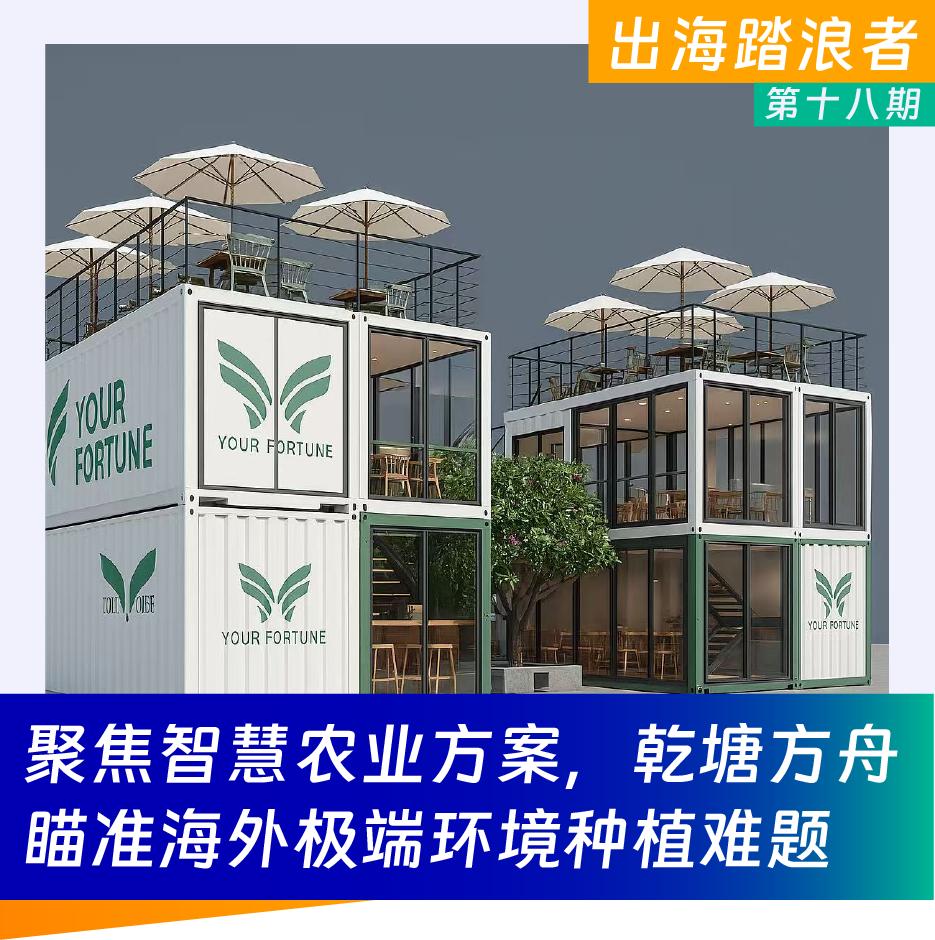
Qiantang Ark's solution is a smart planting cabin, about 25 square meters, transformed from a 40 - foot standard shipping container. "The unit - area cost of each cabin is expected to be in the range of 8,000 to 12,000 yuan. The modular design facilitates transportation and can meet the implementation needs of different places," Tang Chengxi introduced.
The types of crops to be planted in the cabin can be selected according to requirements. High - value - added Chinese herbal medicines can be planted in the Yangtze River Delta, scarce green leafy vegetables can be planted in the Middle East, and pasture can be planted in pastoral areas. Currently, the cultivable varieties cover a variety of Chinese herbal medicines, green leafy vegetables, various mushrooms and special pasture for animal husbandry, and the company is also tackling the cultivation technology of high - difficulty mushrooms and green vegetables.
According to Tang Chengxi, the planting cabin is based on a triple energy supply system of 'photovoltaic + energy storage + civil interface', and its energy consumption is much lower than that of similar products. Specifically, in areas with sufficient sunlight such as deserts and extremely cold areas, the planting cabin can operate by relying on photovoltaic power generation. The electricity for the lights, temperature control system, spraying equipment and control system in the cabin can all be provided by photovoltaics. To cope with rainy days, the cabin can also be equipped with energy - storage batteries, and a civil electricity interface is reserved as a backup, which not only achieves low - carbon emissions but also ensures the stability of operation.
Zero - carbon attribute is another major highlight. Tang Chengxi explained: "We use photovoltaic power generation to replace diesel power generation, reducing carbon emissions at the source. On the other hand, there are plants in the cabin, which can absorb carbon dioxide and release oxygen. There is also a carbon dioxide pump in the cabin to supplement gas directionally to promote photosynthesis, forming a cycle of 'carbon input - plant carbon sequestration - oxygen release', truly achieving low - emission in the planting process."
In terms of planting technology, Qiantang Ark did not adopt the traditional hydroponic model, but chose aeroponic technology. In the breeding stage, the team will place the seeds in special sponges for cultivation, and then transplant them into the cabin after the seedling - raising period. They can also be directly bred and grown in the cabin. In the growth stage, water and nutrient solution are converted into water mist through customized nozzles and evenly sprayed on the roots and leaves of plants, thus solving the problem of uneven nutrient absorption in other cultivation methods.
In terms of nutrient supply, Qiantang Ark uses food - grade nutrient solution, which combines humic acid and a variety of natural trace elements, and meets the safety standards for human consumption to ensure the balanced nutrition of crops. The whole system relies on AI intelligent control. Through sensor networks and algorithms, key parameters such as light, humidity, water quality and nutrition are monitored in real - time and dynamically adjusted. Users can remotely monitor and manage the growth of crops through the mobile phone.
02 From the Southeast Asian islands to the Middle Eastern deserts: Targeting the 'difficulty in getting vegetables' overseas
Globally, the shortage of vegetable supply in Southeast Asia and the Middle East is prominent, so these regions have become the first areas for Qiantang Ark's overseas business to be implemented. In addition, Qiantang Ark also sets its sights on more extreme - environment markets, including the extremely cold areas within the Arctic Circle in Russia, the arid areas in Africa, the plateau areas in Central Asia and the remote areas in Australia. The common feature of these regions is that traditional agriculture is difficult to implement, while the smart planting cabin can operate in an environment of - 50°C to 50°C, which is expected to fill the gap in the local agricultural product supply.
Before the company was established, the core team of Qiantang Ark had made a lot of preparations for entering the overseas market. Its partners have overseas business backgrounds and have set up branch offices in Southeast Asia, the Middle East and other regions, laying the foundation for the implementation of pilot projects. After the company was established in June 2025, Qiantang Ark put 1 - 2 smart planting cabins respectively in island areas such as Thailand and Malaysia, mainly planting kale, which is in short supply locally. Next, the pilot project will be promoted to the United Arab Emirates in the Middle East, mainly to solve the problem of local green leafy vegetable supply.
To adapt to the overseas market, Qiantang Ark is also promoting the local deployment of the supply chain. Since some domestic equipment is affected by overseas technical standards and relevant restrictions, the team will reserve interfaces for monitoring, communication and other equipment, and local purchasers will match the hardware that meets the standards. The core equipment of the planting cabin, such as the outdoor unit of the air - conditioner, water tank and water pipe, are all assembled in China and then transported by sea. Only the easily - worn lighting equipment is left to be installed on - site, which not only ensures the stability of the equipment but also reduces the loss during transportation.
At present, in terms of reaching overseas customers, Qiantang Ark relies on various channels: one is to take advantage of the platform of the BRICS Center to connect with the planting needs of BRICS countries; the other is to link up with overseas government agencies and agricultural business entities through official and non - official organizations such as the Zhejiang Enterprises Going Global Comprehensive Service Port and business associations.
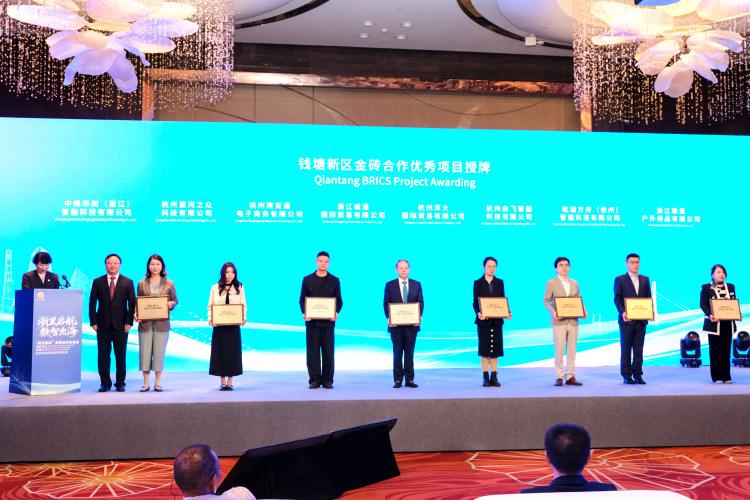
In June 2025, Qiantang Ark carried out one - on - one roadshows at the China - North Africa (Egypt) Two - way Investment Thematic Event; in November, through the connection of the Zhejiang Enterprises Going Global Comprehensive Service Port, it had one - on - one roadshow communications with relevant delegations from Uzbekistan. Based on its outstanding performance in BRICS cooperation, Qiantang Ark was awarded the "Excellent Project of BRICS Cooperation in Qiantang (New) District".
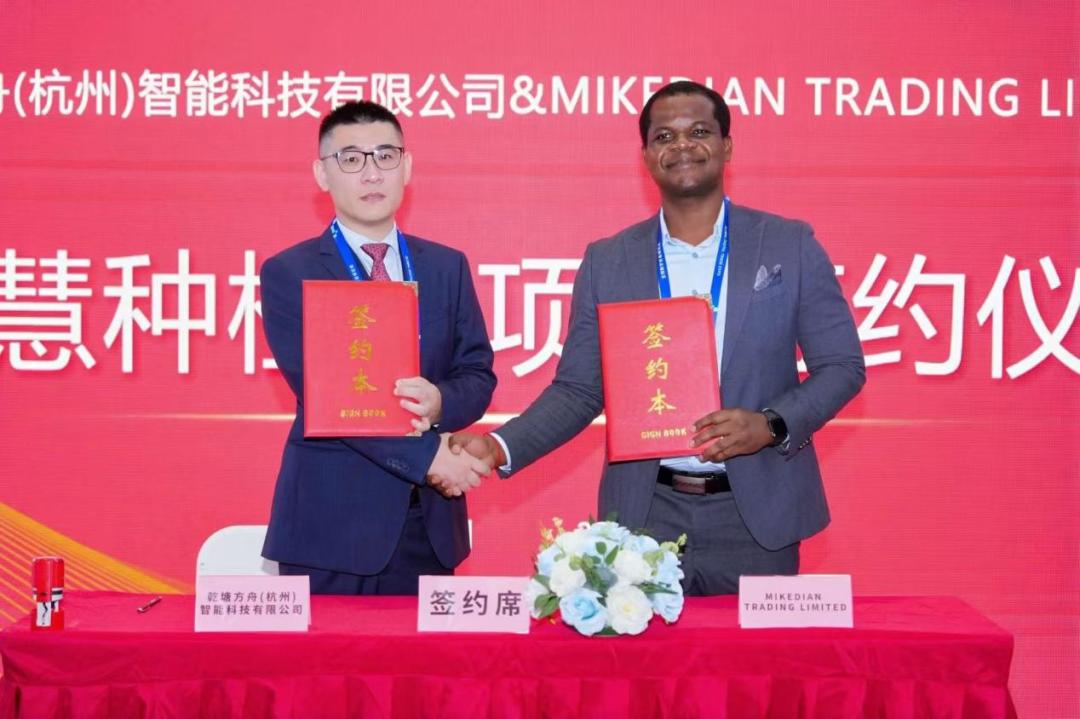
At the 4th Global Digital Trade Expo held in the same year, Qiantang Ark signed an intention order worth 3 million US dollars with Senegal. According to the agreement, Qiantang Ark will focus on the output of digital agricultural technology, provide intelligent planting equipment and technical training for Senegal to help it improve its food self - sufficiency ability; at the same time, explore cross - border e - commerce cooperation in agricultural products to promote high - quality agricultural products from Senegal to enter the Chinese market.
Tang Chengxi introduced that it can cooperate with the government to carry out people's livelihood supply - guarantee projects, providing a stable source of vegetables for cities through the planting cabins, and can also participate in international aid projects to help alleviate the food supply problem in underdeveloped areas; it can provide integrated services of 'planting cabin + nutrient solution + planting scheme' for farmers and vegetable suppliers, and planting some high - value - added crops can quickly recover the cost.
At the same time, Qiantang Ark is also exploring the possibility in the ToC direction. The team is piloting an experience model of "planting cabin + coffee shop" for ordinary consumers. "Our ToC idea is to turn the planting cabin into a small - scale plant factory and a popular check - in point. Combined with the consumption scenario of the coffee shop, consumers can pick fresh vegetables without pesticides and washing on - site to make salads or freshly squeezed drinks, creating an immersive experience scenario related to agriculture," Tang Chengxi said.
This article is from the WeChat official account "Zhejiang Enterprises Going Global Comprehensive Service Port", author: Zhejiang Enterprises Going Global.