Cultural Global
The Undervalued Overseas Market: Real Opportunities I've Witnessed in Latin America | Navigators in the Global Market


Introduction:
Looking globally to explore the second growth curve has become a definite direction. However, how to go global still tests the wisdom and courage of every Chinese enterprise. There are various paths for going global, such as brand expansion overseas, supply chain globalization, and cross - border e - commerce, but there is never a one - size - fits - all answer. The markets in North America, Southeast Asia, the Middle East, and Latin America are vast, yet each has its own challenges and risks. Behind every overseas expedition lies the exploration of Chinese enterprises, and more Chinese figures are emerging on distant coastlines.
The "Global Pioneers" column aims to seek out global benchmarks in different fields, analyze practical cases from a professional perspective, precipitate methodologies through consensus, and discover new possibilities in differences.
At four o'clock in the morning, when Shenzhen was still immersed in the night, Sun Xinyue habitually picked up her phone to reply to messages from her Latin American partners. In the past few years, communicating across a time difference of more than ten hours has become the norm in her work of consulting and researching on Latin American market expansion.
Over the past decade, Sun Xinyue has been engaged in work related to overseas markets. Before founding Jingwei Consulting, which focuses on the Latin American market, she was long - term responsible for overseas investment and global expansion business of large institutions, dealing with clients from regions such as the Middle East, Europe, and Latin America.
Why focus on Latin America for a long time? This is a question many people have asked Sun Xinyue. Judging from the data on paper, Latin America is not a market with "high efficiency" and "strong certainty". However, years of front - line work have made her gradually realize that there are indeed opportunities in the Latin American market. The problem is that people's understanding of this region often stays on the surface.
At a time when global expansion has entered a deep - water zone, the cognitive gap is the real dividend for Chinese enterprises going global. Based on this, Sun Xinyue shared her experiences and insights from her in - depth visits to ten Latin American countries and summarized three principles that enterprises must follow when expanding into Latin America. The following is Sun Xinyue's self - narration.
01
The Undervalued Latin America
Not a "Strange Market"

Domestic discussions about Latin America have long been polarized. One extreme view is that "the risks are too high, it is unstable and uncontrollable", while the other is that "it is rich in resources and full of opportunities". In essence, both judgments are too conceptual.
If you look at it over a long - term perspective, you will find that Latin America is not a market that "changes suddenly". Instead, it is a region that has been undervalued for a long time with slow information updates.
Take Colombia as an example. Cities like Medellín completed the transformation of social governance and industrial structure more than twenty years ago. Today, Medellín is a well - known digital nomad city in Latin America, attracting a large number of young people from the United States and Europe. The technology startup, real estate, and cultural industries are all very active here.
During a chat with a local scholar who has long studied Chinese issues in Medellín this year, I was deeply impressed by what he said to me: "The Colombia you are familiar with is actually our history, not the present."
This cognitive time lag exists not only in Colombia but also in many other countries such as Mexico, Ecuador, and Brazil. The lag in cognitive updates often means overlooked market opportunities.
Many Chinese enterprises going global actually have no short - comings in professional capabilities, technological reserves, and project experience. What they really need to improve is often not their capabilities but their understanding of the local operating methods. At the practical business level, the cognitive time lag will lead to the problem of'scenario differences'.

Sun Xinyue was invited to give a lecture at the Pontifical Catholic University of Chile.
For example, not long ago, I accompanied a design institute client to discuss its infrastructure project plan in Brazil. According to the domestic work habit, they prepared a very detailed list of technical questions in advance, covering multiple details such as electricity and water conservancy, hoping to confirm them item by item during the communication with the local industrial park manager. This approach is very professional and understandable.
However, in the local actual operation, many technical issues are not concentrated in the hands of one person but are scattered among different institutions and departments. The core role of the industrial park manager is more about coordinating resources and promoting processes, rather than answering all technical parameters one by one.
Once this division - of - labor difference is realized, the communication method needs to be adjusted. It is not that the preparation is insufficient, but that in different institutional and organizational structures, a more appropriate docking path needs to be found.
If these differences are only analyzed at the level of reports and data, they are difficult to be truly recognized. But once entering the specific scenario, you will find that many "stuck" points are not due to a lack of ability but because the work logic has not been translated.
Another typical difference that Chinese enterprises will encounter is the discomfort with the "slow pace" in Latin America. During my stay in Latin America this year, I waited for my luggage at the airport for more than six hours twice, from late at night until dawn. Later, I found that the local luggage inquiry does not rely on system tracking but on ground - crew members confirming one by one through WhatsApp. This method is not efficient, but it truly reflects that many local systems still revolve around "people" rather than "processes".
After understanding this, many seemingly incomprehensible problems actually have answers. True localization is not simply hiring local employees but understanding the social and institutional logic behind these differences and adjusting decision - making methods accordingly.
02
Build Long - term Trust with Content

In my previous work experience, the region I contacted most was not Latin America but the Middle East. Precisely because I understand the Middle East, I am clearer about what it means to most Chinese enterprises.
There are opportunities in the Middle East, but they are highly concentrated, and the thresholds are very clear. A large amount of resources are in the hands of a few families and institutions, and the capital allocation logic has long been deeply bound to the European and American markets.
In contrast, the Latin American market has a more diverse structure and a richer industrial hierarchy. There are not only resource - based opportunities but also various possibilities in manufacturing, consumption, and fintech. It is not "fast", but the space is large enough; it is not "hot", but the window period is long enough.
Many people think that consulting for going global must rely on frequent conferences and networking. However, in practice, I have found that truly effective connections often come from long - term and systematic content output.
I usually keep writing analysis articles about the industrial structure, regulatory trends, and family capital ecosystem in Latin America. This kind of content does not pursue popularity, but it often attracts the top - level executives of enterprises, regional managers, and policy researchers. Most of these exchanges will naturally turn into cooperation rather than one - time transactions. This way of building an IP makes me believe that trust is often not built in the most bustling occasions but is naturally formed through long - term professional output.
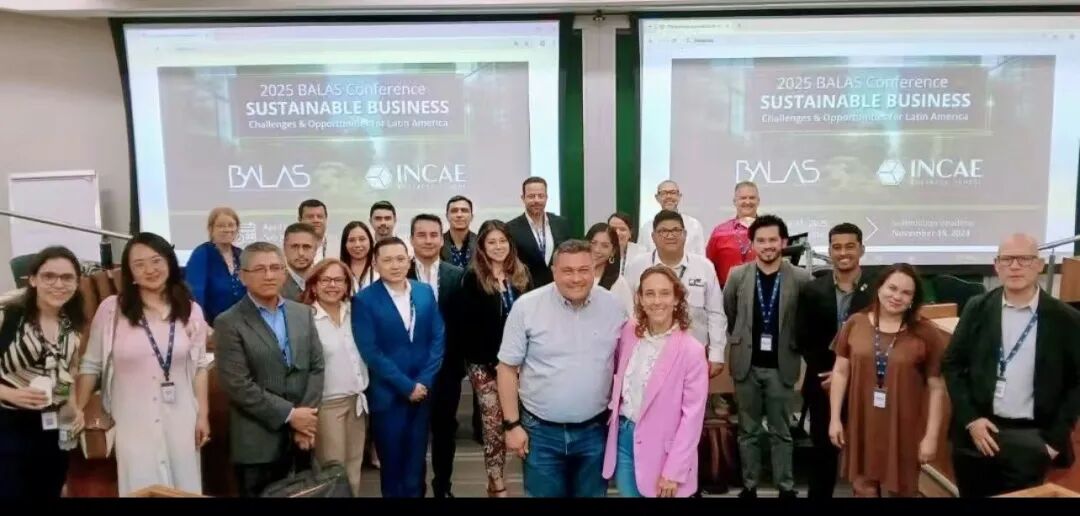
Sun Xinyue participated in the Latin American Costa Rica Forum and gave a report on the prospects of China - Latin America cooperation.
In the process of long - term communication with enterprises, universities, governments, and young people, I have become increasingly aware that Chinese enterprises' expansion into emerging markets has entered a new stage. In this stage, it is no longer just about "whether they can go out", but about how we participate in the reconstruction of the global business system.
My book "Winning in Global Expansion" has recently been published. Many people think that I wrote this book to summarize experience or expand influence. But for me, the real motivation is not to tell everyone "how to succeed" but to systematically sort out the cognitive gap, information gap, and scenario gap, help enterprises reduce misjudgments, and help the younger generation understand the real global market earlier. Because of this book, I had the opportunity to visit many universities to give lectures and share this year. Compared with short - term benefits, I care more about whether more young people can understand the connection between Chinese experience and emerging markets.
On the streets of Mexico, I often chat with small - shop owners, asking them what products sell best and where the goods come from. When I return to China, I also go to Yiwu to talk with stall owners about which countries their goods are finally sold to.
There are still many intermediate links, misunderstandings, and information gaps between Chinese manufacturing and global ordinary consumers. I understand that the real significance of Chinese enterprises going global is not only about enterprise growth but also about enabling more people to access better products and life choices in a more affordable way.
So for me, getting involved in the Latin American market expansion is not just a business choice. I prefer to see myself as a "connector" - connecting China with emerging markets, connecting experience with reality, and connecting this generation of entrepreneurs with the next generation of young people. If Chinese enterprises can participate in the global market in a more mature, more restrained, and more difference - respecting way, then we are not just "going out" but participating in defining the next stage of global business civilization.
*The views expressed are from the interviewed institutions or individuals and are for reference only.
Profile of the Interviewee
Sun Xinyue, CEO and founder of Jingwei Consulting, a scholar researching geopolitics and enterprise global expansion, and author of "Winning in Global Expansion". She was previously responsible for overseas business in institutions such as ICBC International, E Fund Management (International), and ICBC Credit Suisse. Since founding Jingwei Consulting in 2024, she has focused on enterprise global expansion and internationalization consulting under the background of geopolitics, providing strategic support for many leading Chinese enterprises including Zoomlion and the Industrial and Commercial Bank of China, covering key issues such as overseas market entry, compliance access, supply chain and industrial system establishment, and local talent deployment. She is also actively involved in academic and public research, currently serving as a doctoral candidate and off - campus tutor at The Chinese University of Hong Kong, Shenzhen, an off - campus tutor at Zhejiang International Studies University, and a special - appointed researcher on the Belt and Road at South China University of Technology.
This article is from the WeChat official account "Comprehensive Service Port for Zhejiang Enterprises Going Global", author: Zhejiang Enterprises Going Global.