Cultural Global
From Thailand and Mexico to Uzbekistan: My 20-Year Journey with Chinese Enterprises in Global Expansion | Pioneers in Overseas Ventures


Introduction:
Looking globally to explore the second growth curve has become a definite direction. However, how to go global still tests the wisdom and courage of every Chinese enterprise. There are numerous paths, such as brand globalization, supply - chain globalization, and cross - border e - commerce, but there is never a one - size - fits - all answer. Markets in North America, Southeast Asia, the Middle East, and Latin America are vast, yet each has its own challenges and risks. Behind each overseas expedition is the exploration of Chinese enterprises actively involved in the game. More Chinese figures are emerging on every distant coastline.
The "Global Pioneers" column aims to seek out global benchmarks in different fields, analyze practical cases from a professional perspective, precipitate methodologies through common understandings, and discover new possibilities in differences.
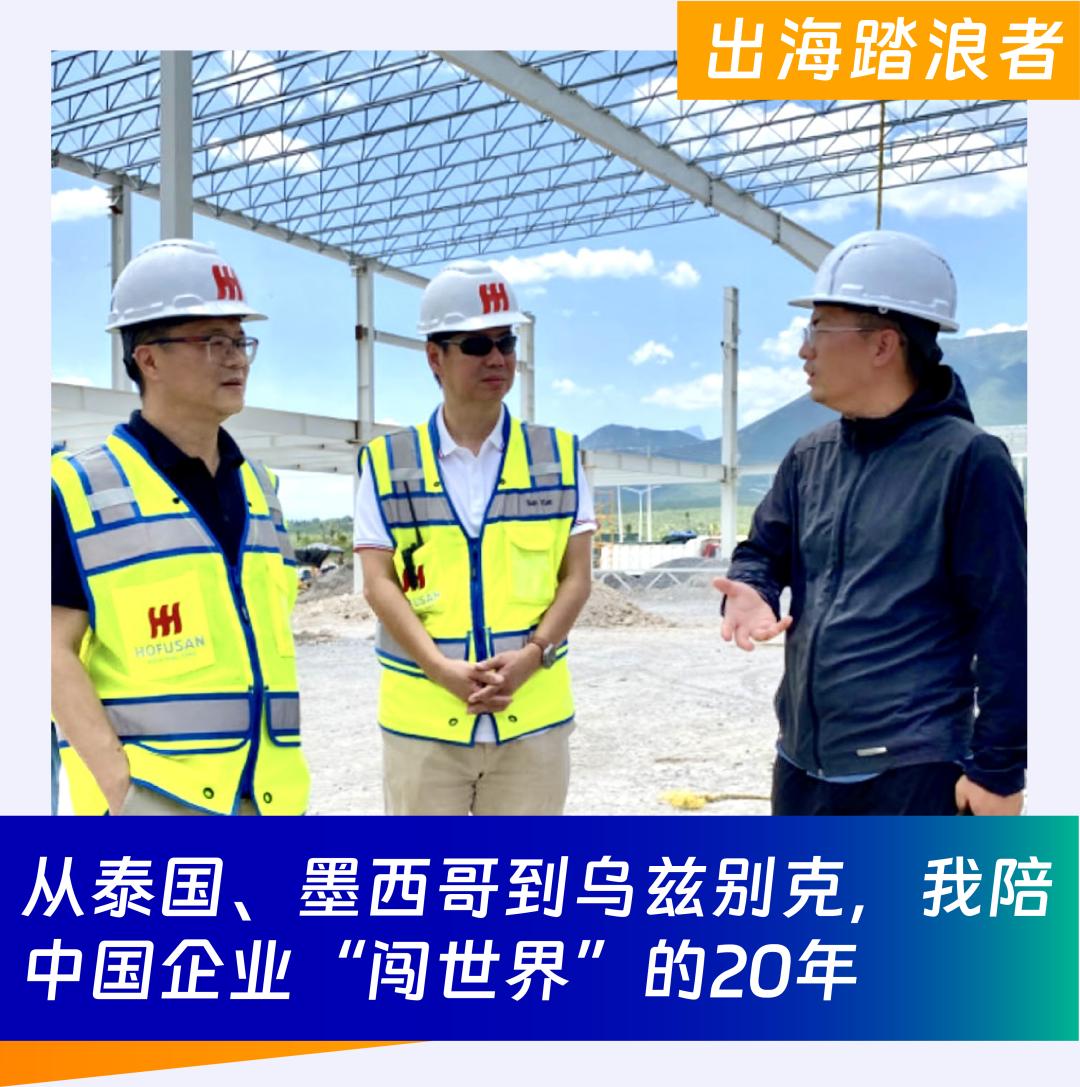
Every week, 14 flights shuttle between Beijing and Tashkent, the capital of Uzbekistan. On this 4,000 - kilometer route, Hu Hai has been one of the most frequent passengers in the past two years.
"Flights to Uzbekistan are always full. It's not just us who are optimistic about the Central Asian market. More and more enterprises are going there for business inspections." Hu Hai is the overseas vice - president of Holley Group and the person - in - charge of Huata (Central Asia) Industrial Park Development Co., Ltd. in Uzbekistan. From participating in the construction of the Thailand - China Rayong Industrial Park in Thailand in 2005, to developing the Huafushan Industrial Park from scratch in the Mexican desert in 2015, and now exploring the Uzbek market, Hu Hai's career has almost kept pace with the wave of Chinese manufacturing going global.
Although he has over 20 years of overseas work experience, Hu Hai still believes that each new project he takes on means starting a business from scratch, and there is no ready - made experience that can be simply replicated.
"How did you build your overseas industrial park?" and "Is it really that difficult for Chinese enterprises to go global?" are the questions Hu Hai is asked most often. But for him, beneath the grand narrative of enterprises going global are the specific and complex daily issues like "how to supply power and water to the factory", "employees not getting used to local food", and "how to pay taxes without getting fined".
It is countless such small details that form the most real profile of Chinese enterprises going global and are also the footnotes to the rich experiences of every global pioneer riding the waves overseas. The following is Hu Hai's personal account.
01
First "Test the Waters" in Thailand:
Localize Well and Become a Service Provider

25 years ago, Chairman Wang Licheng proposed "internationalization" as one of Holley's three major development strategies. At that time, Holley was already a leading instrument and meter manufacturing enterprise in China, but only a small amount of its products were exported overseas through OEM.
Previously, Holley had a cooperative relationship with a Thai electric meter enterprise and was relatively familiar with the local technical requirements for electric meters. So, it chose Thailand as the first stop for "going global".
At that time, my perception of Thailand was that it was just a tourist country, and I knew nothing about its local industrial development. However, after on - site inspections, I found that Thailand was a hot investment destination with a good industrial ecosystem.
The boss of Amata Industrial Park, the largest industrial real - estate developer in Thailand, had an exchange with Chairman Wang. They both believed that it was an irresistible trend for Chinese enterprises to "go global". More companies, like Holley, would shift from exporting products to manufacturing locally. So, they thought about using our overseas experience to provide an industrial platform for future Chinese enterprises coming here.
Thus, the Thailand - China Rayong Industrial Park jointly developed by Holley and Amata came into being. The project needed someone to be fully involved in long - term investment promotion and operation. At that time, I had just joined Holley's overseas business development department and was directly assigned to work in the Thai company, becoming a member of the project team.
Some members of the project were in China, and some were in Thailand. We cooperated in division of labor to complete the pre - construction work. I shuttled between the two places, staying in Thailand for several months at a time and then returning to China for investment promotion. At the beginning, among the Chinese employees stationed locally, there were only the general manager and the financial controller. The rest were recruited locally. This practice also set the tone for Holley's later local development model: Localization is not just a slogan but the survival ability of an enterprise, because only locals know the local policies, culture, and human relationships best.
Soon, we caught up with the first wave of Chinese enterprises going global and received more enterprises interested in Thailand to visit and settle in the park. As the park grew, we realized that hardware was just the foundation, and what Chinese enterprises really needed was a sense of certainty. That is, in an unfamiliar environment, enterprises needed an "intermediate platform" that understood both China and the local area to provide full - process support from factory construction to operation.
This determined our role. We were not simply "landlords" providing a place for enterprises to settle, but all - round service providers and "bridges".
However, at that time, even though the awareness and ability of Chinese enterprises to allocate global resources were gradually strengthening, most were still "cost - oriented" and went global due to local production requirements or raw material advantages. But we already vaguely felt that service and certainty would gradually become more important competitiveness than cost.
02
"From Zero to One" in Mexico:
Transform a Wilderness into an Industrial Park and Build Competitiveness

In 2010, the Thai industrial park had reached a certain scale, and I was sent to Indonesia to be in charge of a local agricultural project. Four years later, the company started to establish its second overseas industrial park, the North American Huafushan Industrial Park. I led the team to conduct research, demonstration, and start - up work from scratch.
From site selection and inspection, business negotiation, to the establishment of the Mexican company, recruitment of local staff, acquisition of all park qualifications, infrastructure construction, and then to investment promotion in China and operation management of the park, I stayed in Mexico for more than 8 years and only returned to China at the beginning of last year.
Holley chose to set up its second industrial park in Mexico because at that time, we saw that the trend of Chinese enterprises' supply - chain globalization was becoming clearer. More importantly, the motivation for going global had shifted from "cost - first" to "stability - first". Many enterprises with the North American market as their main target began to consider building factories in Mexico. Firstly, it was to be closer to the US market, avoid the uncertainty of tariffs, and ensure the stability and security of the supply chain. Secondly, it was to reduce costs.
So, we hoped to provide a safe and convenient channel for these enterprises to enter the North American market. In this process, Holley's core competitiveness was not just providing land and factories. Based on our in - depth overseas development, we were able to guide Chinese enterprises in overseas investment with a more forward - looking vision, provide a complete production environment that met the rules of origin and was close to the target market, and offer one - stop local services.
Many enterprises just starting to go global have no experience in long - term local operation. They often focus more on the one - time or fixed costs of initial entry and think that the cheaper the land price, the better. However, in fact, different prices are associated with different supporting conditions. For example, many enterprises don't know that overseas industrial parks operate commercially, unlike industrial land in China where the government provides infrastructure such as water and electricity. After we acquired land in Mexico, we had to build the infrastructure ourselves, transform the "raw land" into "developed land", and then conduct investment promotion.
But this was also the most difficult part in the initial stage of construction. The climate in Mexico is very dry. The land we acquired was nearly 9 square kilometers, and originally it was just a barren land. Just like in the movies, there were scattered cacti and camel thorns, looking very desolate. We had to apply to and negotiate with the Mexican government for water and electricity resources on the land and find ways to solve these problems ourselves.
First, we built a row of 5,000 - square - meter factories. When you entered through the main gate, there was nothing but the solitary factories around. If I were an enterprise looking for a site, I would definitely feel anxious. Who would dare to invest there? Moreover, at that time, there were already many industrial parks in Mexico invested by American and European enterprises, and their conditions were quite good.
Finally, a Zhejiang enterprise was bold enough to become the first to settle in the Huafushan Industrial Park. They came to Mexico for inspections many times, from the project team, investment managers to the boss himself. They communicated with us repeatedly about the relevant plans, development, and financial support. Coupled with Holley's good reputation in Zhejiang and the certain scale of the Thai industrial park, they finally decided to settle in. Later, the leaders of the Zhejiang Provincial Department of Commerce even flew to Mexico specifically to attend the opening ceremony of this enterprise. On the one hand, it was to support the pioneering spirit of Zhejiang enterprises. On the other hand, it was also a form of encouragement for our industrial park.
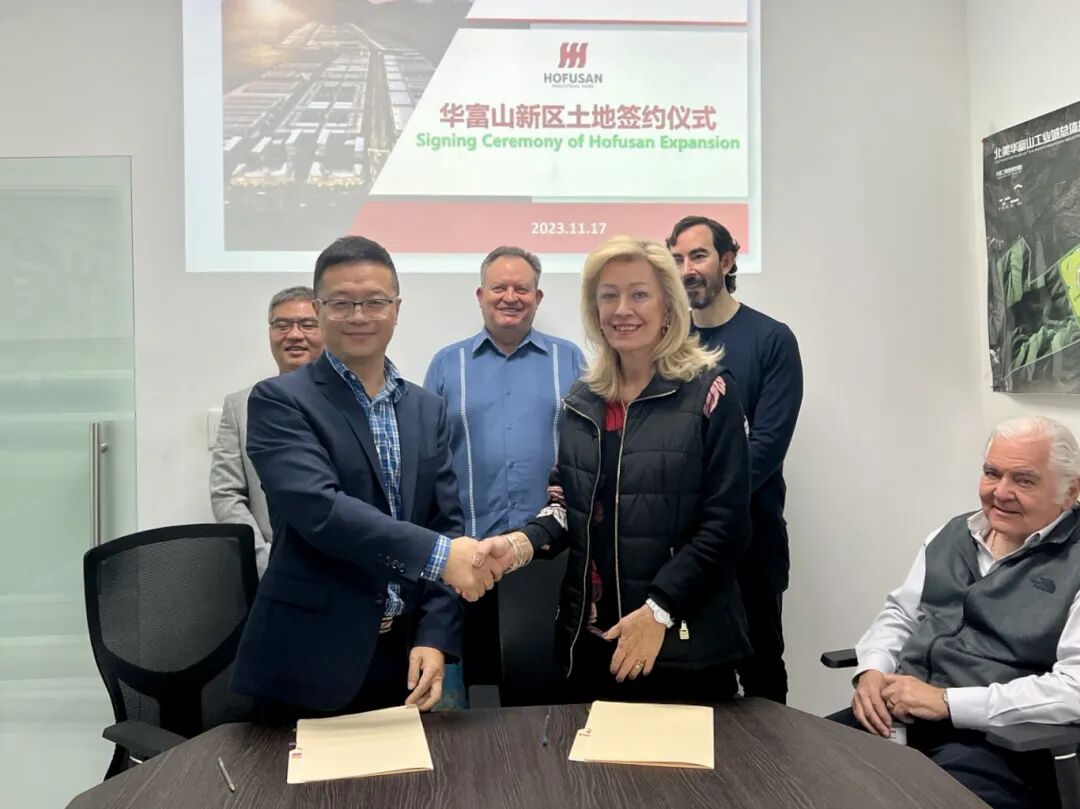
Although we had the experience of the Thai industrial park, going global is not just like moving. Since the laws, cultures, and business customs of each country are completely different, each time it is like starting a new business and we have to adapt again.
When we first arrived in Mexico, we didn't understand Spanish, and it was very difficult to communicate with locals. No matter how delicious tacos are, we couldn't stand them after a long time. So, at the beginning, we required that the local employees we recruited must be able to speak English, and Chinese employees also actively learned Spanish to understand the local culture.
The bigger problem with long - term overseas assignments is that we could only go back to China to meet our families during vacations or business trips. It was very easy to become disconnected from social relationships in China.
We encouraged family members to accompany us. My family also brought our one - year - old baby to live in Mexico for some time. However, because family members were not used to the local food and couldn't understand the newspapers and TV, it was difficult for them to stay for a long time. We tried our best to arrange jobs and language training for accompanying family members in the park to help them build a local social circle. The company also especially encouraged colleagues to get married and settle down locally to truly take root there.
Looking back now, I was able to persevere in Mexico for 8 years. On the one hand, I have a relatively strong adaptability. On the other hand, it was driven by my career ambition and sense of responsibility. I felt that this matter was of practical value to me, the company, and more enterprises, so I just kept going.
From Thailand to Mexico, if I have to say there is any common experience, I think the key is to respect local culture. If an enterprise goes overseas with the mindset of "my products are more advanced, and my employees are more efficient" for so - called "dimensionality reduction strikes", it will definitely be resented by the local people and will not succeed. Localization is the direction that must be adhered to when going global, because a company's operation cannot always rely on foreign employees. There will definitely be many problems of acclimatization, and it is also unstable.
03
Uzbekistan: In the Blue - Ocean Market
Solve the Problem of "Existence or Non - existence"

Last year, due to family reasons, I returned to Hangzhou from Mexico. Soon after, I took over a new project of building an industrial park in Uzbekistan, focusing on the Central Asian region.
Central Asia is an important region along the "Belt and Road". In recent years, local policies have tended to be outward - oriented. With a large population base, there is a huge local market demand and great future development potential. It is a rapidly growing regional market. In addition, the five Central Asian countries have friendly relations with China, and there is less competition in the local market. Relatively speaking, it is still a blue - ocean market.
After comparison among the five Central Asian countries, we thought that Uzbekistan, in particular, was in a rapid growth period of opening up to the outside world and actively attracting investment. It has a relatively large population, more open trade policies, explosive growth in market demand, and is geographically located in the center of Central Asia, making it suitable as the center for industrial development. So, we established Holley's third overseas industrial park there, the Huata (Central Asia) Industrial Park in Uzbekistan.

Different from the Huafushan Industrial Park, which mainly attracts large - scale manufacturing enterprises, the new industrial park in Uzbekistan is more targeted at small and medium - sized enterprises. These enterprises may have insufficient competitiveness in China, but going global may be a good choice for them. They can either look for blue - ocean markets that have not been noticed by large enterprises or follow the upstream and downstream or leading enterprises to go global. The Central Asian market belongs to the former, where there are fewer Chinese enterprises and less competition.
However, the problem is that the local marketization degree is insufficient, and the infrastructure supporting facilities are still immature. Similar to the initial situation in Mexico, when we first started building the industrial park in Uzbekistan, the local area could not provide 120 megawatts of electricity. Limited by the government budget, we couldn't even get the plan and commitment. We could only find ways to strive for it. If we couldn't achieve it all at once, we would increase the capacity step by step, 5 megawatts or 10 megawatts at a time, and try all possible ways to obtain resource allocation from the government, gradually transforming the "immaturity" into "maturity". Finally, we made the park a developed land with "seven connections and one leveling" so as to attract enterprises to settle in.
Now, although I don't need to be stationed in Uzbekistan long - term, I go there one or two times a month. I can clearly feel that the business exchanges between China and the Central Asian region are becoming closer and closer. Just like no matter how the US foreign policy changes, enterprises will not stop investing in Mexico. In the longer term, the demand and trend of Chinese enterprises going global and making in - depth local development will not change.
*The views expressed are from the interviewed institutions or individuals and are for reference only.
This article is from the WeChat official account "Comprehensive Service Port for Zhejiang Enterprises Going Global", author: Zhejiang Enterprises Going Global.