Cultural Global
The business battle in Brazil is in full swing: Meituan enters the arena with high - profile, and Didi makes a comeback.

Author | Feng Ye
Editor | Li Xiaotian
China's leading food delivery giant is becoming a disruptive force in the overseas market.
This is a new chapter in Meituan's story. On May 12th, Brazilian President Luiz Inácio Lula da Silva signed an investment agreement with Meituan CEO Wang Xing. Meituan announced that it plans to invest $1 billion over the next five years to enter the Brazilian food delivery market under the brand "Keeta".
According to Statista, the revenue of the online food delivery market in Brazil is expected to reach $20.91 billion in 2025, with a compound annual growth rate of approximately 7.12% from 2025 to 2030. By 2030, the market size is projected to reach $29.5 billion.
This data is even more impressive when compared. In 2024, the food delivery market in Southeast Asia was approximately $19.3 billion. This means that, in terms of scale alone, succeeding in the Brazilian food delivery market is roughly equivalent to capturing the entire Southeast Asian market.
Coincidentally, Didi, which has a long - standing presence in Latin America, announced in April that it would restart its food delivery business in Brazil. In 2019, Didi entered the Brazilian food delivery market under the brand "99 Food", but withdrew from the competition in 2023 after being unable to compete with iFood, which held over 80% of the market share.
Currently, the food delivery battle in China is still intense, and thousands of miles away in Brazil, a fierce business war is also unfolding. However, the highly monopolized market, escalating labor conflicts, and the thin profit margins of the food delivery business mean that this is not an easy business to pursue.

The Brazilian food delivery market is highly concentrated, leaving limited space for overseas companies. According to Sensor Tower, as of 2024, the local Brazilian food delivery platform iFood had already captured 89% of the local food delivery market share, dominating the market and leading by a large margin.
iFood was founded in 2011. Initially, its first product was a paper - based "food court" that aggregated menus from various restaurants, allowing consumers to order food by phone. As mobile internet took root in Brazil, iFood shifted its focus to online food delivery services.
In terms of timing, iFood had a first - mover advantage. Uber Eats and 99 Food entered the Brazilian market in 2016 and 2019 respectively. Although food delivery platforms typically enter the market through methods such as issuing coupons, investing in advertising, and building delivery teams, iFood's years of accumulated resources and experience have created a flywheel effect: "a large number of users - merchants have no choice but to join - more orders - attract more riders - further squeezing the survival space of competitors". In the minds of Brazilian consumers, the perception that 'food delivery equals iFood' has long been established.
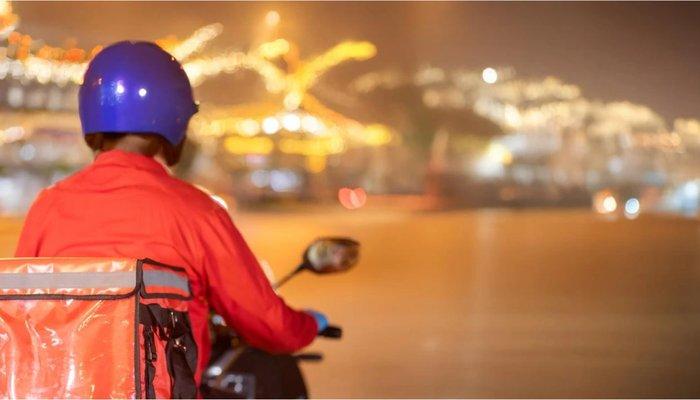
An iFood rider. Source: Canva
However, perception does not equal trust. iFood's food delivery empire has faced criticism from merchants in recent years.
Felipe's family runs a small restaurant in a relatively affluent neighborhood in São Paulo. During busy hours, Felipe often helps at the restaurant. In his view, the cooperation between iFood and the restaurant is "unfair".
"There's always at least one time a week when we can't find a rider. I think it's because there are too many riders in the area during that time, so iFood lowers the delivery price, causing many riders to reject orders. When this happens, we have to refund the customers because they're waiting hungry. If we insist on waiting for a rider, we may receive a bad review due to late delivery or spoiled food, which will cause the restaurant's rating to drop sharply. Customers can complain justifiably, but who do you think bears the loss?" Felipe told Xiaguang She.
Regarding iFood's responsibilities, Felipe said bluntly, "They should clearly inform us of the solutions for unexpected situations so that we can prepare contingency plans. But they have no incentive to change because there is no competition."
The high commission fees also trouble merchants. iFood determines the commission scheme based on whether the merchant delivers the food independently or cooperates with iFood for delivery. The restaurant where Felipe works uses iFood's delivery service, and the total commission rate is as high as 27%. To reduce the commission rate, merchants need to pay a monthly fee or participate in promotional activities. However, Felipe believes that "these packages with monthly fees are full of pitfalls."
To reduce costs, many merchants also list their products on other food delivery platforms such as Glovo and Cardapioonli, or even use the messaging app WhatsApp for traditional food ordering. This is their way of resisting the giant.
Not only merchants but also consumers are calling for "competitors to iFood". Brazilian consumer Juana told Xiaguang She, "iFood is large - scale and exploits restaurants and food delivery riders. I hope competition can bring about improvements."
Therefore, the Brazilian food delivery market is not airtight. The key lies in how to do what iFood has failed to do. Frankly speaking, Meituan has also faced a lot of criticism in China, and many of the pain points overlap with those of iFood. However, as an outsider, Meituan will surely adopt a more humble attitude in the initial stage. Just as Keeta did when entering Hong Kong and the Middle East, it implemented a high - subsidy strategy to quickly attract users.
Additionally, iFood was previously investigated by the Brazilian antitrust agency (CADE) for its exclusivity policy. Paulo Solmucci, the president of the Brazilian Bar and Restaurant Association (Abrasel), said bluntly, "Meituan's entry has rekindled the almost extinguished hope of competition and an alternative to iFood's near - monopoly." Xiaguang She believes that Didi and Meituan's high - profile announcements to enter the Brazilian food delivery market may be related to the Brazilian government's efforts to promote antitrust and healthy competition.

Meituan's extensive network of 7.45 million riders in China is a moat that is difficult to breach. However, in Brazil, Meituan has to build its rider network from scratch, which may be its biggest challenge in entering the Brazilian market.
Almost every Brazilian consumer mentions the social issue of "riders going on strike repeatedly due to dissatisfaction with platform treatment" in surveys. If you search for the Portuguese keyword "greve dos motoboys" (rider strike) on Google, you'll get thousands of search results. The most recent large - scale protest took place two months ago.
On March 31st and April 1st this year, thousands of riders held protests named "breque dos apps" (put the brakes on apps) in multiple Brazilian cities such as São Paulo and Rio de Janeiro. The "apps" they targeted were food and goods delivery platforms represented by iFood, Uber Flash, and 99 Entrega.
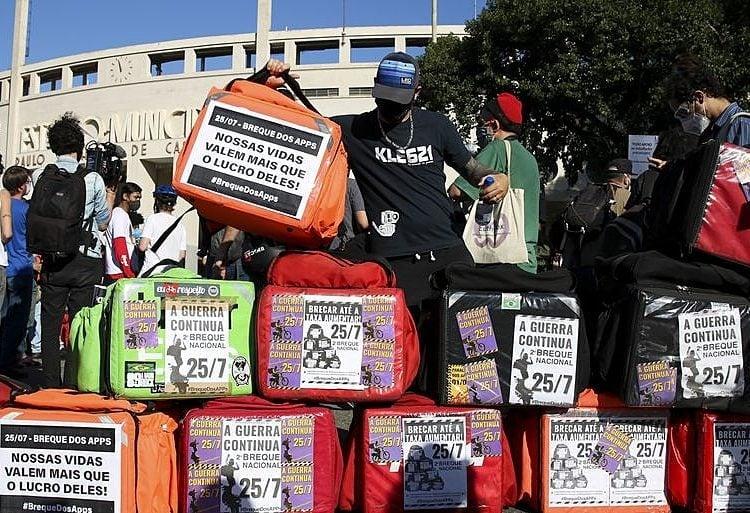
The scene of the protest. Source: Brasil de Fato
Riders believe that these platforms exploit labor too much and do not provide stable working conditions and environments. Their main demand is to "increase the minimum delivery fee from 6.5 reais (approximately 8.3 RMB) to 10 reais (approximately 12.7 RMB)". In addition, they also demand to increase the per - kilometer fee from the current 1.50 reais (approximately 1.9 RMB) to 2 reais (approximately 2.5 RMB).
"Asking for a pay raise" is just a way for these riders to deal with other risks. Besides income issues, they also face risks due to job instability - no formal employment contract, no social security contributions from the company, and no right to enjoy the benefits of a formal job. Brazilian consumer Carri said bluntly, "The operation mode of food delivery apps claims that independent work is beneficial to workers, such as 'being your own boss' and 'working as long as you want', but it's a scam, and many young Brazilians have fallen into this trap."
Eduardo, a former iFood delivery rider who worked for the company for two and a half years, told Xiaguang She that in Brazil, with its complex regions and large gap between the rich and the poor, riders also face high safety risks. "To increase my activity on the app, I even have to work in the early morning. If I pass through high - crime areas, I'm likely to be robbed, but ultimately, I have to take responsibility for it myself. There are far more dangerous situations than I expected."
For this reason, even logistics companies born in Latin America have difficulty truly "completing the last - mile delivery". Deliverymen can only leave the goods at a nearby post office and let residents pick them up themselves. This also leads to a low delivery success rate and frequent package - loss incidents. The person in charge of J&T Express in the Brazilian market once told Xiaguang She that due to the numerous slums in Brazil and the poor internal security situation, J&T's local deliverymen need to come from the slums and be familiar with the internal social structure and operating rules of the slums. "As long as we follow the rules inside the slums, there won't be too many problems."
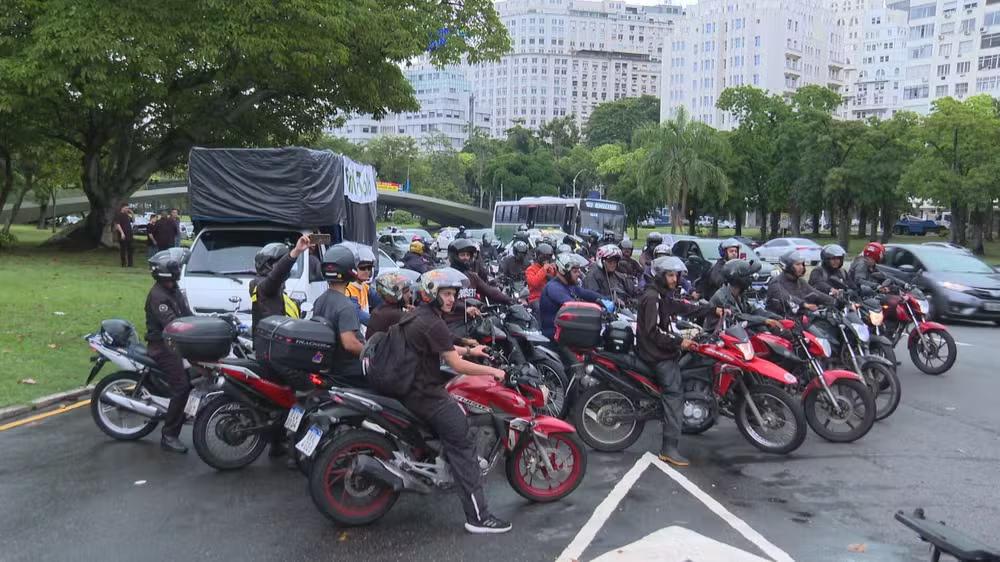
Riders near Santos Dumont Airport in downtown Rio de Janeiro. Source: Globo.com
Due to unsmooth negotiations, riders in Brazil go on strike frequently. Since 2020, there have been 2 - 3 public rider strikes in Brazil every year, but they still haven't achieved their desired results. Regarding the strike at the end of March, Eduardo said, "The final negotiation was not ideal, and the minimum delivery fee for riders remains at 6.5 reais."
This means that Meituan and Didi will still face intense scrutiny from workers after entering the Brazilian food delivery market.
The most straightforward solution is to invest money, which is also a common approach for Chinese companies going overseas. When expanding into the Middle East and Hong Kong markets, Meituan adopted a high - subsidy and zero - commission strategy. "I'm sure that if they (in Brazil) pay higher salaries than iFood, most deliverymen will consider working for them. It would be great if they could treat workers as 'formal employees', but that's probably impossible. So, a better salary is a good start." Eduardo said.
The complexity lies in the need for a strategic approach to investing money. iFood will surely improve the treatment of riders when facing competition - just like Meituan in China did after JD.com entered the market. But to what extent can both sides increase their investment? In addition, iFood has announced a cooperation with Uber to achieve "interconnectivity of user systems". Facing iFood, which is supported by the large Dutch consortium Prosus and has rich local resources, can Meituan's $1 - billion investment last for five years?
It's worth mentioning that another issue related to delivery is "rider fraud".
Carri said, "It's not uncommon for customers to be overcharged or not receive their food. Some (but not all) of these fraud cases involve riders, who may pick up the food at the restaurant but never deliver it. Another common form of fraud is when customers pay on delivery, riders use the credit card machine to overcharge while distracting the customers to make them pay a higher amount. Most deliverymen are honest, but due to these cases, people still think they're untrustworthy."
In fact, Latin America has the highest credit - card fraud rate in the world, and credit - card skimming occurs frequently. A complete "industry chain" of skimming has formed there. After consumers make credit - card payments at a consumption venue, all their information is copied, and scammers then use the cardholder's identity to conduct transactions. In some Latin American countries, the mainstream payment method is real - time transfer. However, criminals take advantage of this payment method. After stealing local consumers' payment account information, they use large - model technology to fabricate "account identity information" to fraudulently purchase goods and resell them for profit.
This will put more pressure on delivery platforms to implement localized management measures, which is a weakness for Chinese companies going overseas.

Food delivery is not a profitable business. A person close to Meituan said, "The profitable businesses are group - buying, hotel and travel, or financial services. Food delivery is always in the red."
This characteristic holds true globally. In China, in the first half of 2024, Meituan's food delivery business had a loss of 0.34 yuan per order - for every order delivered, it lost 0.34 yuan, and the total number of orders during the statistical period was 11.6 billion. Ele.me has always been in a loss - making state. According to Alibaba's "Interim Report for the 2025 Financial Year", for the six - month period ending September 30, 2024, the adjusted EBITA of Alibaba's local - life services group was - 777 million yuan, compared with - 4.546 billion yuan in the same period in 2023.
In 2022, Forbes also reported that iFood had a net loss of 120 million euros in the first half of 2022, although its parent company Prosus has not published iFood's revenue data since then.
Why do Chinese unicorn companies travel across the ocean for a loss - making business?
Prosus CEO Fabricio Bloisi once said that iFood is not in a hurry to make a profit. "Our market and fintech businesses will continue to grow in the next 5 to 7 years." "If you pursue profit too quickly, you may kill the business."
It's worth noting that Prosus has long focused on technology - sector investments and is the largest shareholder of Tencent. It has invested in several food delivery companies (such as the European food delivery giant Just Eat) and has a clear understanding of the essence of the food delivery business. Fabricio's view is clear - Food delivery may not be profitable, but a solid food delivery foundation is the basis for expanding other high - margin businesses.
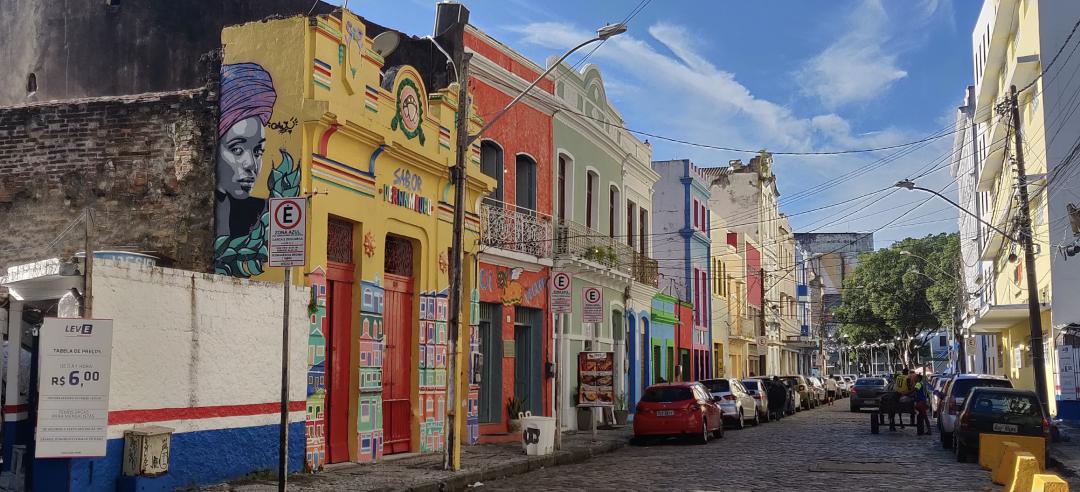
Strolling on the streets of Brazil, feeling the country's colors and vitality. Source: Unsplash
First of all, food delivery creates a high - frequency, essential scenario where users open the app at least once a day. It is the traffic hub for the entire local - life services business. On this platform, high - margin services can be continuously added, such as in - store group - buying, hotel and travel bookings, instant supermarket retail, advertising distribution, and financial credit services.
Take Meituan as an example. Its closed - loop ecosystem of "food, entertainment, travel" is built on the user base of its food delivery business. Through daily orders, Meituan can collect data on users' consumption frequency, taste preferences, spending power, and active time periods, laying the foundation for hierarchical operation, personalized recommendations, and advertising conversion. This also applies to platforms like iFood and Uber Eats.
Secondly, the infrastructure built by the food delivery network can be extended to more businesses in terms of technology and logistics. For example, scenarios such as same - city delivery, supermarket e - commerce, and cross - border retail all rely on the efficiency and density of "the last mile".
Most importantly, in Brazil, the integration of "food delivery + local - life services + payment" has not been achieved, and there are unicorn companies in each field. Meituan has a mature development model, and Didi has also implemented a closed - loop ecosystem of "food delivery + finance + ride - hailing" in other Latin American countries. So, rather than saying they "want to do the Brazilian food delivery business", it's more accurate to say they are competing for the large market of Brazilian digital - life infrastructure.
Brazilian consumers are increasingly receptive to integrated digital services. With an internet penetration rate of 92.5% in households, it creates favorable conditions for the popularization of super apps. For example, Rappi, a Latin American technology company founded in Colombia in 2015, is evolving from a simple delivery service to offering financial services, grocery delivery, and pharmacy services. It also plans to expand into areas such as streaming music, gaming, and e - commerce.
Moreover, from the perspective of Brazil's population distribution, it is an ideal destination for food delivery companies going overseas. Different from other emerging markets globally, Brazil has a relatively high urbanization rate, reaching 87.6% in 2022, ranking 9th in the world. The Brazilian population is mainly concentrated in the eastern and southeastern coastal areas. For example, large cities like São Paulo and Rio de Janeiro are located there. São Paulo is the most populous city in Brazil, and the state of São Paulo has a population of over 70 million. Rio de Janeiro is also densely populated, with a population of about 15 million in the state of Rio de Janeiro. The area between São Paulo and Rio de Janeiro has the highest population density, accounting for approximately 23% of the country's total population. This means that if Meituan can capture the hearts of users in a few core cities, it can expand its business horizontally and gradually develop into a "super app" comparable to Meituan in China.
From a macro perspective, the actions of internet unicorn companies like Meituan and Didi in recent years also indicate the inevitability of Chinese consumer - oriented internet companies going overseas. However, they may face more difficulties in Brazil.
This article is from the WeChat official account "Xiaguang She", author: Feng Ye.