Cultural Global
Representatives and committee members have heated discussions: How can Chinese enterprises go global from "going out" to "integrating in"?


This year's Government Work Report proposes to "expand two-way investment". From "product export" to "system-level overseas expansion", from "going global" to "deeply integrating into local markets and climbing up the value chain", Chinese-funded enterprises are accelerating their integration into the global industrial chain. Focusing on how to respond to challenges in the new stage, avoid "involution-style" competition and realize high-quality overseas expansion, the Dajiangdong Studio of People's Daily conducted exclusive interviews with three national deputies and political advisors during the Two Sessions.
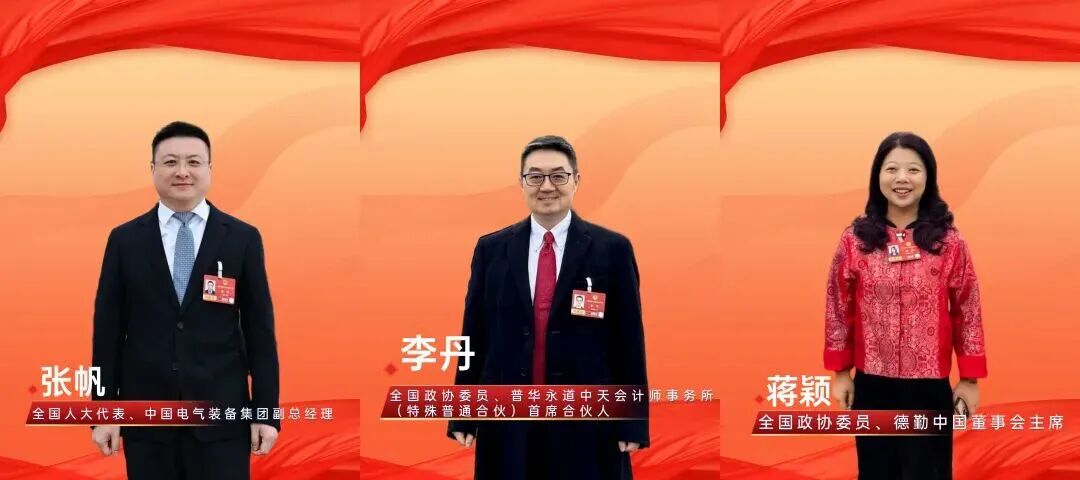
During the Two Sessions, the Dajiangdong Studio held dialogues with three national deputies and political advisors. Illustration by Qian Youyi
01
Shift from "product export" to "capability export",
The biggest challenge is compliance of cross-border data flow

Dajiangdong: Data released by the Ministry of Commerce shows that China's outward foreign direct investment reached 174.38 billion U.S. dollars in 2025, up 7.1% year on year, ranking steadily among the top in the world. Chinese enterprises that "go global" create more than 2 million jobs on average every year, and have funded the construction of a large number of livelihood facilities covering education, health and environmental protection. What new trends are emerging in the overseas expansion of Chinese-funded enterprises?
Jiang Ying (Member of the National Committee of the Chinese People's Political Consultative Conference, Chairperson of Deloitte China's Board of Directors): The globalization of Chinese enterprises has entered a new stage, and is accelerating the transition from "product export" to "capability export" — building factories overseas, setting up R&D centers, contributing technologies to local communities and assisting industrial upgrading. This change mainly benefits from the improvement of Chinese enterprises' international competitiveness.
At present, the overseas expansion models of Chinese enterprises can be divided into four categories. The first is supply chain overseas expansion, that is, upstream and downstream enterprises follow the "chain leader" enterprises to go global, with representative enterprises including BYD, CATL and Xiaomi. The second is technology export, such as out-licensing of Chinese innovative drugs from companies like Qile Pharmaceutical, while Pop Mart represents the export of brands and culture. The third is born-global, which means overseas businesses operate in a globalized mode from the very beginning of establishment, such as WuXi AppTec and Shein. The fourth is joint overseas expansion, where foreign-funded enterprises in China cooperate with local Chinese enterprises to go global: local Chinese enterprises give play to the advantages of China's supply chain system and manufacturing capacity, while foreign-funded enterprises leverage their influence in overseas markets, for example, the cooperation between Geely and Renault in technology, capital and markets.
Zhang Fan (National People's Congress Deputy, Deputy General Manager of China Electric Equipment Group Co., Ltd.): I have also noticed that the way Chinese enterprises expand overseas is changing. In the past, it was "factor export", but now it is shifting to higher-level "value creation". This means that enterprises should not only bring products to overseas markets, but also make all-round progress in high-end links of the "smile curve" such as R&D, branding and services.
Dajiangdong: What new challenges are there in this new stage?
Li Dan (Member of the National Committee of the Chinese People's Political Consultative Conference, Chief Managing Partner of PricewaterhouseCoopers Zhong Tian LLP): The overseas expansion of Chinese enterprises is moving from "scale expansion" to "quality-led development". One of the biggest challenges in this new stage is the compliance of cross-border data flow. At present, major global economies are accelerating the construction of regulatory barriers centered on "data sovereignty", such as the EU's General Data Protection Regulation and the U.S. Executive Order 14117, which pose multiple challenges to the overseas development of Chinese enterprises.
The first is the dilemma of compliance. Enterprises not only need to cope with the increasingly standardized and refined domestic regulatory requirements in fields such as cross-border data flow and industrial chain security, but also need to adapt to the continuously improving compliance standards of host countries in national security review, anti-monopoly, foreign investment access, environmental protection and ESG disclosure. This cross-jurisdictional and multi-level regulatory pattern puts forward higher requirements for the compliance capability of enterprises.
The second is the risk of barriers. Some rules are of protectionist nature, forming non-tariff barriers. It is mainly manifested in rising exchange rate risks, high cross-border financing costs, global tax system restructuring (such as the global minimum tax reform) and stricter tax supervision in various countries, which directly affect the long-term return stability and cash flow security of overseas investment of enterprises, and pose continuous challenges to the financial and tax compliance management of enterprises.
The last is the pain of governance. The globalization governance level of enterprises lags behind the expansion of their business. Some Chinese enterprises have achieved international business scale, but their global management and control systems have not been established or matured synchronously. Without the support of systematic global governance capabilities, overseas businesses are prone to problems such as disjointed management and control, information gaps and risk accumulation.
Jiang Ying: One point needs to be added. The "negative list" has become an important system for China to manage the data outbound of enterprises. Many free trade zones in China have issued negative lists for data outbound and released supporting implementation documents. However, enterprises still face practical problems such as insufficient transparency of the management measures for data outbound outside the list, limited coverage of industries and fields in the negative lists of various regions, and inconvenient query and use of guiding documents.
It is suggested that first, clarify the regulatory standards for data outbound in scenarios outside the negative list, promote the coordinated and unified implementation standards of all free trade zones, and further improve the convenience of data flow in free trade zones. Second, accelerate the update of the negative list. For the uncovered fields and how free trade zones refer to each other, the state should put forward implementable operation measures as soon as possible. Finally, further optimize policy consultation and guidance services, launch more convenient compliance tools as soon as possible, reduce the running time of enterprises, and strive to achieve the standard of "at most one visit".
02
Build a "three-dimensional response system",
Evolution from "building ships to go global" to "building ships + building ports"

Dajiangdong: How to deal with these challenges systematically?
Li Dan: The essence of global competition has evolved from market competition between individual enterprises to the overall contest of industrial chain ecosystem. For example, in the fields of new energy vehicles and high-end equipment manufacturing, the "fleet-style overseas expansion" model led by leading enterprises and coordinated by supporting enterprises has shown significant advantages.
I suggest that a collaborative innovation mechanism for the industrial chain can be established to promote upstream and downstream enterprises to form strategic alliances in technology R&D, standard formulation and market development. Encourage deepening of interest binding through cross-shareholding, joint venture and co-construction. At the same time, improve the construction of industry information sharing platforms, and strengthen overseas investment risk warning and compliance guidance. Give full play to the coordinating function of industry associations in production capacity planning and market order maintenance, and establish an industry self-discipline and benign competition-cooperation mechanism.
Zhang Fan: I focus on the three major blocking points of finance, insurance and approval encountered by Chinese enterprises when "going global", and put forward three suggestions on this.
First, financial support should be "precise drip irrigation". It is suggested to give preferential policy loans to key projects that conform to the joint construction of the Belt and Road Initiative, and accelerate the facilitation of RMB cross-border settlement, so as to help enterprises reduce exchange rate risks from the source, and escort the export of Chinese equipment with "local currency settlement".
Second, current traditional insurance products have limited coverage for high-risk regions. It is suggested that relevant institutions develop new insurance types such as political risk insurance and default risk insurance for high-risk countries, explore the establishment of a risk pool model jointly borne by the government and enterprises, provide bottom-line guarantee for enterprises that dare to explore emerging markets, so that enterprises can dare to go global and take root stably.
Third, cross-border investment approval should be "classified and targeted". At present, the approval of overseas investment projects involves many departments and has a long cycle. It is suggested to establish a classified and hierarchical approval mechanism, open a green channel for major projects that conform to national strategies and simplify the process. At the same time, incorporate ESG performance and localization commitments into the evaluation indicators to guide enterprises to transform towards "deeply integrating into local markets".
Dajiangdong: This year's Government Work Report proposes that in 2026, China will thoroughly rectify "involution-style" competition. How to avoid "involution-style" competition in the process of Chinese enterprises' overseas expansion?
Zhang Fan: Practical experience tells us that Chinese enterprises need more awareness of cooperation in overseas development. Many projects are large in scale and long in cycle. If we can give play to the advantages of China's complete industrial chain categories and efficient coordination, it is easier to form joint forces. For example, last year, we and China Huadian Corporation participated in the photovoltaic power generation project in Uzbekistan in the form of a consortium, creating the "Chinese speed" of "starting construction and connecting to the grid in the same year", which became one of the new energy projects with the fastest construction speed in the local area, giving full play to the advantages of central enterprises in complete industrial categories and the synergy between Chinese-funded enterprises.
Chinese enterprises' overseas expansion needs to avoid simple price competition, even disorderly and malicious competition, and low-quality and low-efficiency "involution". If enterprises undercut each other's prices and make repeated investments, they may get projects in the short term, but in the long run, it is not conducive to the development of the industry, and will also affect the overall image of Chinese enterprises.
Dajiangdong: Facing the realistic environment of high political, exchange rate and payment risks in some countries, how can "going global" enterprises carry out risk management and project screening? What successful experiences are there?
Jiang Ying: Our experience is to promote public service platforms, overseas Chinese chambers of commerce and professional service institutions to jointly build "overseas comprehensive service stations for Chinese-funded enterprises", learn from the practices of foreign chambers of commerce, and provide enterprises with localized risk warning, compliance consultation, legal emergency assistance and rights protection support.
It is suggested that the economic and commercial sections of Chinese embassies and consulates abroad take the lead to select and certify a number of professional institutions that are familiar with local conditions and have experience in serving Chinese-funded enterprises, so as to form a localized service provider library. At the same time, support leading domestic professional service institutions to "go global" by setting up branches, strategic alliances and consortia.
Zhang Fan: Risk prevention and control is not only an institutional issue, but also requires operable methods. Recently, China Electric Equipment Group has gradually explored a risk control system of "rigid constraint + penetrating supervision + professional support", which has been relatively effective after implementation.
We adhere to the three rigid rules of "not going to dangerous places, not getting involved in gray areas, and complying with local laws and customs", and dynamically manage the risk classification of the global market to block the business access of high-risk countries from the source. At the same time, we actively explore the use of digital means such as AI and big data to build a digital operation platform for international business, bring the whole process of projects into online monitoring, and realize the penetrating management of overseas projects that are "visible and controllable".
A single tree cannot make a forest. Chinese enterprises' overseas expansion should not only learn to unite, but also need professional support. For example, take the initiative to cooperate in depth with professional institutions such as the Export-Import Bank of China and China Export & Credit Insurance Corporation, leverage professional forces to cope with complex challenges such as exchange rate fluctuations and country risks, and build a joint prevention and control mechanism with internal and external coordination.
03
Promote "high-quality overseas expansion" with value improvement, value symbiosis
and long-term value

Dajiangdong: How to improve the quality of overseas expansion? How to serve the overall situation of national development?
Li Dan: High-quality overseas expansion should realize three transformations: from scale expansion to value improvement, focusing on technology spillover and brand premium; from zero-sum competition to symbiotic development, building an open and collaborative industrial ecosystem; from market occupation to standard leadership, participating in and even leading the formulation of international rules.
Government departments can provide systematic support for enterprise transformation and upgrading by establishing industrial chain overseas service platforms, improving cross-border financial service systems and strengthening international rule alignment.
This systematic overseas expansion model can not only enhance the global competitiveness of Chinese enterprises, but also bring multiple benefits to the host countries such as technology transfer, job creation and industrial upgrading, so as to achieve win-win cooperation.
Jiang Ying: The enterprises that can truly succeed in overseas expansion in the future must be those that can integrate into the local economic and social network to realize "value symbiosis". To take root in the local area and adapt to local customs, what enterprises most need to make up for is the ability of "integrating in", that is, to become a strategic partner that builds a localized ecosystem, contributes technologies to the local area, assists industrial upgrading and creates jobs.
Zhang Fan: Chinese enterprises' overseas expansion should achieve "long-term value", high-quality, sustainable and benefit local people's livelihood. Through the overseas expansion practices in recent years, we have summed up several key principles.
The first is quality priority. Quality is the foundation for enterprises to go global. Over the past ten years, we have delivered more than 200 substations and more than 6,000 kilometers of high-voltage transmission lines in Belt and Road countries. A number of landmark projects we participated in, such as the Belo Monte project in Brazil, the Mula DC project in Pakistan and the DC interconnection project in the Philippines, have become the local "electricity business cards". Only by relying on excellent products and high-standard performance can we win the market.
The second is long-termism. "Going global" cannot only focus on short-term benefits, but also maintain strategic determination and dig deep for development. In Egypt, Malaysia, Indonesia and other places, we promote localized operation, combine Chinese technical standards with the needs of local power grids, which not only drives local employment, but also realizes mutual benefit and win-win results with the host countries.
The third is social responsibility. Last year, when Saudi Arabia was in the most tense period of peak summer electricity consumption, we only used 6 months to complete the delivery of the high-voltage mobile substation project of Saudi Electricity Company, ensuring the power consumption of local residents. "Small but beautiful" projects are often the most touching. High standards ensure quality, sustainability builds trust, and only by truly benefiting people's livelihood can we win respect.
*Content source: International Finance News
This article is from the WeChat official account "Zhejiang Enterprises Overseas