Cultural Global
Saudi Arabia vs. UAE: Which is more suitable as a regional headquarters in the Middle East? | Overseas Practical Training Camp


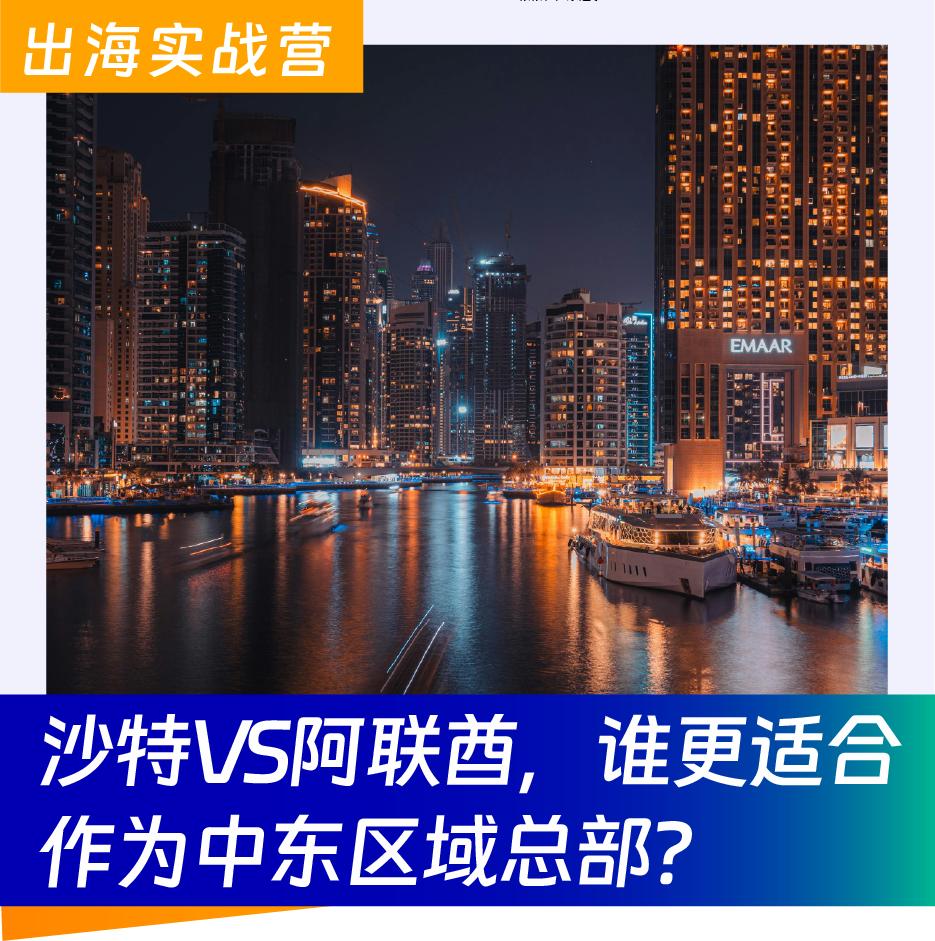
As the two major core economies in the Middle East, Saudi Arabia and the United Arab Emirates (UAE) are becoming two popular choices for overseas enterprises to set up regional headquarters in the Middle East, thanks to their unique resource endowments and development strategies.
Saudi Arabia, driven by the "Vision 2030", is rapidly rising with the support of large - scale infrastructure projects worth hundreds of billions and the dividends of economic transformation. The UAE, on the other hand, maintains its advantages with a free - zone system established over decades, a global logistics network, and a mature business ecosystem. They have different focuses in development paths, policy orientations, and business environments. When choosing where to set up a regional headquarters, enterprises need to closely align with their own strategic positioning - whether to aim for government orders and long - term growth and deeply integrate with the national development dividends; or to pursue flexibility, efficiency, and global connectivity and quickly enter the Middle East market with low risks?
01 National - level policy dividends vs. International platform value
From a macro perspective, Saudi Arabia, as the largest economy in the Middle East and North Africa region, had a GDP of approximately $1 trillion in 2024, accounting for nearly half of the total GDP of the six Gulf Cooperation Council (GCC) countries (Saudi Arabia, the UAE, Qatar, Kuwait, Oman, and Bahrain). The non - oil sector's contribution to GDP has exceeded 50%, and the economic structural transformation has also achieved initial results. Notably, Saudi Arabia is promoting a series of transformations through the "Vision 2030" plan. It plans to attract over $3.2 trillion in investment by 2030, with goals including entering the top 15 economies in the world and controlling the unemployment rate below 7%.
This transformation has created a vast number of opportunities: the $50 - billion NEOM future city project, the Red Sea tourism project involving the development of over 90 islands, and the supporting projects for international events such as the 2030 World Expo and the 2034 FIFA World Cup have provided an order pool worth hundreds of billions for industries such as infrastructure, energy, high - end manufacturing, and culture and tourism. Meanwhile, over 60% of Saudi Arabia's 35 million population is under 35 years old. The consumption upgrade and labor - force dividends brought by the young population have further enhanced the potential of the local market. Choosing Saudi Arabia essentially means choosing to resonate with a national - level grand transformation and sharing the growth dividends during the process of its economic structural reshaping.

In contrast, the UAE's advantages lie in "maturity and openness". Although its economic volume (GDP of approximately $550 billion) is smaller than that of Saudi Arabia, it has built a highly internationalized business ecosystem through more than 40 free trade zones, with a differentiated layout of "one zone, one characteristic": the Dubai International Financial Centre (DIFC) focuses on financial services, the Jebel Ali Free Zone (JAFZA) specializes in trade and logistics, the Dubai Silicon Oasis (DSO) emphasizes technology entrepreneurship, and the Abu Dhabi Global Market (ADGM) focuses on high - end services.
The UAE's policy system is more stable. The corporate income tax was officially implemented in June 2023, with a standard tax rate of only 9%. Small and medium - sized enterprises with an annual income of less than 3 million dirhams (approximately 5.8 million yuan) can be directly exempted. Its logistics network is also a global benchmark - Dubai International Airport is the world's busiest international passenger airport, and a 4 - hour flight can cover more than 50 emerging markets; the Jebel Ali Port is the largest port in the Middle East, where container clearance can be completed within 2 hours, and a 7 - hour flight can cover more than 80% of the world's population. For enterprises seeking a stable, efficient, and low - tax environment and aiming to quickly start business and reach multiple markets in Europe, Asia, and Africa, the UAE provides a smoother entry path.
02 Comprehensive incentives vs. Free - zone ecosystem
In terms of attracting regional headquarters, both countries have launched strong special plans, but with different focuses.
Saudi Arabia's "Regional Headquarters Program", centered on "strong policy drive", has achieved remarkable results. According to the Saudi Press Agency, as of now, more than 600 multinational companies have obtained regional headquarters licenses, exceeding the original target of attracting 500 by 2030.

The core attraction of this program lies in "policy binding + multiple exemptions". On the one hand, Saudi Arabia clearly stipulates that "foreign enterprises seeking government contracts must set up regional headquarters locally". This mandatory requirement has directly prompted a large number of enterprises to relocate to Riyadh. In the first quarter of 2024, 120 enterprises completed the establishment of their regional headquarters, a year - on - year increase of 477%.
On the other hand, licensed enterprises can enjoy a series of significant preferential policies, including a 30 - year renewable tax exemption (0% corporate income tax and 0% withholding tax), a 10 - year exemption from the "Saudization" policy (no mandatory employment of local employees), a fast - track visa process for executives and employees (no quota limit), and the age limit for family visas being extended to 25 years old, allowing spouses to work. In addition, the Saudi Ministry of Investment provides full - process services, from resource matching, on - site inspections to procedure handling and policy application, significantly reducing the cost for enterprises to establish a presence.
Although the UAE has not launched a clear "Special Program for Regional Headquarters", its free - zone system essentially performs the same function and has more characteristics of "market - based screening". Enterprises registered in the core free zones can enjoy a permanent 0% corporate income tax exemption after meeting the conditions of "substantial operation + financial audit". At the same time, they have 100% foreign ownership and the right to freely remit capital and profits.
However, the prerequisite for enjoying these preferential policies is to meet strict compliance requirements: enterprises need to have physical office space and independent financial audit reports, and some free zones also require core business to be carried out within the zone. This model is more like "exchanging compliance for preferential policies", screening out enterprises with real operational needs. In addition, the UAE has signed double - taxation agreements with more than 100 countries, which can effectively avoid cross - border tax risks; the registration process is efficient and fast, which can be completed in as fast as 3 - 5 days, and most free zones have no minimum registered capital requirement.
03 Deep - seated challenges in talent and tax compliance
Talent strategy: Balancing localization requirements and labor costs
Both countries implement "localization" policies, but with different logics and impacts. Due to the concentration of foreign talents in the UAE, the "Emiratization" policy mainly focuses on senior management positions, with no mandatory requirements for grass - roots and technical positions. Enterprises have high flexibility in talent selection. There is no personal income tax for technology - related positions, which is quite attractive to international talents; at the same time, the UAE's golden visa provides long - term residency, which helps enterprises retain core foreign employees.
Driven by the high youth unemployment rate in Saudi Arabia, the "Saudization" policy is more stringent. The policy covers all positions from grass - roots to management. Although regional headquarters are granted a 10 - year exemption, they need to gradually increase the proportion of local employees in the long run. The target for the local employee proportion in the private sector by 2030 is 50%, and the labor cost in Saudi Arabia is relatively high, with an average monthly salary of about 8,000 - 12,000 yuan (including social security).
Tax compliance: Refined management and standardized processes
Saudi Arabia's tax system is characterized by frequent updates and strict supervision. The standard corporate income tax rate is 20%, and the value - added tax rate is 15%. The electronic invoice system has entered the second phase, requiring enterprises to connect directly with the tax authorities in real - time when issuing invoices and upload data synchronously; enterprises with a total related - party transaction amount exceeding 6 million Saudi riyals (approximately 11.4 million yuan) need to prepare local documentation, and those with an amount exceeding 100 million Saudi riyals can apply for an Advance Pricing Agreement (APA). The maximum fine for non - compliance is 400,000 Saudi riyals (approximately 760,000 yuan). Although regional headquarters can enjoy tax exemptions, the complexity of the compliance process poses high requirements for enterprises' tax management capabilities.
The UAE's tax system is more concise, transparent, and predictable. The standard corporate income tax rate is 9%, and the exemption policy for small and medium - sized enterprises is clear; the value - added tax rate is 5%, and some industries can enjoy exemptions. Enterprises in free zones only need to submit audit reports as required, with no requirement for real - time data connection, and the compliance process is relatively simple. It should be noted that both countries have implemented a global minimum effective tax rate of 15%. If an enterprise's actual tax rate is lower than this standard, it needs to make up the difference, and the room for "tax avoidance" relying solely on low tax rates has been reduced.
This article is from the WeChat official account "Hangzhou Qiantang Overseas Business Service Base for Enterprises", author: Zhejiang Enterprises Going Global.