Cultural Global
Sanhua Intelligent Controls: From a Small Factory in Zhejiang to a Giant Worth Hundreds of Billions, the Secret of Rise Behind Three "Bold Bets" | Gl


Introduction:
Going global is no longer an option for enterprises, but there are still many choices in the way of going global. Brand going global, supply chain going global, cross - border e - commerce... Behind each model, there are countless stories of arduous exploration by Chinese companies; North America, Southeast Asia, the Middle East, Latin America... On every distant continent, there are more and more international figures of Chinese brands.
From attracting foreign investment forty years ago to "going global in groups" today, Qiantang, as the main front of Hangzhou's export - oriented economy, has always been the bridgehead for enterprises to transform themselves and break through for innovation. The China Enterprises International Service Center has long been concerned about overseas markets and enterprises going global. Based on this, in 2025, we launched a new column "Wave Riders in Going Global" to find benchmark enterprises going global in various fields, disassemble practical cases from a professional perspective, precipitate methodologies in the process of seeking consensus, and explore differentiated development paths in non - consensus.
The following is the third article in this column.
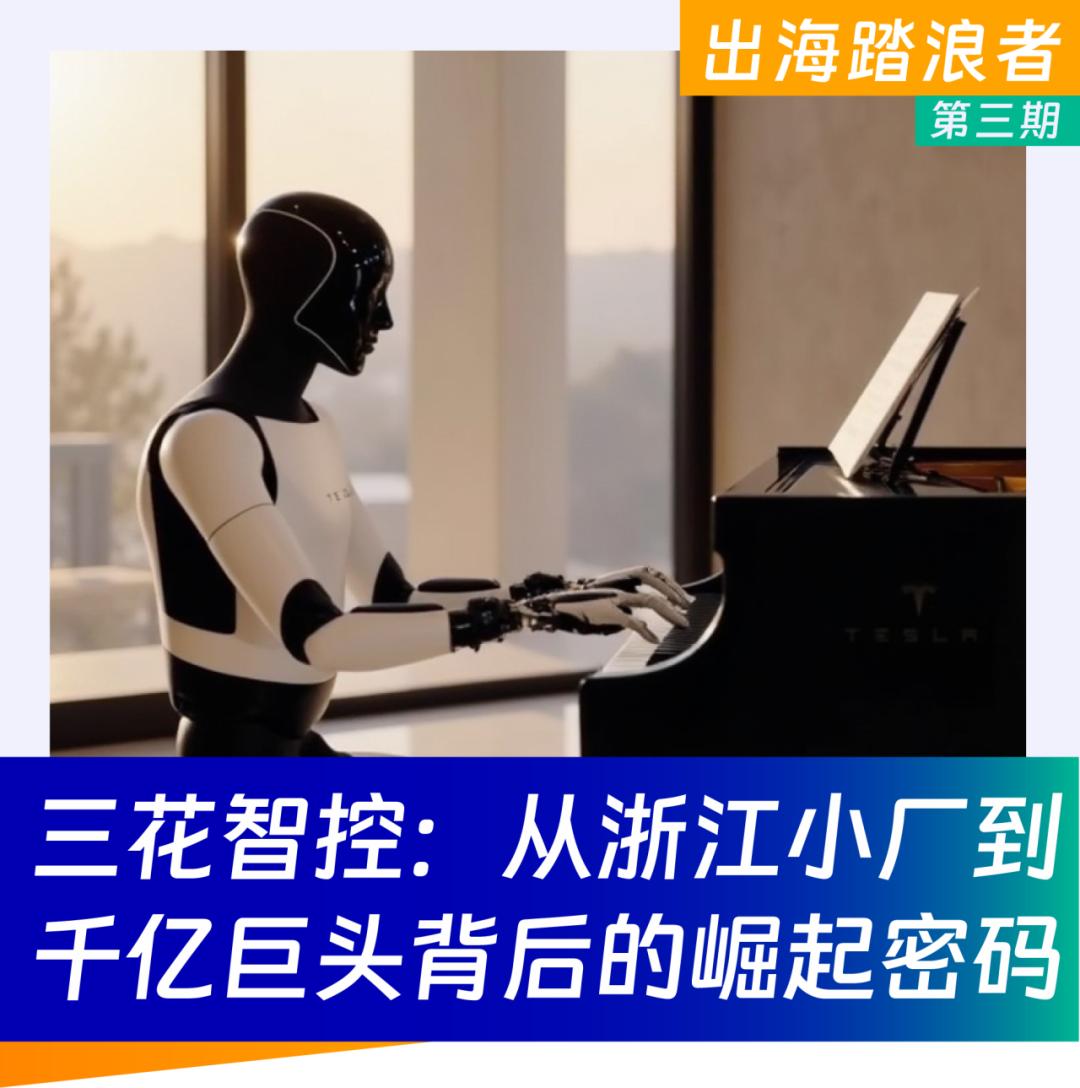
From the hot - discussion caused by the appearance of the robotic dog on the Spring Festival Gala to the inclusion of "embodied intelligence" in the 2025 Government Work Report, humanoid robots have become one of the most concerned industrial tracks at present. In the industrial chain of this track, in addition to downstream enterprises directly facing the market such as Tesla and Unitree Technology, there are also some key players in the upstream of the supply chain who are not well - known to the outside world but have manufacturing advantages and technological accumulations. Their development status directly affects the growth rate and growth space of the entire track, and to a certain extent, also shapes the form and capabilities of the final products.
Sanhua Intelligent Controls is such an enterprise.

Except for stockholders and industry insiders, many people may not have heard of the name of Sanhua Intelligent Controls (hereinafter referred to as "Sanhua"), let alone know what the various valves and components it produces are used for. Zhang Daocai himself once summarized that Sanhua is built by three products, namely the two - way three - way solenoid valve produced in 1987, the air - conditioning four - way valve developed in 1995, and the electronic expansion valve matured in 2014.
As an "invisible champion" in the field of electromechanical components, in the past 40 years, Sanhua has always improved through research on technology R & D and production processes, quietly developing from a small factory in Xinchang, Shaoxing to the world's largest manufacturer of refrigeration and air - conditioning control components and a globally leading manufacturer of automotive thermal management system components, providing core components for almost all leading enterprises in the global air - conditioning and automotive industries. The financial report shows that in 2024, Sanhua Intelligent Controls' operating income was 27.947 billion yuan, a year - on - year increase of 13.80%; the net profit attributable to the parent company was 3.1 billion yuan, a year - on - year increase of 6.10%.
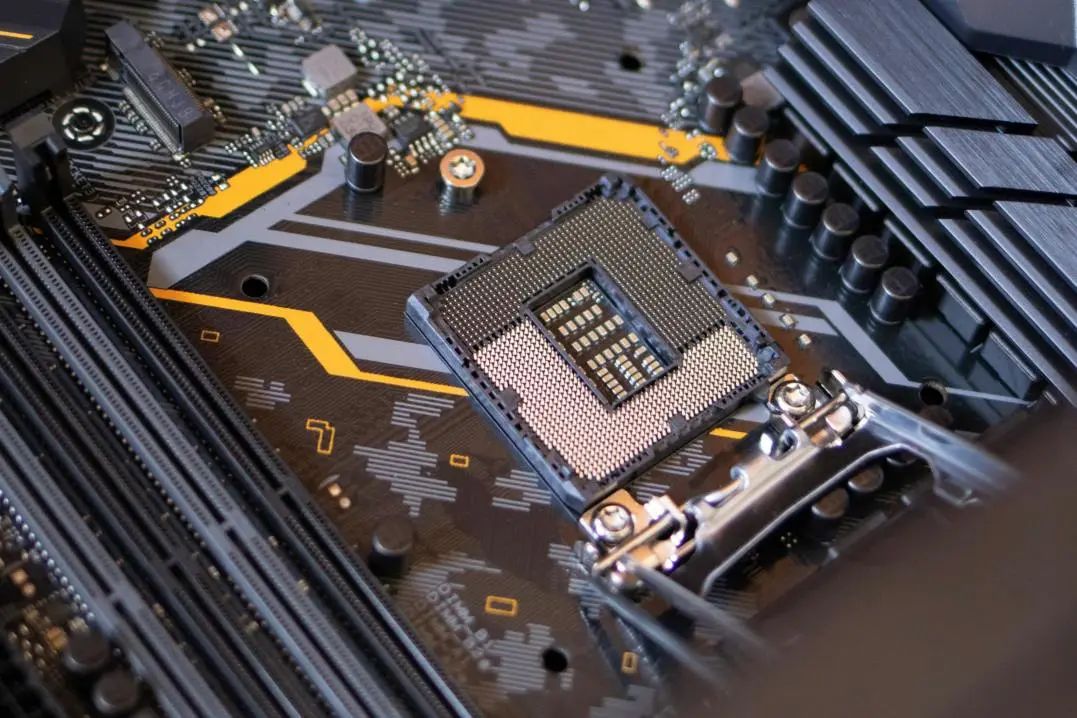
On January 15, 2025, Sanhua applied for listing on the main board of the Hong Kong Stock Exchange again, and its A - share market value exceeded 100 billion yuan. When the development of new energy vehicles is in the ascendant, Sanhua Intelligent Controls planned ahead again and participated in the upsurge of the intelligent robot industry, taking robot electromechanical actuators as the key development area in the future.
If the iteration of the main products constitutes the bright line of Sanhua's development, then the expansion of the global market is a hidden line during this period. From the very beginning of its establishment, Sanhua has faced direct competition with international brands such as Ranco, and the battlefield has never been limited to the domestic market. As of September 30, 2024, Sanhua's overseas market revenue reached 9.051 billion yuan, accounting for 44% of the company's total revenue. It has also built 13 production factories overseas and employed more than 5,000 overseas employees to support the production capacity supply and market operation in the global market.
What factors have determined Sanhua's development from a small factory to an "invisible champion"? What right steps has Sanhua taken in the past 40 years?

Shorten the R & D cycle and grow from a small factory to a small giant

In 2007, in a meeting room of Huanglong Century Plaza in Hangzhou, the Sanhua team led by Zhang Yabo was conducting a difficult acquisition negotiation with the British company Ranco. A few hours later, the two sides parted on bad terms. Zhang Yabo, who was making his first attempt at cross - border mergers and acquisitions, said harsh words on the spot: If you leave this time, don't come back.
As the acquirer, Sanhua had the initiative. At that time, Sanhua's growth in the four - way valve market was irresistible, and its sales volume had ranked first in the world for three consecutive years. Ranco, the earliest inventor of the four - way valve, although it had monopolized the global market for nearly half a century, had been constantly losing the mid - and low - end markets under Sanhua's competition, and its revenue and profits had been declining.
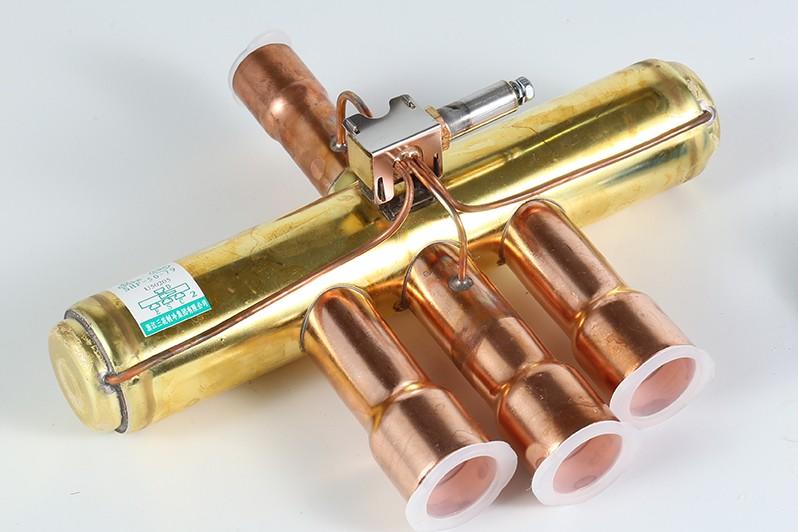
The four - way valve is an essential component of air conditioners. It is only a dozen centimeters long. By moving the piston to change the flow direction of the refrigerant, it determines whether the air conditioner is for cooling or heating. 38 years after Ranco invented the four - way reversing valve, in 1995, Sanhua completed and put into operation its first four - way valve production line.
In 1998, Sanhua was just a small player in the four - way valve market, but it had already caught Ranco's attention. Ranco proposed to acquire Sanhua's four - way valve business at a sky - high price of 300 million yuan.
Regarding the "olive branch" extended by Ranco, there was a fierce debate within Sanhua: Should we seize the opportunity to make a fortune but give up the long - term future, or should we hold on to the product but face the strong competition from our peers? Out of confidence in the development prospects of the Chinese air - conditioning market, Zhang Daocai, the founder of Sanhua, chose the latter.
Zhang Daocai is Zhang Yabo's father. In 1979, he became the sales and supply section chief of the former factory of Sanhua, the Xinchang Agricultural Machinery Repair and Manufacturing Factory in Shaoxing. He promoted the factory's transformation to produce refrigeration accessories, cooperated with Shanghai Jiao Tong University and Haier, and in 1987, broke the monopoly of foreign enterprises and developed the first "two - way three - way solenoid valve", earning 10 million yuan in a year.
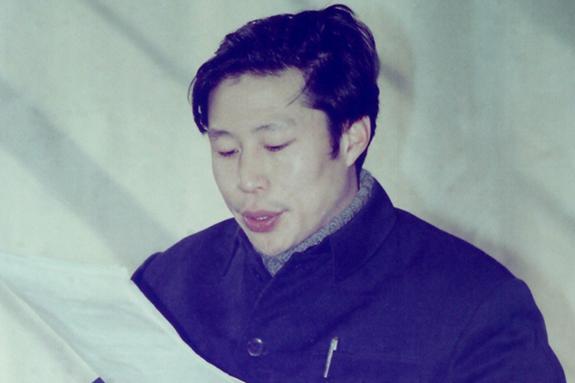
Zhang Daocai, the founder of Sanhua Holding Group
Entering the 21st century, the Chinese air - conditioning market entered a period of rapid growth. Zhang Daocai decided to shift the R & D focus of refrigeration components to air - conditioning stop valves. To compete for the domestic air - conditioning market share, Sanhua continuously optimized production internally, reduced the cost of four - way valves to exchange low prices for high sales; externally, it sent salespeople to visit air - conditioning brands across the country to compete with import enterprises for customers. Soon, domestic air - conditioning brands such as Gree, Midea, Haier, and Changhong successively became Sanhua's customers, and the annual sales volume of multiple valve products reached millions.
In 2005, Sanhua Co., Ltd. was listed on the Shenzhen Stock Exchange, raising 295 million yuan. The next year, the sales volume of four - way reversing valves exceeded 25 million sets, and its global market share rose to 50%.
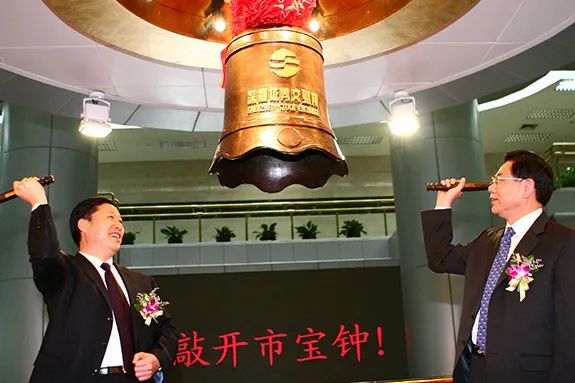
Sanhua's listing on the Shenzhen Stock Exchange
Ten years after Ranco's acquisition attempt of Sanhua was rejected, in 2007, the two companies sat at the negotiation table again, but this time their roles were reversed. Sanhua acquired Ranco's four - way valve business, and thus became a giant in the global four - way valve market with the most complete varieties, the most patents, and the strongest production capacity, and its market share increased to 60%.
"It was right to invest in this decade." Many years later, Zhang Daocai still often mentioned this past event. For him, the ten - year acquisition battle with Ranco meant the correctness of adhering to long - termism and the necessity of winning the competition by product strength.
From Xinchang to Hangzhou, booking a ticket for the electric vehicle dividend

On July 28, 2017, at the model 3 listing and delivery ceremony held by Tesla in California, the United States, the scene was boiling, which also attracted high attention from the global technology and manufacturing industries. At the delivery ceremony, Sanhua's executives were also present as special guests. As one of Tesla's core suppliers, at that time, Sanhua had just won the PACE Award, known as the "Oscar" of the automotive industry, with its electronic expansion valve technology, which was also the first time a Chinese automotive parts enterprise had won this honor. In addition to providing thermal management components for Tesla, Sanhua is also a first - tier supplier for large European automobile manufacturers such as Mercedes - Benz, BMW, and Audi, as well as domestic automobile manufacturers such as BYD, Geely, Li Auto, and NIO.
The prospectus shows that in the nine months ending in September 2024, Sanhua Intelligent Controls' revenue from automotive parts was 8.111 billion yuan, accounting for 40% of the total revenue, becoming a new growth engine for the enterprise. From the air - conditioning four - way valve to the electronic expansion valve for new energy vehicles, behind Sanhua's second development curve is another decade of "right investment".
As early as 2006, Sanhua separated its automotive air - conditioning parts division and established Sanhua Automotive Parts Co., Ltd. in Xiasha, Hangzhou. At that time, Xiasha belonged to the Hangzhou Economic and Technological Development Zone, which provided many support policies for the automotive industry. Sanhua successively established several companies here, initially building a development system for the automotive air - conditioning parts industry.
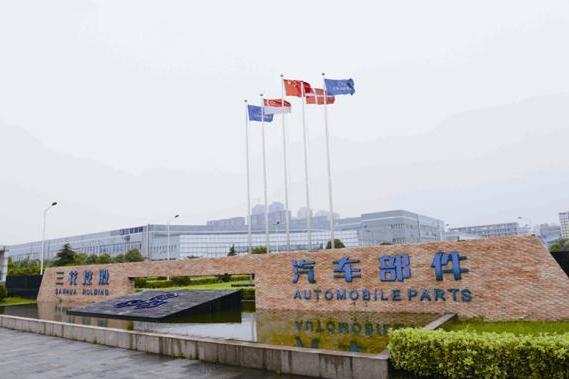
At that time, the automotive industry was still dominated by fuel vehicles, but a few people had foreseen the future rise of electric vehicles in advance. In October 2008, a few months before Tesla began mass - producing and delivering its first batch of electric sports cars, the Roadster, Zhang Daocai visited Lu Guanqiu, the founder of Wanxiang Group in Hangzhou. At that time, Lu Guanqiu told him, "It's no longer necessary to engage in traditional automobiles now. If you want to do it, engage in new energy vehicles."
Although Sanhua's擅长的 thermal management system was already used in fuel vehicles, it was even more critical for new energy vehicles and would directly affect the energy - consumption efficiency of vehicles. Lu Guanqiu's words made Zhang Daocai realize that only by designing good control components and assemblies for automotive air - conditioning thermal management in advance could he seize the future of the automotive industry.
In 2009, Sanhua established a central research institute in the Xiasha Industrial Park in Hangzhou, taking the new energy vehicle air - conditioning system as the main research direction. After four years of difficult exploration of the product route and communication with customer needs, Sanhua finally successfully developed automotive electronic expansion valves and reached cooperation with several leading brands of new energy vehicles in the United States.
The electronic expansion valve is a key component in the new energy vehicle thermal management system, which can precisely control the flow of the refrigerant to achieve more efficient thermal management. With the full - scale explosion of the new energy vehicle industry, Sanhua replicated its success in the air - conditioning four - way valve market. Relying on technological innovation and first - mover advantage, it became a leading enterprise in the thermal management parts industry. Calculated by sales volume, production volume, and revenue, in 2023, automotive electronic expansion valves and integrated components accounted for 52.6% and 65.7% respectively, both ranking first in the global market. Compared with Valeo in France and Mahle in Germany, which only have a global market share of about 15%, it can be said that Sanhua has an absolute leading position in the global electronic expansion valve market.

Layout in humanoid robots, accumulating strength for the third growth curve

Zhang Daocai has expressed his admiration for Tesla and Elon Musk more than once. At the 2019 annual business planning conference, Zhang Daocai said: "Tesla is known for innovative management and develops new products very quickly. In this era, it's even more the case that the fast - moving fish eats the slow - moving fish. Sanhua must be fast."
In 2025, the "fast - moving fish" Tesla accelerated its pace in the field of humanoid robots. At the factory in Fremont, California, where the model 3 was once released, it updated multiple recruitment information related to the development of the Optimus humanoid robot, accelerating the mass - production process of Optimus.

Meanwhile, the domestic humanoid robot market is also surging. Data from the Market Supervision Big Data Center shows that as of the end of December 2024, there were 451,700 intelligent robot industry enterprises in China, a 206.73% increase compared with the end of 2020.
Sanhua keenly察觉到 this trend and planned to layout in the robot field as early as around 2022, betting on this track for the third growth opportunity. Sanhua mentioned in its annual reports for 2022 and 2023 that it would take robot electromechanical actuators as the key development area in the future, "providing new high - value - added growth points for the company in the next 5 - 10 years".
"Centering around automation to achieve machine substitution, we hope to free people from things they don't want to do, improve efficiency, and increase people's freedom. In detail, automated production lines, robots, humanoid robots, and the Internet of Everything are all specific implementation methods, which are the company's opportunities and the directions to go. In the broad scope of automation, (Sanhua Intelligent Controls) focuses on the core components that the company is good at and engages in B2B business." Zhang Yabo once introduced in an interview.
In the same month when Tesla released recruitment information for humanoid robots, Sanhua announced in a notice that it had signed an "Investment Agreement for the Sanhua Intelligent Controls Future Industry Center Project" with the Management Committee of Hangzhou Qiantang New Area, planning to invest no less than 5 billion yuan in Qiantang District, Hangzhou to build a R & D and production base for robot electromechanical actuators and domain controllers.

Sanhua located its humanoid robot R & D base in Hangzhou Qiantang for the same reason as it invested in automotive parts production here 19 years ago, which was to enjoy the policy support from the local government in aspects such as assisting in approval, tax incentives, and applying for national key projects. In addition, as an important city in the Yangtze River Delta economic circle, Hangzhou's industrial systems in advanced manufacturing and artificial intelligence are gradually taking shape, which is conducive to Sanhua further integrating regional supply chain resources and expanding its market share. For example, Unitree Technology's "robotic dog" that appeared on the Spring Festival Gala this year and another company called "One of the Six Rising Stars in Hangzhou", Deep Robotics, are both robot R & D companies located in Hangzhou.
Not long ago, Elon Musk said that the goal in 2025 was to manufacture thousands of Optimus humanoid robots, and the production volume would increase tenfold in 2026, producing 50,000 - 100,000 humanoid robots, and it might double tenfold every year in the future. If Sanhua Intelligent Controls can continue to form a binding relationship with enterprises such as Tesla, it means locking in the next round of industry growth dividends in advance.
Conclusion
Looking at Sanhua's development experience in the past 40 years, the long - term growth code of Sanhua can be summarized as follows: always focusing on the electromechanical component field it is good at, conducting technological R & D in combination with industry development trends, and catching the growth express trains of emerging tracks three times. And each technological route breakthrough and product transformation means accumulating more technological and talent precipitation, gradually building a deeper moat, so as to occupy an advantageous position in advance in the next technological upgrade and take a dominant position in the industrial chain.
Hermann Simon, a famous German management scientist who first proposed the concept of "invisible champions", once said, "Chinese invisible champions show very similar characteristics to German invisible champions, such as high aspirations, down - to - earth attitude, and concentration". Like many "invisible champions" well - known in the industry but unknown to the outside world, Sanhua has shaped the current appearance of Chinese manufacturing with its profound understanding and keen insight into the industry, as well as its low - key and hard - working spirit. The development process of Sanhua is also a microcosm of Chinese manufacturing enterprises constantly growing and strengthening in the surging wave of globalization.
【Reference materials】
1. "The Road of the Explorer: The Biography of Zhang Daocai", Chi Yuzhou;
2. "Sanhua's Leap: Walking with Giants", Enterprise Management;
3. "Hidden Champions: The Pioneers of Future Globalization", Hermann Simon.

This article is from the WeChat official account "Hangzhou Qiantang Enterprise Going Global Service Base". Author: Qiantang Going Global. Published with authorization from Qiantang.