Global Talent
 Cultural Global
Surging Tides at Qiantang, Linking the World: Hangzhou Qiantang is accelerating the construction of a new highland for an open hub.


*The article is sourced from Zhejiang News of Chinanews.com
Zhejiang News of Chinanews, November 11 (Wang Yifei, Jiang Huijun) In the business service area of the Zhejiang Enterprises Overseas Comprehensive Service Port located in the Wisdom Valley of Qiantang District, Hangzhou, the staff are connecting enterprises with cross-border finance, legal compliance and international tax resources; in the "BRICS Post", overseas chambers of commerce and associations, service institutions and local enterprises are communicating and negotiating; in the exhibition area of the Zhejiang-Africa Service Center not far away, four functional sections of cultural exchange, economic and trade promotion, talent cultivation and information interaction are arranged in sequence... From enterprise overseas service to BRICS economic and trade cooperation, and then to China-Africa two-way trade, specific scenarios are conveying the same signal — Qiantang is transforming the location advantage of Hangzhou's "East Gate" into the advantage of an open hub linking the whole world.
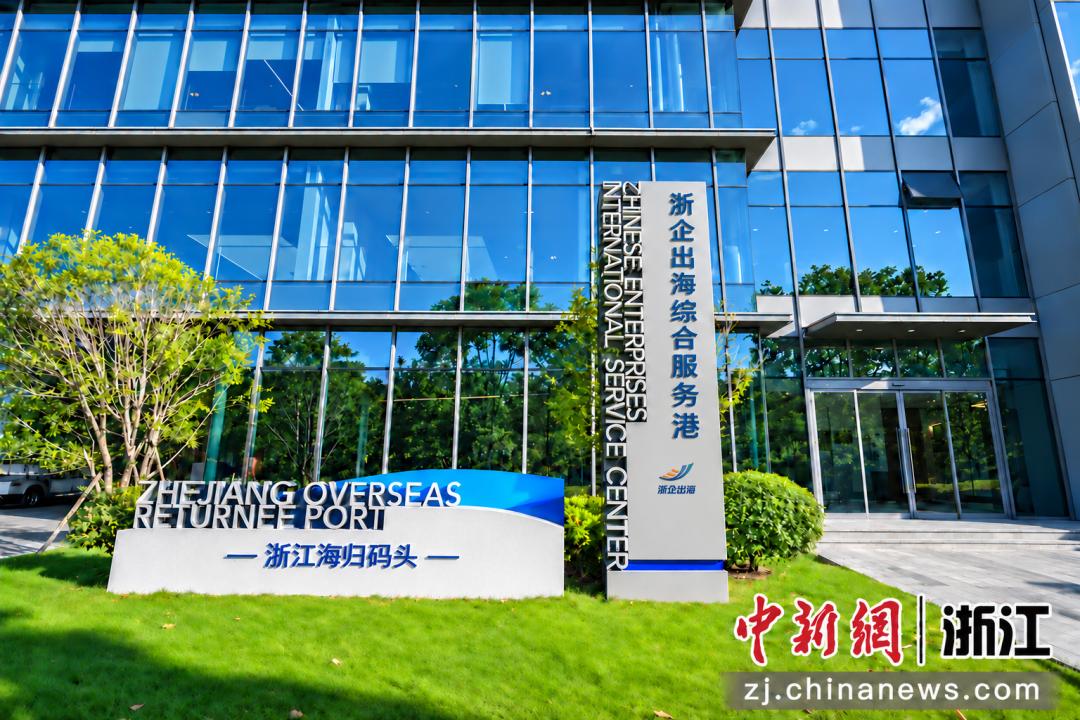
The Zhejiang Enterprises Overseas Comprehensive Service Port located in Qiantang District. Photo by the Publicity Department of Qiantang District Committee.
Qiantang is a key manufacturing town in Zhejiang. Open platforms including the national-level economic development zone, free trade pilot zone, comprehensive bonded zone and cross-border e-commerce comprehensive pilot zone are superimposed here, gathering more than 700 industrial enterprises above designated size. For the local area, the open hub is not only a channel for goods to enter and exit, but also a node for the allocation of resource elements and a springboard for enterprises to go global. Opening-up requires both "bringing in" and "going global"; it requires not only channels, but also services.
From "Channel" to "Hub"
Accelerated Integration of Open Functions
01

An open hub must first have bearing functions. Qiantang's open platforms are evolving from a single channel function to integrated functions.
The Zhejiang Enterprises Overseas Comprehensive Service Port is a microcosm of this transformation. In a 4,000-square-meter space, more than 50 professional service institutions and platforms such as the "BRICS Post" are gathered, forming a one-stop cross-border investment service ecosystem covering government affairs, consulting, finance, law, finance and taxation, with a total of more than 1,000 enterprise service sessions. Adopting the mode of "service provider settlement + enterprise service reservation", the service port allows enterprises to connect with cross-border finance, legal compliance, international taxation and other resources on a single platform. There are many links for enterprises to go global. Once they encounter key bottlenecks, whether they can quickly find matching resources often affects the project progress. To this end, the service port has sorted out a "high-frequency pain point list", introduced professional service providers to respond to each category, and transformed "enterprises looking for services" into "services waiting for enterprises".
The service port solves the first step for enterprises to go global. Further down, open platforms also need to solve the problems of goods, brands and industrial landing. The China Cooperation Center for Special Economic Zones of BRICS Countries has established contacts with 5 international organizations, 20 BRICS embassies and consulates, 56 overseas special economic zones and chambers of commerce and associations. From January to August 2026, Qiantang's total import and export to other BRICS countries reached 16.51 billion yuan, a year-on-year increase of 15.6%; of which exports reached 12.74 billion yuan, a year-on-year increase of 21.6%. The functions of this platform are extending from economic and trade docking to commodity exhibition and sales and brand landing. "Buy in BRICS" has set up two physical operation points in Qiantang, gradually building a normalized exhibition and sales ecosystem integrating online and offline, opening up the chain of "commodity display - compliance access - channel docking - purchase conversion", and undertaking functions such as the display window for characteristic commodities of BRICS countries, the first-stop platform for overseas brands to enter the Chinese market, the physical reception hall for two-way economic and trade docking, and the demonstration scenario of cross-border new retail.
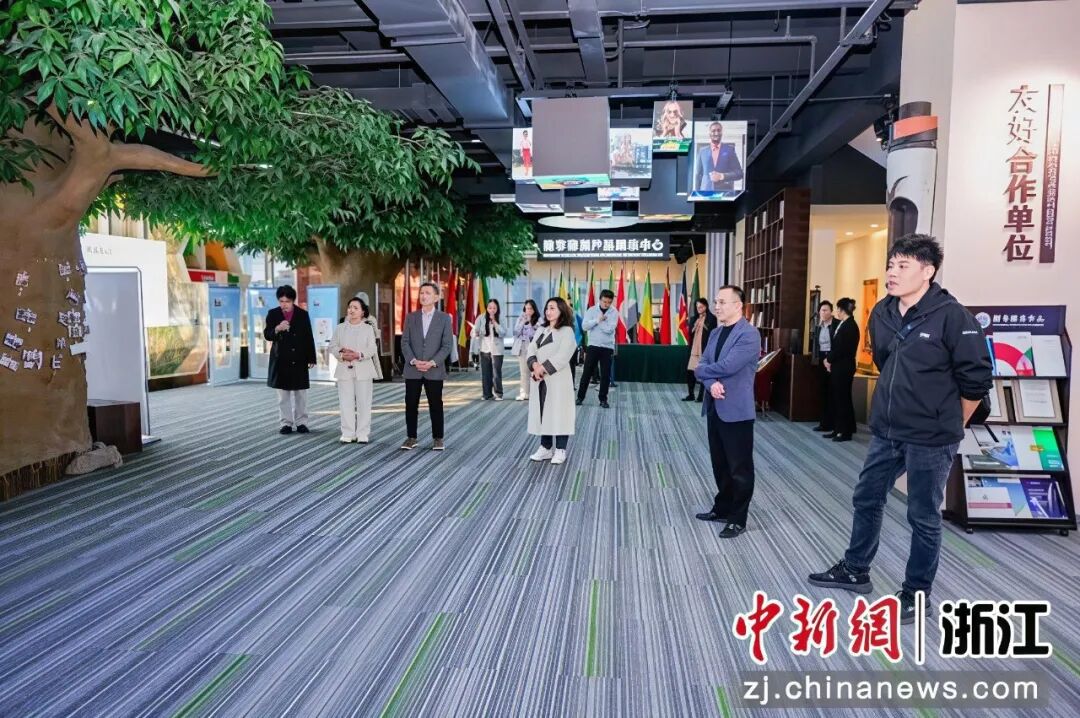
Zhejiang-Africa Service Center. Photo by the Publicity Department of Qiantang District Committee.
Apart from commodities and brands, industrial cooperation also requires more carriers. The local Zhejiang-Africa Service Center is based in Qiantang, serves Zhejiang, and guides and serves enterprises targeting Africa, especially private enterprises. Under the guidance of the China-Africa Chamber of Commerce for Non-Governmental Promotion, the center promotes the construction of the Belt and Road China-Africa Cooperation Industrial Park. As a national key landing carrier of the trade promotion project under the "Nine Programs" of the 2021 Forum on China-Africa Cooperation, the industrial park enjoys three national-level open platforms of free trade zone, comprehensive bonded zone and cross-border e-commerce comprehensive pilot zone, and is empowered by the policies of special economic zones of BRICS countries in 2025. The project is fully developed by state-owned assets and state-owned enterprises of Qiantang District, operated under the guidance of the Zhejiang-Africa Service Center, linked with 23 African countries and 8 industrial parks in Africa, opening up the whole chain of China-Africa investment promotion docking, cross-border trade and enterprise settlement. It plans two main business formats of industrial office and single-family factory buildings, which can adapt to scenarios such as intelligent manufacturing R&D, pilot production, cross-border exhibit display and foreign trade office.
These platforms are not simple physical concentration, but form a functional chain covering enterprise overseas development, overseas Chinese merchants docking, BRICS economic and trade cooperation, and China-Africa cooperation. Enterprises can connect with multiple types of resources such as policies, markets, finance, laws and talents at one window; institutions can find projects, partners and channels on one platform. Qiantang promotes open services from "fragmented" to "integrated", allowing the open hub to grow from a single-point function to a complete service chain.
From "Enterprises Looking for Services" to "Services Waiting for Enterprises"
Continuous Improvement of the Open Ecosystem
02

The effectiveness of the open hub ultimately falls on the cross-border transaction cost of enterprises and the speed of "Qiantang Manufacturing" going global.
The integration effect of the above-mentioned service port has been reflected in many specific cases. Through the docking of the service port, Qiantang Ark signed a $3 million letter of intent for orders with Senegal at the Global Digital Trade Fair. From "confusion" to "order", the key turning point lies in the effective matching of enterprise demands and overseas resources by the platform. Such cases show that open services cannot stay at the level of policy release, but need to enter specific scenarios of enterprises to solve problems such as information asymmetry, inaccessible resources and disconnected services.
The open services of the service port are not one-way. Cross-border investment includes both outbound investment and inbound investment. If overseas Chinese businessmen in Southeast Asia or Europe hope to enter the Chinese market or connect with Chinese supply chains, the service port can link government institutions and domestic service providers to provide equivalent "one-stop services". Under the guidance and support of the overseas Chinese federations at provincial, municipal and district levels, the service port also maintains communication and docking with overseas Chinese merchant networks, so that overseas Chinese merchants can not only be "destination partners" for Chinese enterprises to go global, but also potential "companions".
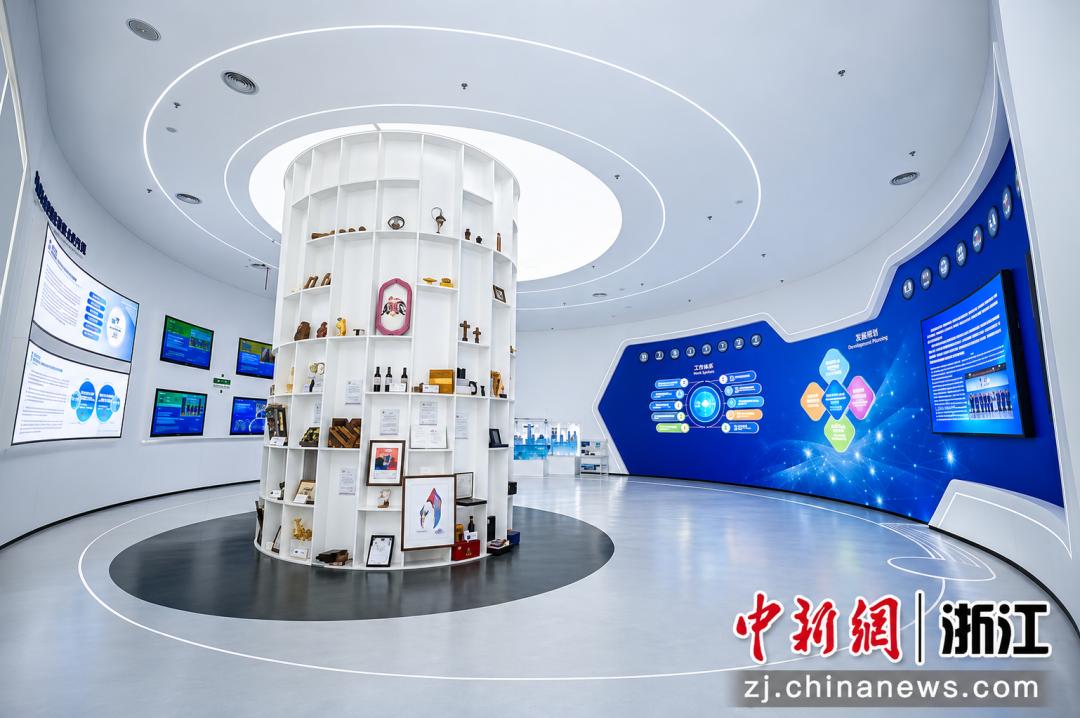
International Reception Hall of the China Cooperation Center for Special Economic Zones of BRICS Countries. Photo by the Publicity Department of Qiantang District Committee.
"Buy in BRICS" also undertakes two-way service functions. Relying on the superimposed advantages of multiple zones including Qiantang Comprehensive Bonded Zone, Free Trade Zone and Cross-border E-commerce Comprehensive Pilot Zone, as well as logistics and supply chain resources, the platform helps BRICS brands reduce the trial and error cost of entering the Chinese market, allows products to face consumers directly, test market response, and precisely connect with local e-commerce and offline channel resources. Its value is not simply selling commodities of BRICS countries to China, but helping BRICS brands truly understand China, enter China, and gradually gain a firm foothold in the Chinese market.
The confidence of the open ecosystem comes from the industrial hinterland. Qiantang gathers more than 700 industrial enterprises above designated size, with the total industrial output value of enterprises above designated size exceeding 400 billion yuan in 2025, and deepens the "chain + cluster" development around the five leading industries of "automobile, medicine, chip, chemical industry and intelligence". Industries have demands, and opening-up has channels; enterprises have scenarios, and the hub has services. Qiantang Intelligent Factory of Yokohama Rubber, the largest wholly foreign-owned manufacturing single project in Hangzhou in the past decade, was put into operation 11 months after the start of construction, refreshing the fastest record of the enterprise's global factory construction. This year, leading enterprises in the field of embodied intelligence such as Galaxy General, Star Motion Era and Unitree Robotics have successively settled in Qiantang. Behind these cases is Qiantang's continuous efforts to transform location advantages and platform advantages into opening-up advantages and development winning advantages.
From "Commodity Flow" to "Rule Docking"
In-depth Development of Institutional Opening-up
03

The long-term competitiveness of an open hub depends not only on the scale of commodity and factor flow, but also on the docking capacity of rules and standards.
Cooperation between special economic zones is the core of the economic and trade cooperation network built by the BRICS Center. Special economic zones include free zones, export processing zones, comprehensive bonded zones, economic and technological development zones, high-tech zones, etc. Some countries have also set up oil and gas special economic zones, agricultural product processing special economic zones, mineral processing special economic zones and other special economic zones according to industries. These special economic zones play a significant role in attracting foreign investment, increasing employment, driving GDP and promoting industrial upgrading, and are regarded as a window to understand a country's economic development. Qiantang's exploration in this field is evolving from individual projects to rule docking.
In March 2025, the General Administration of Customs of China included cross-border e-commerce goods and bonded goods into the scope of TIR international road transport, and uniformly handled them through the International Trade "Single Window". The Qiantang Block of Hangzhou Area of China (Zhejiang) Pilot Free Trade Zone took the lead in exploration across the country, linking ports such as Manzhouli and Khorgos to build a cross-provincial coordination mechanism of "Zhejiang warehouse pre-position + border port linkage + TIR direct access": scattered cross-border e-commerce goods are assembled in the inland pre-set cargo collection warehouse, with "one declaration, one certificate throughout the process, and fast inspection throughout the whole process" when exiting the country, no need to unpack and inspect repeatedly at border ports, the comprehensive logistics cost is reduced by about 25%, and the transportation efficiency is improved by about 58%.
The story of rule docking continues. Qiantang is planning to explore the mutual recognition of economic and trade standards of BRICS countries relying on the pilot free trade zone, study the limited acceptance of conformity assessment results of overseas special economic zones, and strive to form an operation plan of "one certification, two zones access"; at the same time, it will share the model experience that has been replicated and promoted in many places inside and outside the province, such as the "9610" list traceability management, to the special economic zones of BRICS countries. In local words, the rule story tells one thing: make every institutional innovation move towards "replicable and mutually recognizable", and promote scattered pilot "bonsai" to be connected into the "landscape" of global opening-up.
From the Zhejiang Enterprises Overseas Comprehensive Service Port to the China Cooperation Center for Special Economic Zones of BRICS Countries, from "Buy in BRICS" to the China-Africa Cooperation Industrial Park, Qiantang is stringing open platforms into chains, integrating services around enterprises, and turning the industrial hinterland into support for two-way connection. In the next step, Qiantang will continue to accelerate the construction of the main platform of a global advanced manufacturing base, link global resources with an open hub, and shape new competitive advantages with new quality productive forces. The opening story of this new industrial city is unfolding in more specific scenarios.
This article is from the WeChat Official Account "Zhejiang Enterprises Overseas Comprehensive Service Port".