Cultural Global
As the export tax rebate rate declines, where is the next stop for the overseas expansion of new energy vehicles?

Ministry of Finance and State Taxation Administration have released an official announcement, clarifying that starting from April 1, 2027, the export VAT rebate rate for new energy vehicles will be lowered from 13% to 9%. The 4 percentage point reduction in the rebate rate means that the space for Chinese automakers to participate in overseas competition relying on export cost advantages may be further narrowed. Against the backdrop of the continuous expansion of the global new energy vehicle market, exploring new market growth increments has become a key topic for Chinese automakers' overseas expansion.
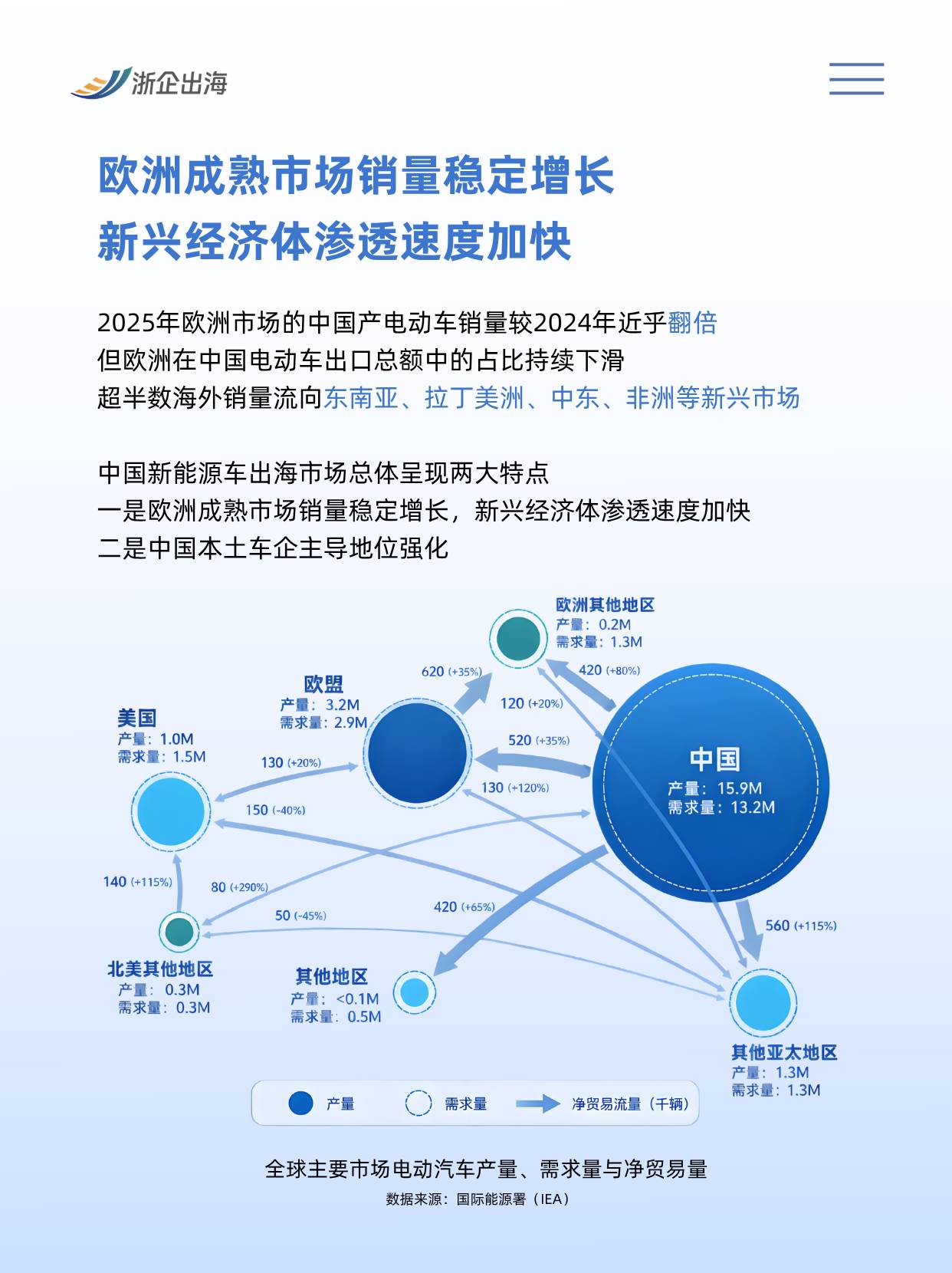
According to the *Global EV Outlook 2026* released by the International Energy Agency (IEA), different regions around the world present distinctive growth opportunities and competition patterns.
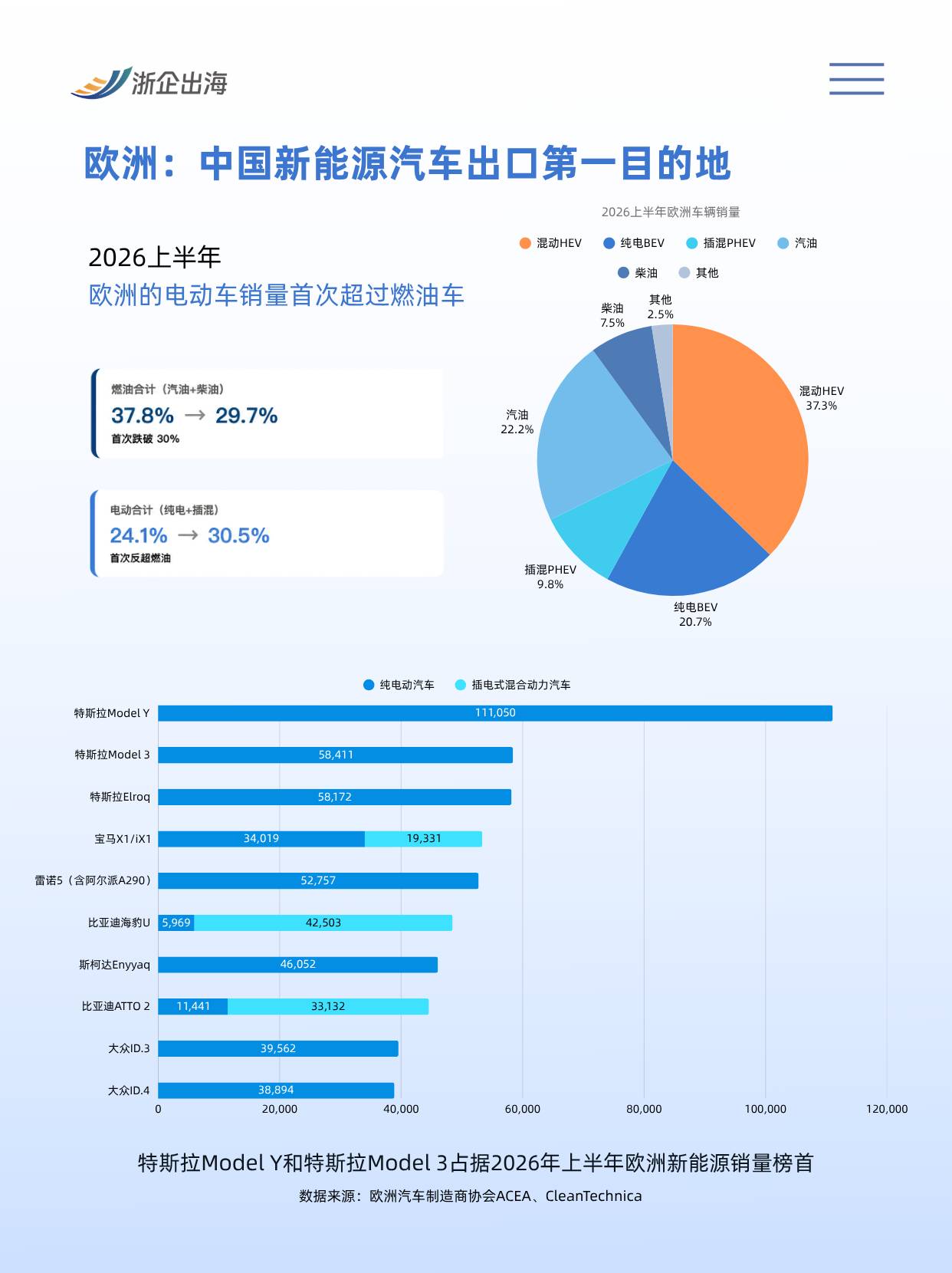
I. Europe. In the first half of 2026, electric vehicle sales in Europe surpassed fuel vehicle sales for the first time, and market demand in Europe continues to grow. Chinese brands, relying on extreme cost-effectiveness and vertically integrated industrial chain capabilities, are currently the biggest variable in the European market. Building local overseas factories, carrying out localized OEM cooperation, and deepening local operations will be the core paths for Chinese automakers to enhance brand influence and avoid trade barriers.
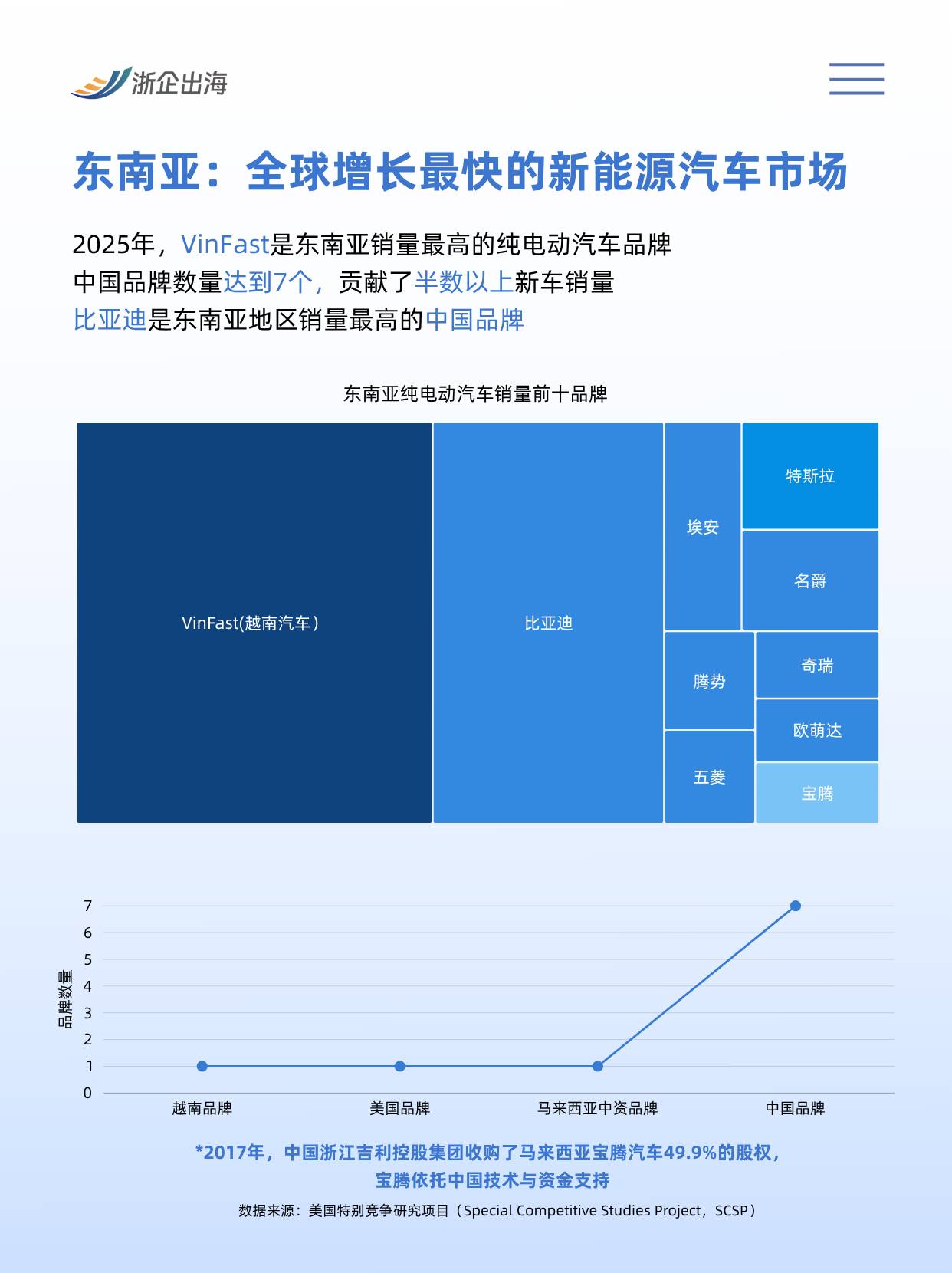
II. Southeast Asia. Total electric vehicle sales in Southeast Asia increased by 100% year-on-year to 500,000 units in 2025, and Chinese brands contributed more than half of the new vehicle sales. Starting from 2026, Thailand, Malaysia and Indonesia have successively introduced new restrictive policies for new energy vehicles. The policy focus has shifted from stimulating end consumption to attracting investment and cultivating local complete vehicle and upstream and downstream supply chains, which will force overseas automakers to abandon the pure trade model and set up local CKD production lines.
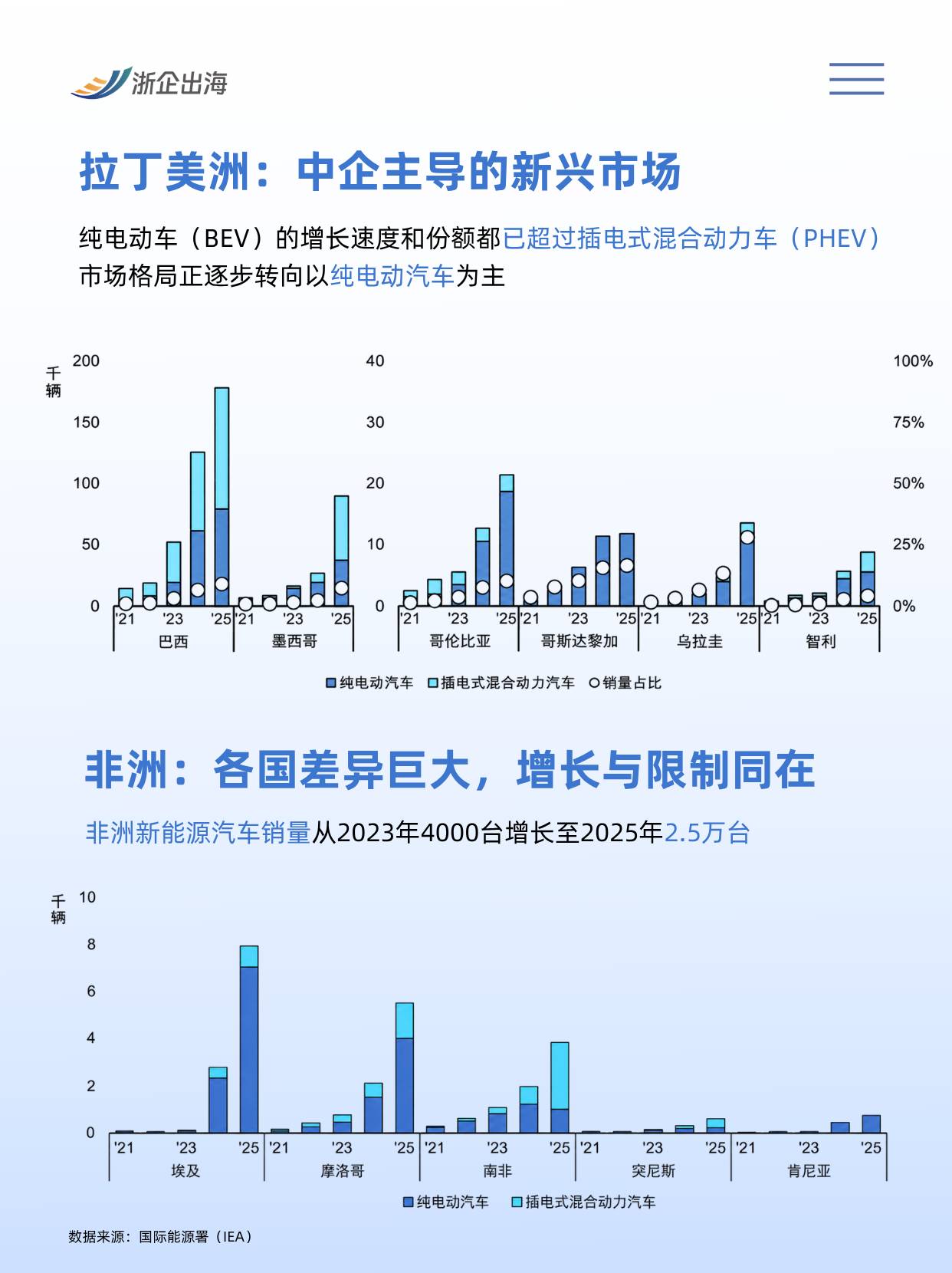
III. Latin America. In the second quarter of 2026, new energy vehicle sales in Latin America increased by 137% year-on-year to nearly 190,000 units, and the market pattern is gradually shifting to pure electric vehicles as the mainstream. Chinese new energy vehicle manufacturers combine technological leadership with high cost-effectiveness to establish a dominant position in Latin America. With a large number of new brands entering the market intensively, there is a possibility of market pattern restructuring.
IV. Africa. New energy vehicle sales in Africa reached 25,000 units in 2025. Commercial fleets such as online ride-hailing, leasing, logistics and corporate official vehicles are the main driving force for local electrification. Chinese electric vehicle brands are reshaping the African automotive market through competitive prices, product strategies centered on hybrid power, and customized solutions targeting local pain points such as unstable power grids.
With the adjustment of the export tax rebate policy, the overseas expansion of Chinese new energy vehicles is shifting from price competition to localized layout and differentiated competition. How to grasp the market opportunities in various regions and adapt to local policies and consumer demands will become the key for Chinese automakers to move from "product export" to "industrial overseas deployment".