Cultural Global
The second phase of the "BRICS Direct Train · Hangzhou for BRICS" SEZ Economic and Trade Cooperation Acceleration Camp was held in Hangzhou.

To further solidify the BRICS Special Economic Zone China Cooperation Center (hereinafter referred to as the "BRICS Center") and precisely empower Hangzhou enterprises to explore the BRICS market, the 2nd phase of the "BRICS Direct Train · Hangzhou to BRICS" Special Economic Zone Economic and Trade Cooperation Acceleration Camp (hereinafter referred to as the "2nd Acceleration Camp") hosted by Hangzhou Municipal Bureau of Commerce was held in Qiantang District, Hangzhou on August 21. Representatives from commerce bureaus of all districts, counties (cities) and relevant special economic zones attended the event. More than 60 representatives from enterprises that have already gone global or intend to layout in the BRICS market participated, covering fields including artificial intelligence, intelligent manufacturing, new energy, financial consulting, construction trade, and pharmaceuticals. Before the event started, all participants visited the exhibition hall of the BRICS Center to gain in-depth understanding of its construction background, key priorities and phased achievements.
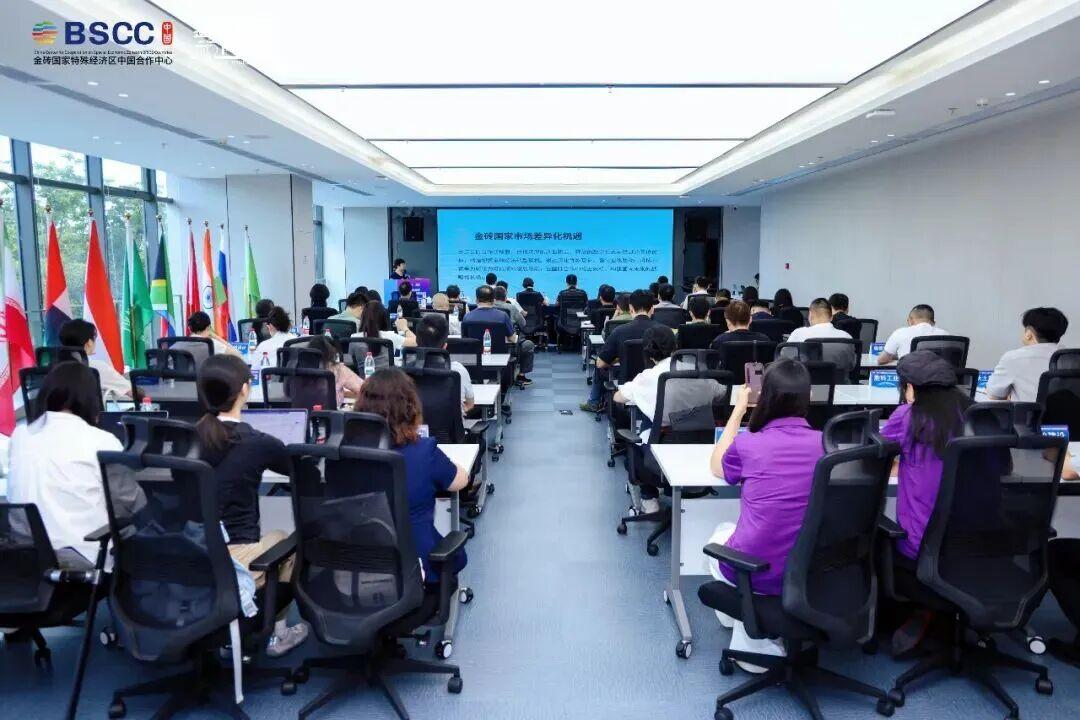
Relevant official from Hangzhou Municipal Bureau of Commerce introduced the construction achievements of the BRICS Center and priorities for the next step. As a core platform for Hangzhou to serve the overall national opening-up landscape, connect the "Global South" and expand emerging markets, the BRICS Center has seen its platform system increasingly improved, brand activities carried out in depth, and economic and trade cooperation enhanced in quality and efficiency since its launch over a year ago. Up to now, Hangzhou has introduced 33 special policies in 6 areas including trade innovation, two-way investment and customs clearance facilitation, set up 11 BRICS Special Economic Zone service stations, and held more than 30 brand activities such as "BRICS Direct Train · Hangzhou to BRICS". From January to June this year, the total import and export volume of Hangzhou to BRICS countries reached 1341.6 billion yuan, accounting for 28.1% of the city's total foreign trade. In the next step, Hangzhou will take the BRICS Center as the core carrier, focus on the five major brands of "Buy in BRICS, Invest in BRICS, Digital BRICS, Innovative BRICS, Cultural & People-to-People BRICS", promote the construction of the "Five Centers", and continue to provide all-round, full-chain services for Hangzhou enterprises to deeply cultivate the BRICS market.
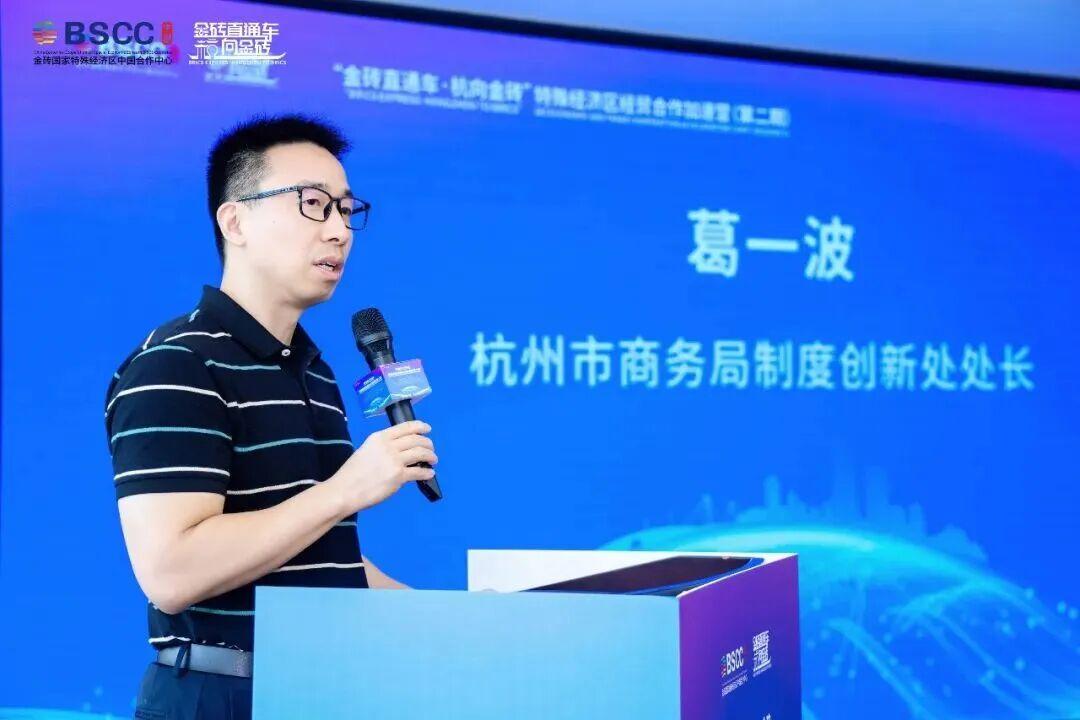
Centering closely on the actual needs of enterprises going global, the 2nd Acceleration Camp has elaborately arranged full-chain content ranging from country-level practical operations, investment opportunities in overseas special economic zones to exhibition empowerment, visa services and investment filing, covering 9 special topic modules and multiple rounds of interactive Q&A sessions.
Deeply Cultivate Country-specific Markets:
Investment Environment and Implementation Practices in BRICS Countries
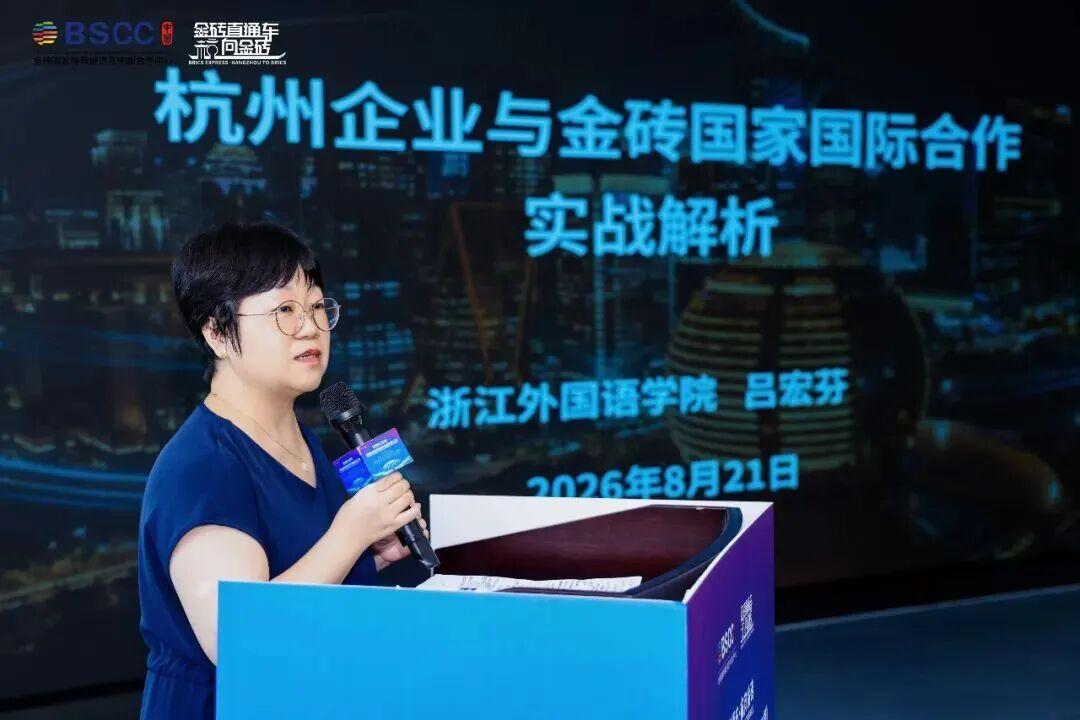
Lv Hongfen, Director of the Institute of Latin American Studies of Zhejiang International Studies University shared her insights on the practical international cooperation between Hangzhou enterprises and BRICS countries based on the previous in-depth visits and investigations conducted by Hangzhou Municipal Bureau of Commerce in 13 districts, counties (cities). She pointed out that Hangzhou has remarkable advantages in digital economy, private sector vitality and national-level platform empowerment. It should implement differentiated going-global strategies for BRICS countries in different regions such as Southeast Asia, Latin America and the Middle East, make key breakthroughs in fields including intelligent manufacturing, digital technology and green energy, and avoid geopolitical and compliance risks through clustered going-global and localized operation.
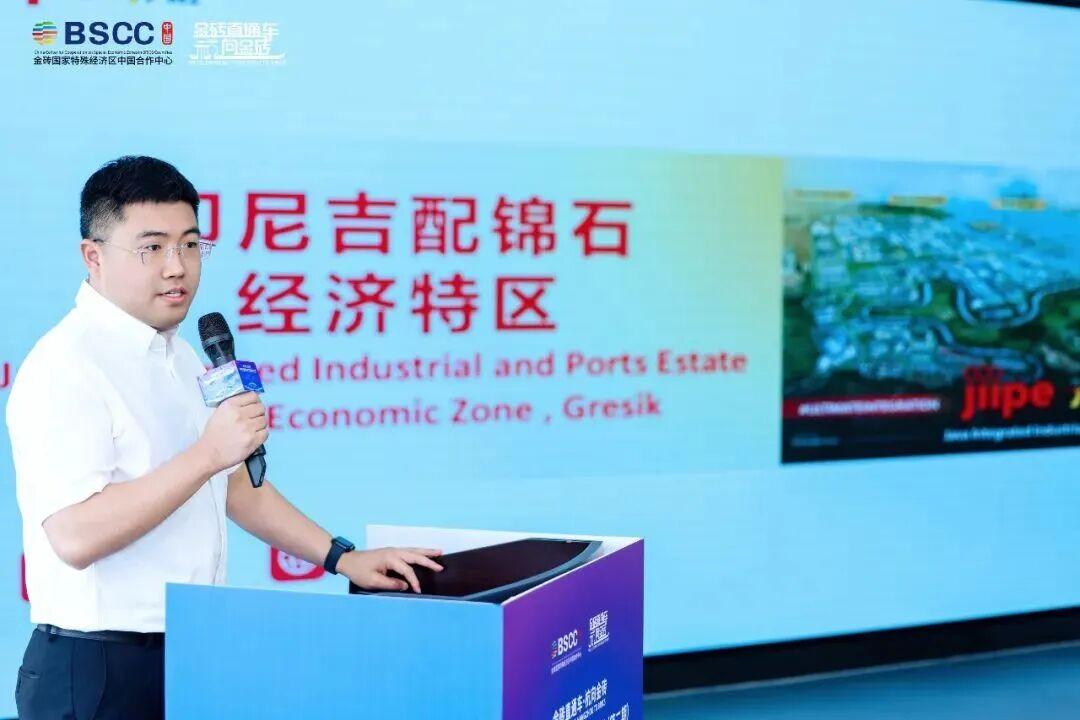
Hu Tianye, Head of China Market of Indonesia Gresik Special Economic Zone introduced the strategic location, comprehensive facilities and preferential policies of the special zone in detail. He stated that the special zone is equipped with complete port logistics supporting facilities and abundant land resources, and suggested Hangzhou enterprises focus on the investment opportunities in the special zone in fields such as metal processing and electronic manufacturing, and take advantage of the policy window period of the special zone to lock in advantageous resources as soon as possible.
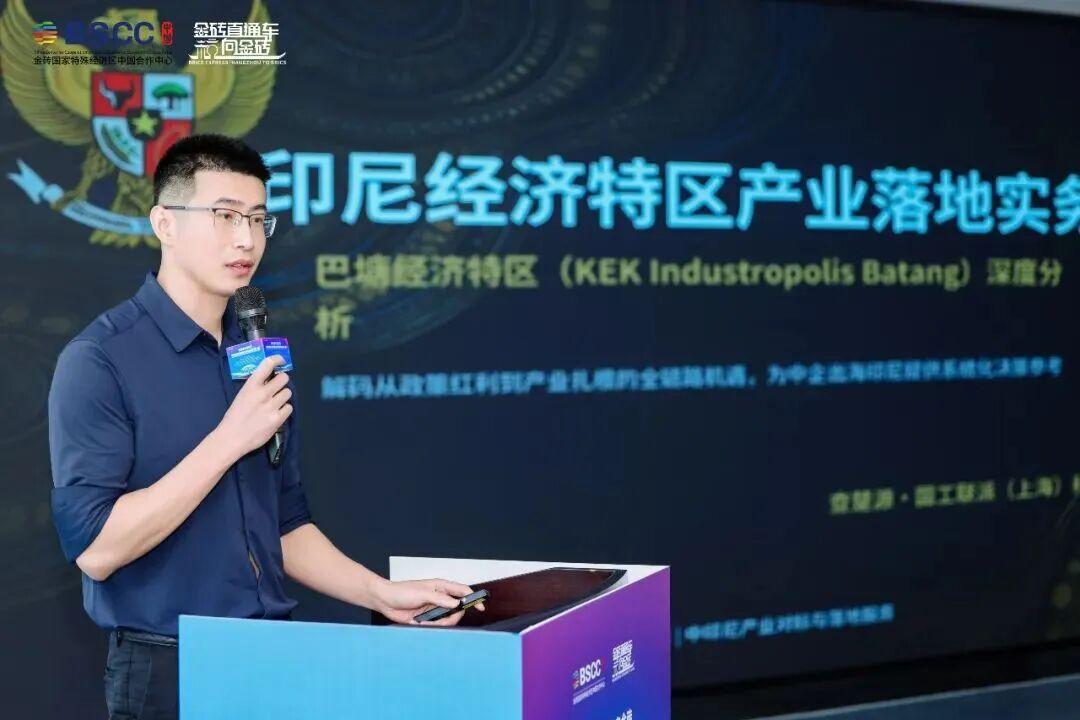
Cha Chuyuan, General Manager of Guogong Lianpai (Shanghai) Technology Development Co., Ltd. conducted an in-depth analysis of the policy dividends and industrial ecology of Indonesia Batang Special Economic Zone. Taking the "Batang Speed" that Longte Special Steel achieved production in only 15 months as an example, he pointed out that the China-Indonesia "Two Countries, Twin Parks" framework provides enterprises with an efficient landing channel, and suggested that enterprises make good use of the one-stop approval service in the special zone to greatly shorten the time cycle from contract signing to production.
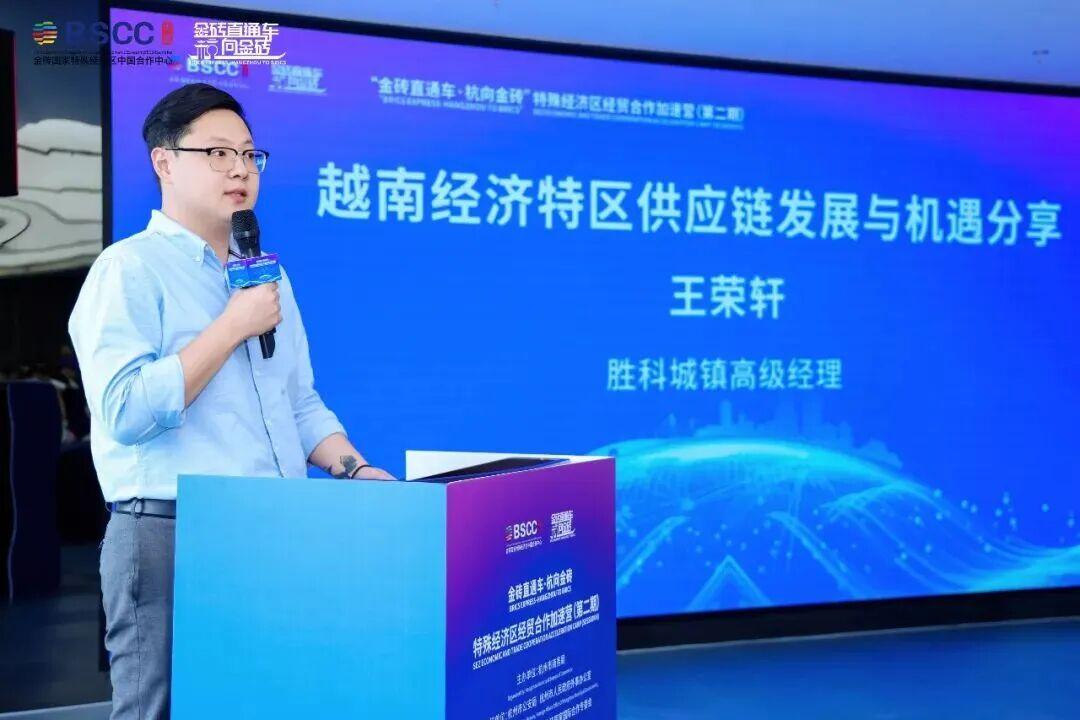
Wang Rongxuan, Senior Manager of Semburban Towns shared the latest opportunities for supply chain development in Vietnam's special economic zones. He pointed out that Zhejiang is one of the major manufacturing provinces in China with the shortest sea shipping distance to Vietnam. It not only has remarkable advantages in supply chain response, but also its characteristic industries such as textile and new energy are highly compatible with the demand of the Vietnamese market. He suggested that Hangzhou enterprises choose suitable regions according to their industrial positioning and make full compliance plans before going global.
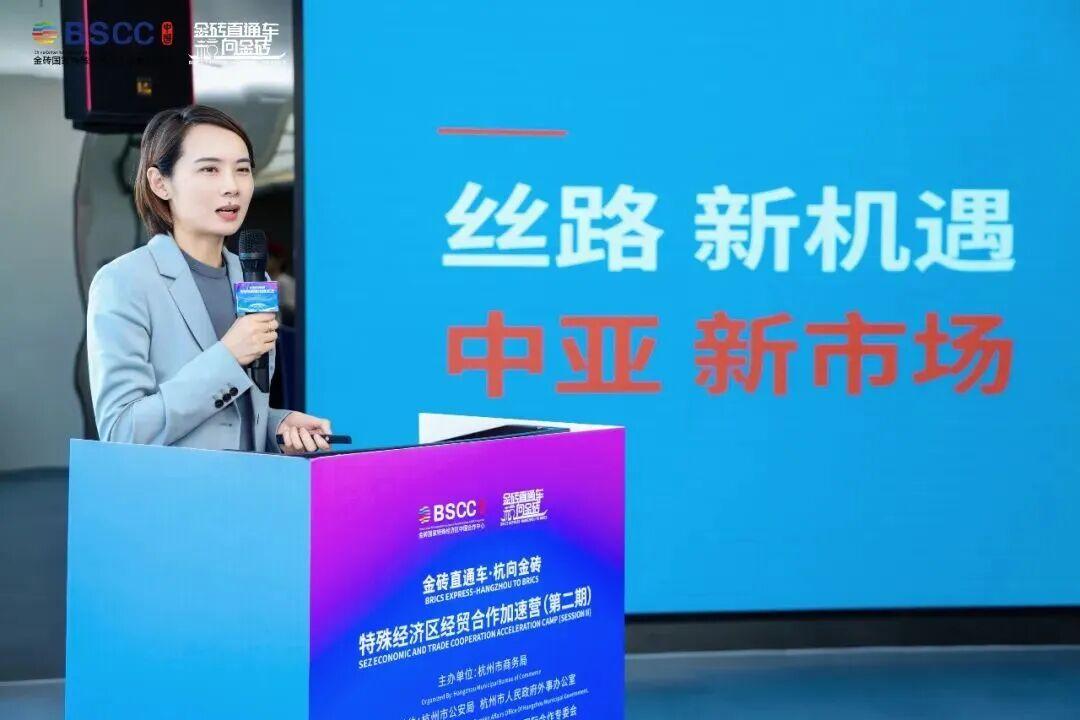
Pan Beibei, Marketing Director of Holley · Uzbekistan (Central Asia) Huata Industrial Park shared insights on the park's location planning and preferential investment policies. She pointed out that Zhejiang's advantageous industries such as textile, auto parts and building materials are highly complementary to the Uzbekistan market, and suggested that Hangzhou enterprises seize the window dividend of the China-Kyrgyzstan-Uzbekistan railway construction, take Uzbekistan as a strategic fulcrum to enter the Central Asian and Eastern European markets, and make good plans for localized employment and compliance at the same time.
Consolidate the Cornerstone of Compliance:
Contract Facilitation and Full-process Practice of ODI Filing
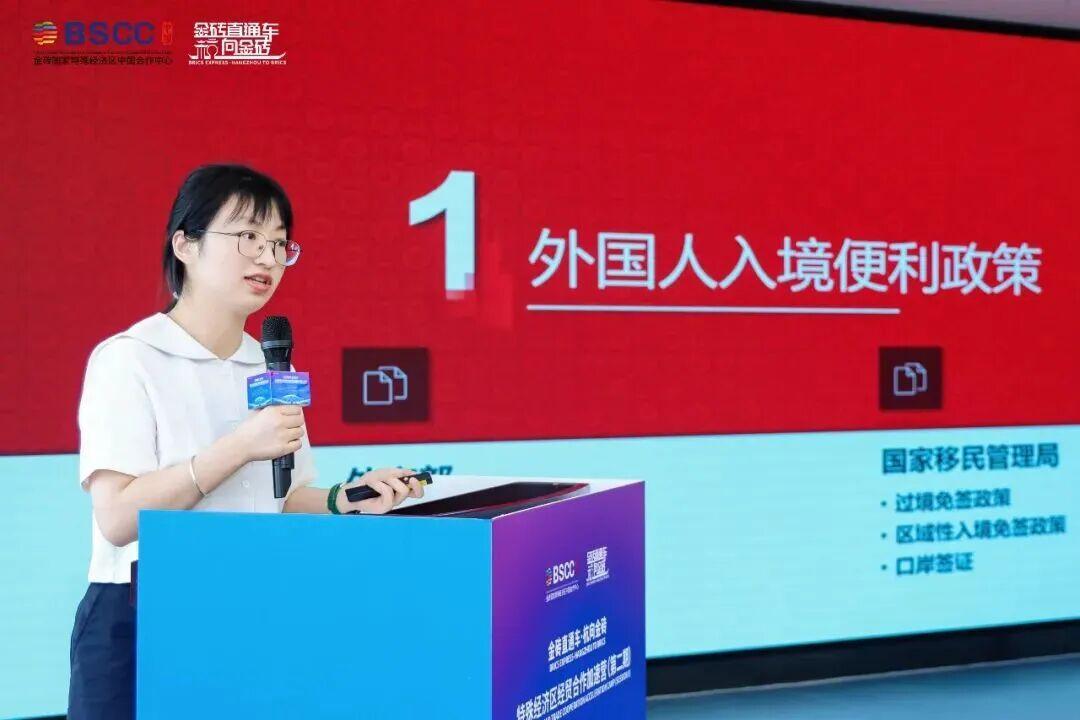
Chen Tianying, Third-level Police Sergeant of Exit-Entry Administration Brigade (International Cooperation Division) of Hangzhou Municipal Public Security Bureau interpreted the facilitation policies for foreigners entering China, focusing on the full-chain services including 240-hour transit visa exemption, emergency port visa channel, accommodation registration, visa extension and residence permit. She pointed out that port visa, as an important channel for foreigners to come to China, has been implemented in 99 open ports in 73 cities across the country, providing institutional guarantee for enterprises and their BRICS partners to come to Hangzhou for urgent negotiations.
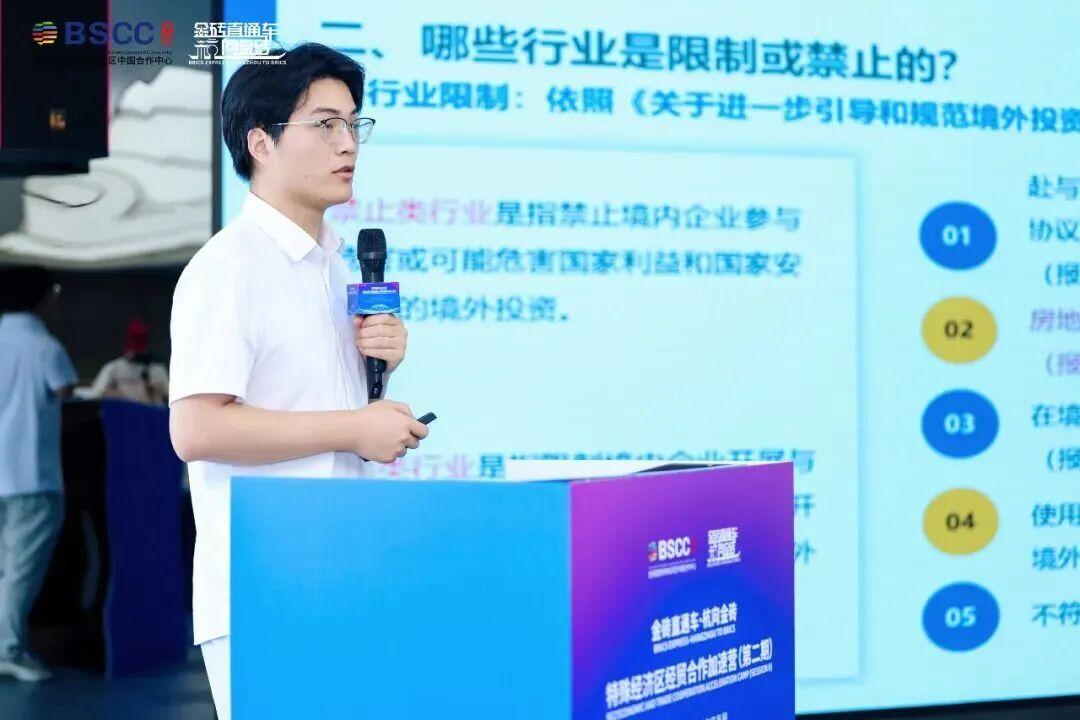
Gao Zhangqiang from the Foreign Economic Cooperation Division of Hangzhou Municipal Bureau of Commerce conducted an in-depth interpretation of the overseas direct investment (ODI) filing policies and administrative regulations. He systematically sorted out the filing levels, filing processing methods, precautions and common problems in preparing filing materials, and clarified the definition criteria for restricted and prohibited industries. He suggested that enterprises make preparations in advance such as overseas company name verification and feasibility study report compilation, reserve sufficient time to complete the filing process, and ensure the project is promoted in a legal and compliant manner.
Integrate Empowerment Platforms:
Comprehensive Service Port and Exhibitions Boost Global Layout
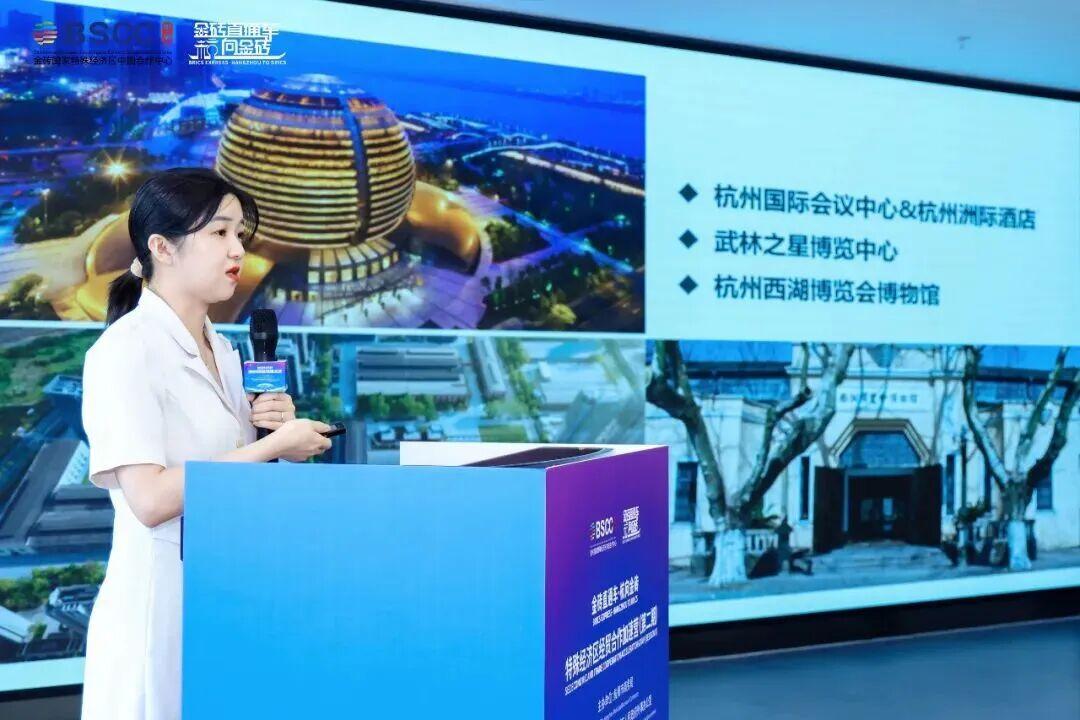
Zhu Lichuan, Manager of Market Development Department of Hangzhou Convention and Exhibition Group sorted out high-quality exhibitions in BRICS countries represented by the Indonesia Digital Transformation Expo (DTI-CX), and shared the exhibition selection strategies and the full process of exhibition preparation. She suggested that enterprises actively use exhibition platforms to obtain orders and expand customers, and gradually expand the Indonesian market through the three-stage strategy of "channel first - compliant landing - in-depth ecological cultivation".
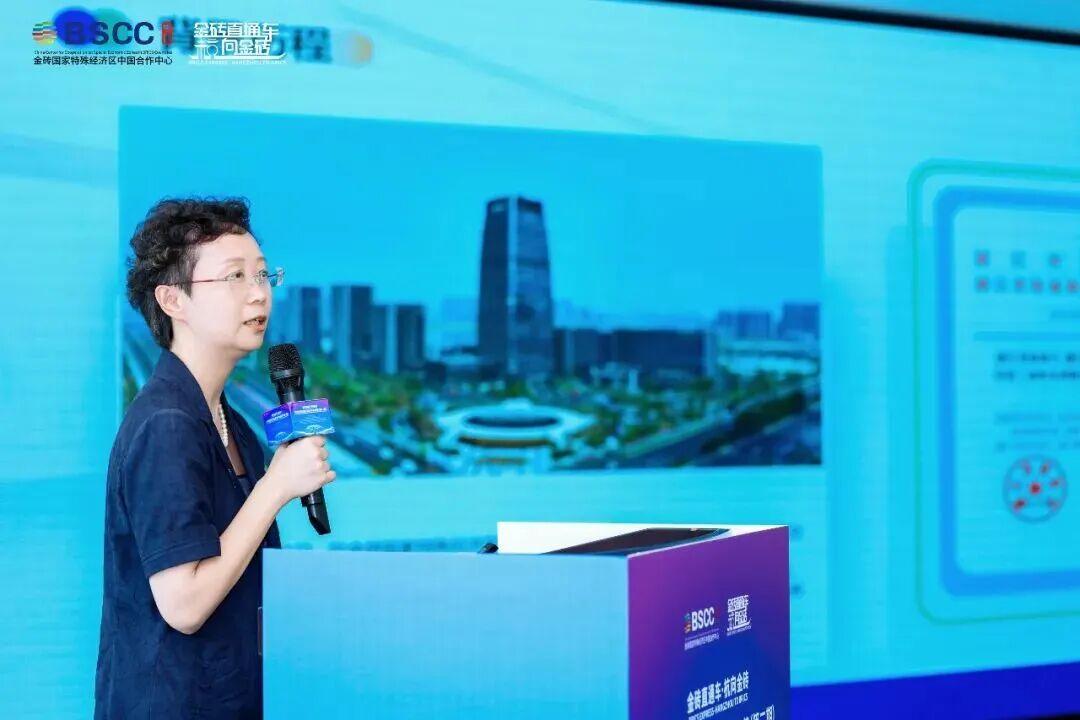
Ding Yi, Chairman and General Manager of Qiantang Global International Economic and Trade Development Co., Ltd. introduced the system architecture of Zhejiang Enterprises Going Global Comprehensive Service Port that empowers Hangzhou enterprises in a one-stop manner. Up to now, the platform has introduced more than 40 professional service institutions, serving over 900 enterprises in total. She suggested that enterprises going global make good use of localized service platforms to lower the initial threshold of overseas layout.
This Acceleration Camp highlights interaction and practical orientation. The whole event adopts the form of combining centralized teaching and interactive Q&A, and each module is equipped with dedicated Q&A time to ensure full communication between participants and instructors.
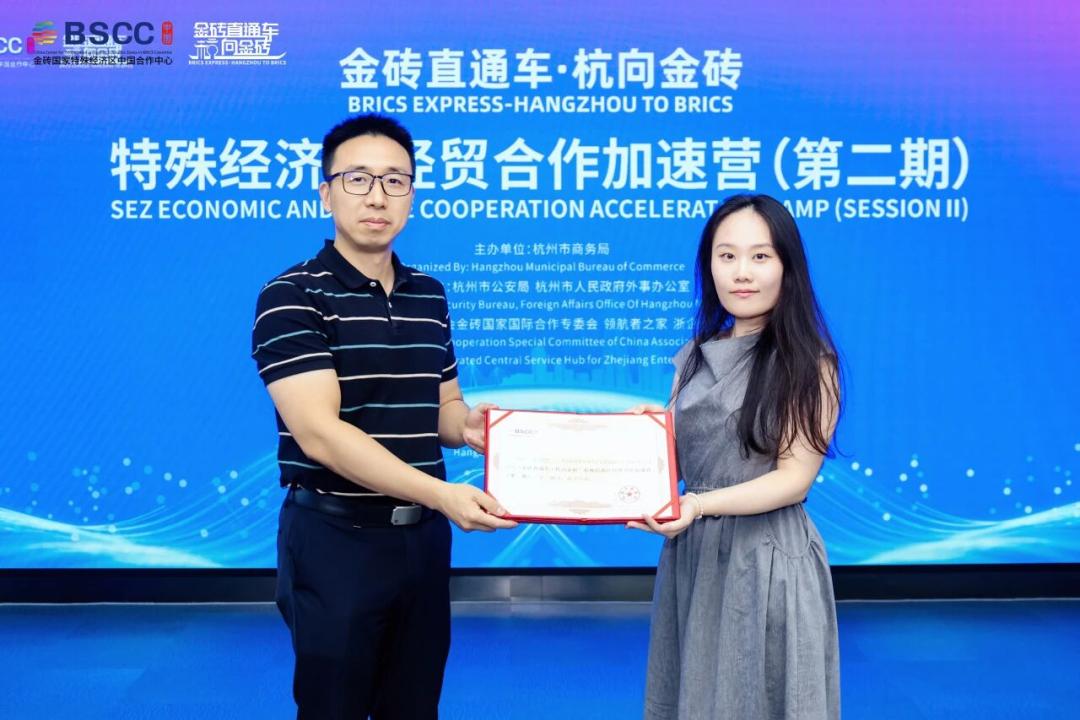
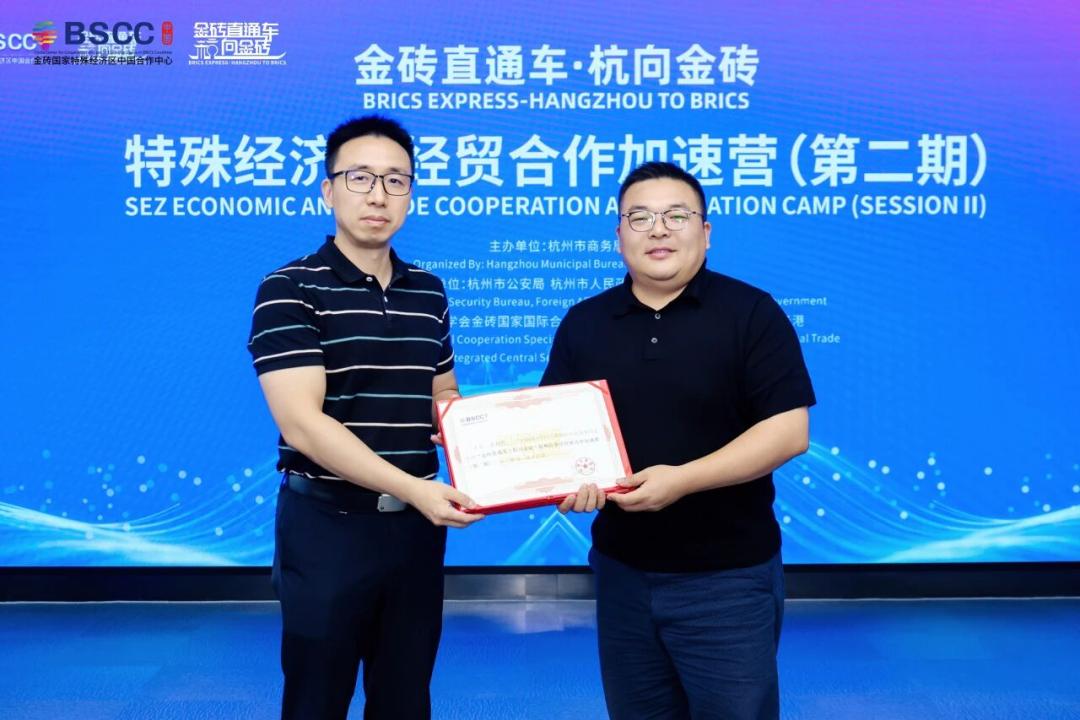
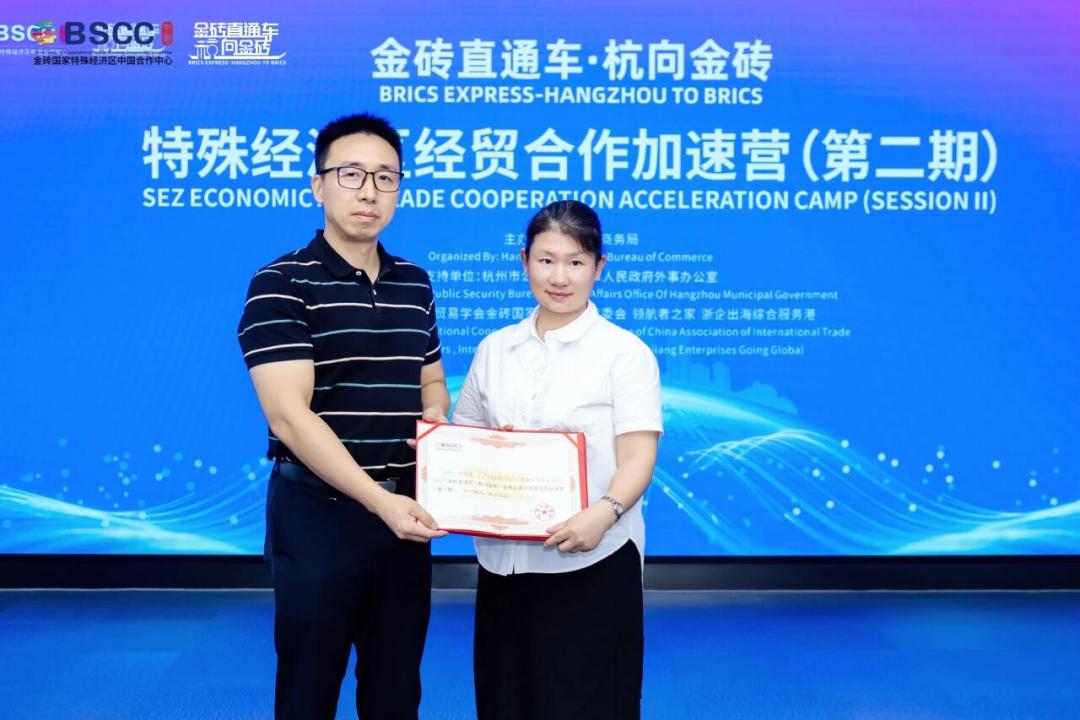
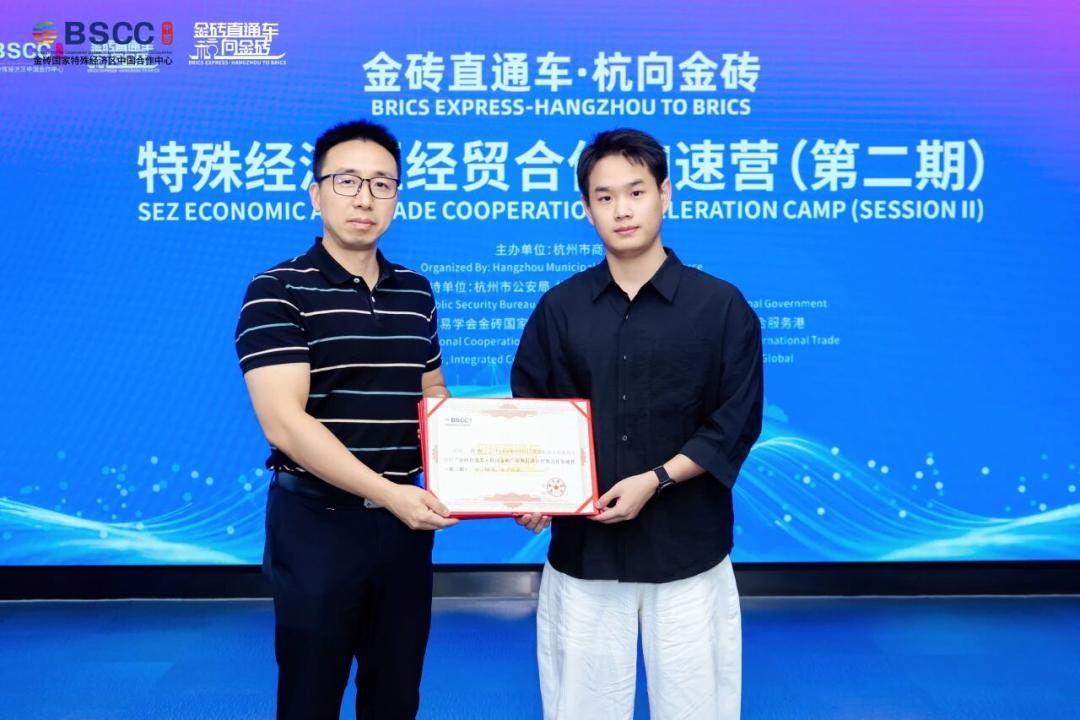
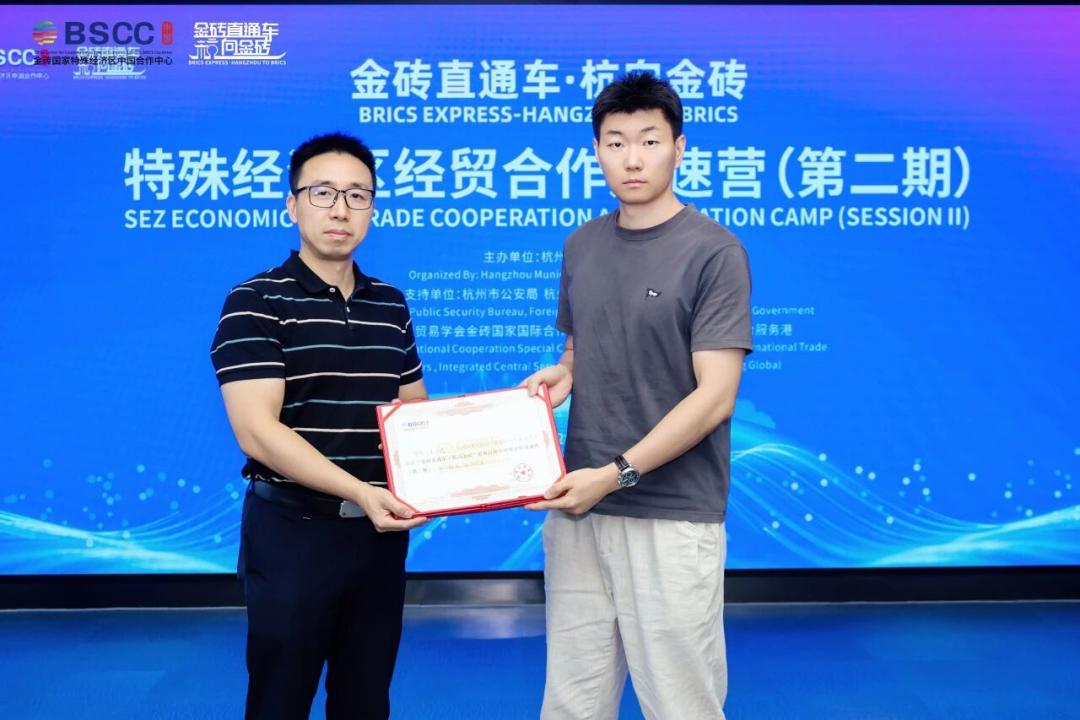
At the final closing ceremony, participant representatives shared their training insights and going-global plans, and all stated that the 2nd Acceleration Camp features solid content and strong pertinence, providing full-chain empowerment for enterprises from market insight to compliant landing. The organizer issued completion certificates to participants who finished the training.
In the future, Hangzhou Municipal Bureau of Commerce will continue to give full play to the role of the BRICS Center as an open platform, help enterprises explore the BRICS market, and deepen economic and trade cooperation in special economic zones. On September 24 this year, Hangzhou Municipal Bureau of Commerce will hold the "2026 BRICS Special Economic Zone Hangzhou Dialogue" during the 5th Global Digital Trade Expo to build the event brand of the BRICS Center and strive to achieve full coverage of all BRICS countries.
This event is hosted by Hangzhou Municipal Bureau of Commerce, undertaken by the BRICS International Cooperation Special Committee of China Association of International Trade, Navigator Home,