Cultural Global
Trump goes crazy, Yonghui faces a crisis.

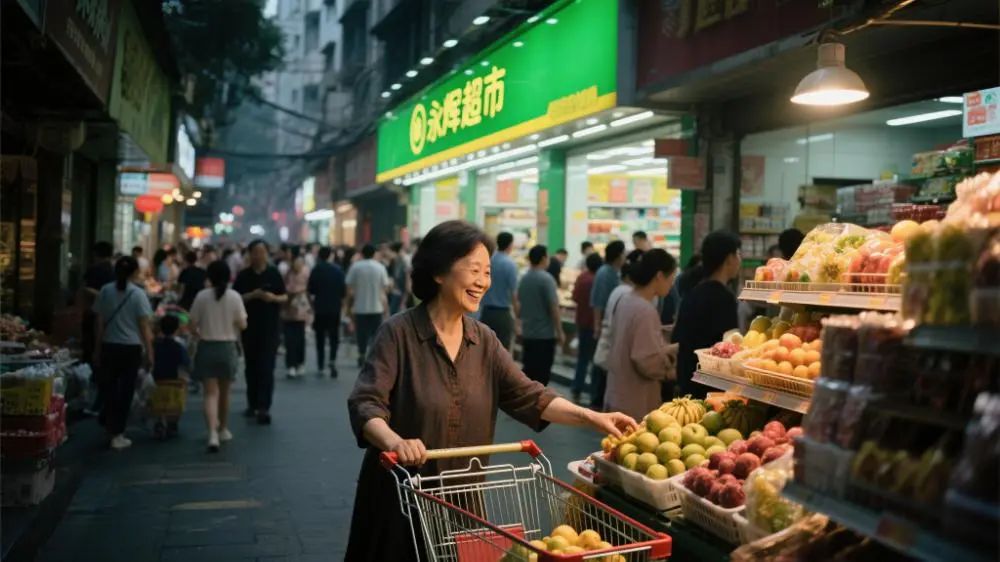
Yonghui, aiming to "reduce fat" (optimize operations), is accelerating the strengthening of its supply chain capabilities.
Author | Fu Rao
Editor | Yuan Ye
Yonghui should be most grateful to three people after a year of reform.
One is Yu Donglai. In the past two years when Fat Donglai and Yu Donglai were on the top of the traffic altar, Yonghui, as its most devout follower, has received multiplied traffic exposure, solved the traffic problem, and achieved a simultaneous increase in the company's stock price and market value, with the passenger flow and turnover doubling.
One is Ye Guofu. Yonghui had been in continuous losses for four years and was heavily in debt, with a debt - to - asset ratio reaching 88.6%. When the two founders were in a tight spot, Ye Guofu spent 6.27 billion yuan in cash to buy 29.4% of Yonghui's shares, becoming its largest shareholder, supporting Yonghui's transformation with real money.
One is Trump. After he made a crazy adjustment to the tariff policy at the beginning of April, many foreign trade enterprises exporting to the United States turned back to the domestic market to seek cooperation, and Yonghui was one of them. Just at the end of March not long ago, Ye Guofu had just announced that Yonghui would focus on optimizing the supply chain, and then got the impetus.
In this wave of shifting from export to domestic sales, Yonghui seems to be the biggest beneficiary.
01 Yonghui's Secret Joy
In April, the United States significantly raised the import tariffs on Chinese products. A large number of foreign trade merchants turned to domestic self - sales to seek self - rescue. Many daily necessities and food foreign trade companies chose to enter supermarkets to relieve the pressure of inventory and sales.
Offline supermarkets have collectively opened their arms to actively embrace foreign trade products. They not only established a fast green channel to get foreign trade products on the shelves as soon as possible, but also set up special areas for foreign trade products, occupying the prominent positions in supermarkets. For example, Wushang Group, a retail giant in Wuhan, set up 6 special areas for high - quality foreign trade products, with more than 200 new foreign trade products on the shelves; Zhongbai Group also set up a "special area for foreign trade products shifting to domestic sales" in three leading stores, with 62 new foreign trade products on the shelves.
Undoubtedly, leading supermarkets like Yonghui, Zhongbai Group, RT - Mart, and Wumart, which have hundreds of stores, can help buffer the sales pressure of these enterprises.
In addition, online e - commerce platforms are also joining in. For example, Hema officially launched a "foreign trade special area" page in its Hema Fresh App in the East China and Pearl River Delta regions in mid - April, covering products in categories such as kitchenware, household items, and small household appliances, among which daily necessities account for 60%.
Some foreign trade products with support have achieved good sales.
Take the "foreign trade ginger" recently put on the shelves in RT - Mart as an example. According to Jiemian News, on the first day of the foreign trade ginger being put on the shelves, 1.2 tons were sold, and the sales volume was six times that of the previous daily average. On the next day, 1.56 tons were sold.
Anyone can see that the foreign trade product suppliers who have successfully entered supermarkets have become the biggest beneficiaries in this wave of "shifting from export to domestic sales" because supermarkets have greatly helped them solve the problems of inventory backlog and sales channels.
But actually, Yonghui is also secretly happy.
First of all, the participation of foreign trade merchants and products has not only helped Yonghui expand its product categories but also attracted a lot of customers and good word - of - mouth for Yonghui.
As of now, 9 products of two brands have been successively put on the shelves and sold in 4 stores, namely Beijing Xilongduo Store, Fuzhou Olympic Sports Center Store, Hangzhou Binjiang Baolong Store, and Linping Wanda Store, attracting many consumers to go for shopping.
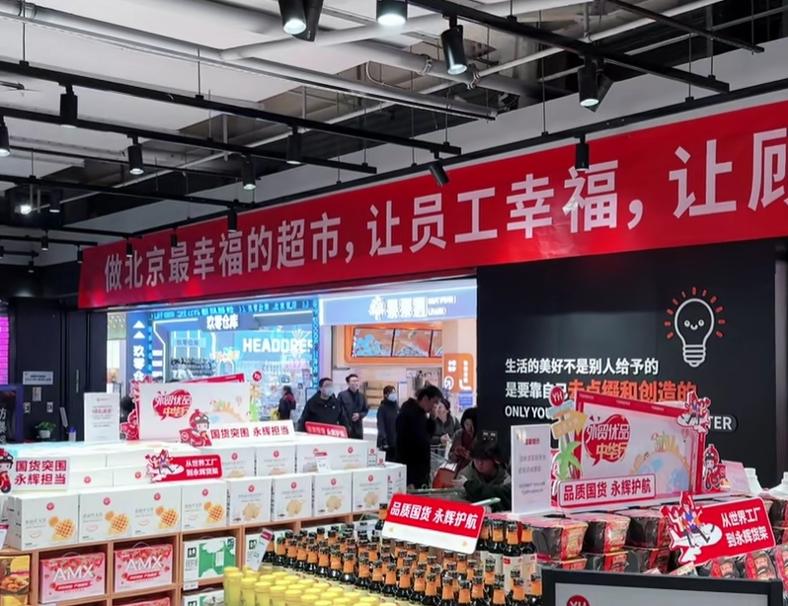
Secondly, for Yonghui, which is currently eager to reform its supply chain, foreign trade enterprises turning to the domestic market also provide more choices of high - quality products, which is beneficial to the reform.
After Yonghui proposed three measures on April 7, including opening a green channel, putting products on the shelves within 15 days, providing brand promotion support, and jointly developing new products, as of April 22, according to media reports, Yonghui's special email box had received more than 500 emails seeking cooperation. Among them, Yonghui has entered the negotiation stage with more than 300 high - quality supply chain enterprises, covering categories such as frozen food, snacks, and household items.
Of course, Yonghui is not the only beneficiary. As of now, Hema and RT - Mart have both connected with more than a hundred foreign trade enterprises. But different from other supermarkets, Yonghui is particularly eager to transform its supply chain.
At the supply chain conference at the end of March, Ye Guofu emphasized that the focus of Yonghui's next work is to transform the supply chain.
Just after setting the goal, there was new impetus for the transformation. It can be said that Trump's "crazy act" inadvertently helped Yonghui seamlessly connect and accelerate the completion of the reform.
Of course, Yonghui does not accept all comers.
According to Jiemian News, after receiving the cooperation intentions from foreign trade enterprises, Yonghui will consider the qualifications of the enterprises and products, the production and supply capabilities of the enterprises, and the logistics and distribution situation. The general consideration logic is quality first, followed by price. After finalizing the cooperation, it will quickly promote the cooperation according to the different situations of each enterprise and product and match the store situation for product placement.
02 Another Turning Point
No other enterprise has been as lucky as Yonghui. In the past whole year, Yonghui has had three "fate - changing" turning points.
Divided by chronological order, they are: in May last year, Yonghui accepted the rectification from Fat Donglai; in September last year, Ye Guofu became the largest shareholder of Yonghui; in April this year, the foreign trade setbacks promoted Yonghui's supply chain reform.
These three turning points also correspond to the three stages of Yonghui's reform: the adjustment stage of the Fat Donglai model, the store optimization stage, and the in - depth promotion stage of supply chain innovation.
In the view of Luedaicankao, Yonghui has successfully completed the first two stages of reform.
In terms of store adjustment and reform, as of the end of 2024, Yonghui had completed the adjustment and reform of 31 stores, and each "Fat Donglai - style" Yonghui store has achieved a double increase in passenger flow and revenue.
Since most of these stores were adjusted and opened in the second half of last year and the number of stores accounted for a small proportion, it had little impact on Yonghui's revenue last year. At the same time, Yonghui closed 232 underperforming stores, which led to a 14% decline in its overall revenue last year.
In the store optimization stage, Yonghui Supermarket focused on optimizing the product structure and procurement mode, eliminating old products and introducing new ones.
According to Huxiu, in terms of product structure, Yonghui Supermarket still benchmarks against Fat Donglai. For example, in the Yonghui Supermarket in Shanghai Jinshan Wanda Store in January this year, 9,418 single products were removed (there were originally 13,358 products), and 6,753 new products were added, with the proportion of new products exceeding 63%. After the adjustment, the product structure was close to 80% of Fat Donglai's product structure, and a special area for Fat Donglai's own - brand products was set up, mainly including popular Fat Donglai products such as the popular DL oatmeal, DL compound fruit juice, and DL laundry detergent.
Although in the 2024 annual report and the first - quarter report released recently in 2025, Yonghui still failed to escape the loss state, and the loss amount even increased year - on - year. But some data also show that the reform is gradually taking effect.
In the first - quarter financial report of 2025, the "stable - state stores" of Yonghui that have completed the adjustment and reform, that is, stores that have been open for more than three months, have successfully achieved stable profitability. As of the end of March, 41 "stable - state adjustment and reform stores" that had been open for more than three months had累计 achieved a net profit of 14.7 million yuan.
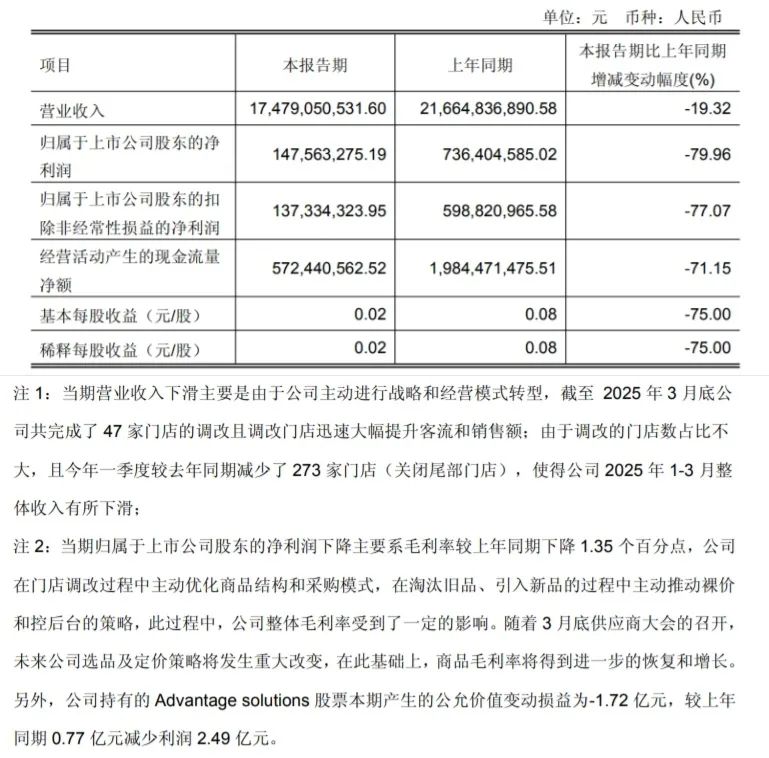
This is why Ye Guofu has been more radical in this year's reform and gradually expanded the scope of adjustment and reform.
At the same time, Ye Guofu also got rid of the "burdensome" business. He directly sold 12 Yonghui stores in Heilongjiang and Jilin to Beyoute and withdrew from the Northeast market. There are many reasons. The Northeast market is not Yonghui Supermarket's main operating area. The Northeast warehousing center built in 2018 has not been officially put into operation after six years because the property right certificate has not been obtained.
Meanwhile, Ye Guofu has also accelerated the speed of Yonghui Supermarket's store adjustment and reform, setting the target of the number of adjusted and reformed stores in 2026 at 300 - which is obviously an aggressive goal. At present, among Yonghui Supermarket's more than 700 stores, only 61 have completed the adjustment and reform in the Fat Donglai model.
In Ye Guofu's view, with the increase in the proportion of adjusted and reformed stores, the completion of store closures, and the deepening of supply chain reform, the next 12 to 18 months will be the period when the reform results are concentratedly released.
For Yonghui at present, supply chain upgrading is the important key for Yonghui.
Different from Yonghui Supermarket's previous KA model, Ye Guofu has carried out a series of reform measures, such as cutting out middlemen, implementing "direct procurement at net prices", establishing direct cooperation with supply factories, eliminating intermediate costs, and canceling various fees charged to suppliers.
Yonghui's previous KA model, simply put, was to charge suppliers an entry fee. That is, suppliers had to pay entry fees, shelf fees and other costs to enter Yonghui Supermarket.
This procurement model has many drawbacks: on the one hand, some suppliers would raise the procurement price in order to get the mall entry ticket, display space, and promotion resources, resulting in corruption in the procurement chain, which would cause the cost to be stacked layer by layer and finally be passed on to the consumer end; on the other hand, suppliers could not respond to the market in a timely manner, and supermarkets naturally could not adjust and optimize the product structure in a timely manner according to the consumers' purchase situation.
In 2024, Yonghui Supermarket completed the adjustment of nearly 30,000 products to get rid of the KA model through supply chain reforms such as direct procurement from the source of fresh products, self - distribution of meat and poultry, and "eliminating the KA model" for food products.
On March 29 this year, Yonghui Supermarket held its 2025 Global Supplier Conference in Xuchang, Henan. Ye Guofu clearly put forward Yonghui's supply chain upgrading strategy for 2025, such as planning to incubate 100 core single products worth hundreds of millions of yuan, locking in 200 core suppliers and other long - term goals, and adding 60 self - brand products, with the goal of increasing the sales proportion of self - brand products to 40%.
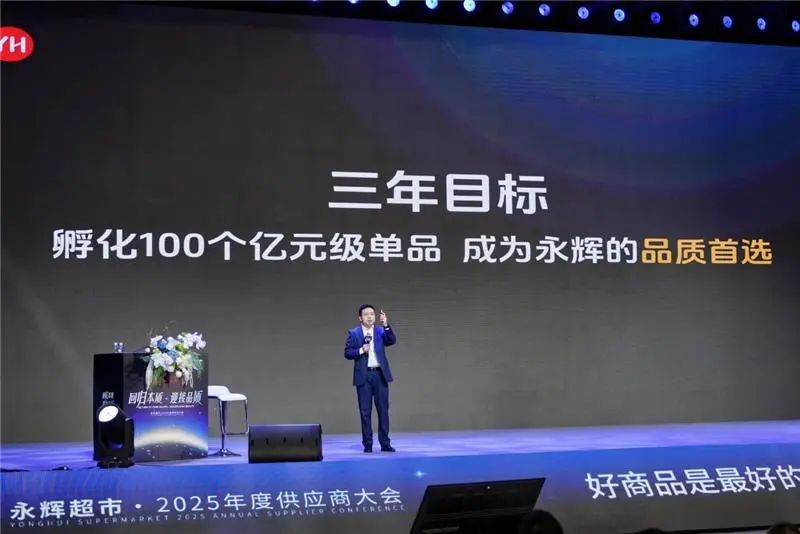
Now, the connection between a large number of foreign trade enterprises and Yonghui Supermarket can greatly promote the innovation of Yonghui Supermarket's supply chain and help quickly optimize the supply chain system and renew products.
03 Getting Rid of the "Fat Donglai" Influence
In April 2024, Caijing interviewed a senior practitioner in the Changsha retail association.
He revealed that during the process of Fat Donglai helping BBK with store rectification, many of BBK's original suppliers were not willing to join this rectification. Yu Donglai had to bring his own suppliers to adjust BBK's products, and the cooperation relationship between these suppliers and BBK was very weak. Once Fat Donglai left, the cooperation might change.
Yonghui also has the same trouble.
For Ye Guofu, he appreciates Fat Donglai's model and hopes to transform Yonghui Supermarket into a high - quality retail supermarket like Fat Donglai and Sam's Club. But he wants Yonghui to find its own way and get rid of the "Fat Donglai" influence as soon as possible.
This is not easy.
At least for now, in many of Yonghui's adjusted and reformed stores, more than 80% of the product structure benchmarks against Fat Donglai. Even in the supermarket, Yonghui Supermarket's popular products are still Fat Donglai products with the DL logo.
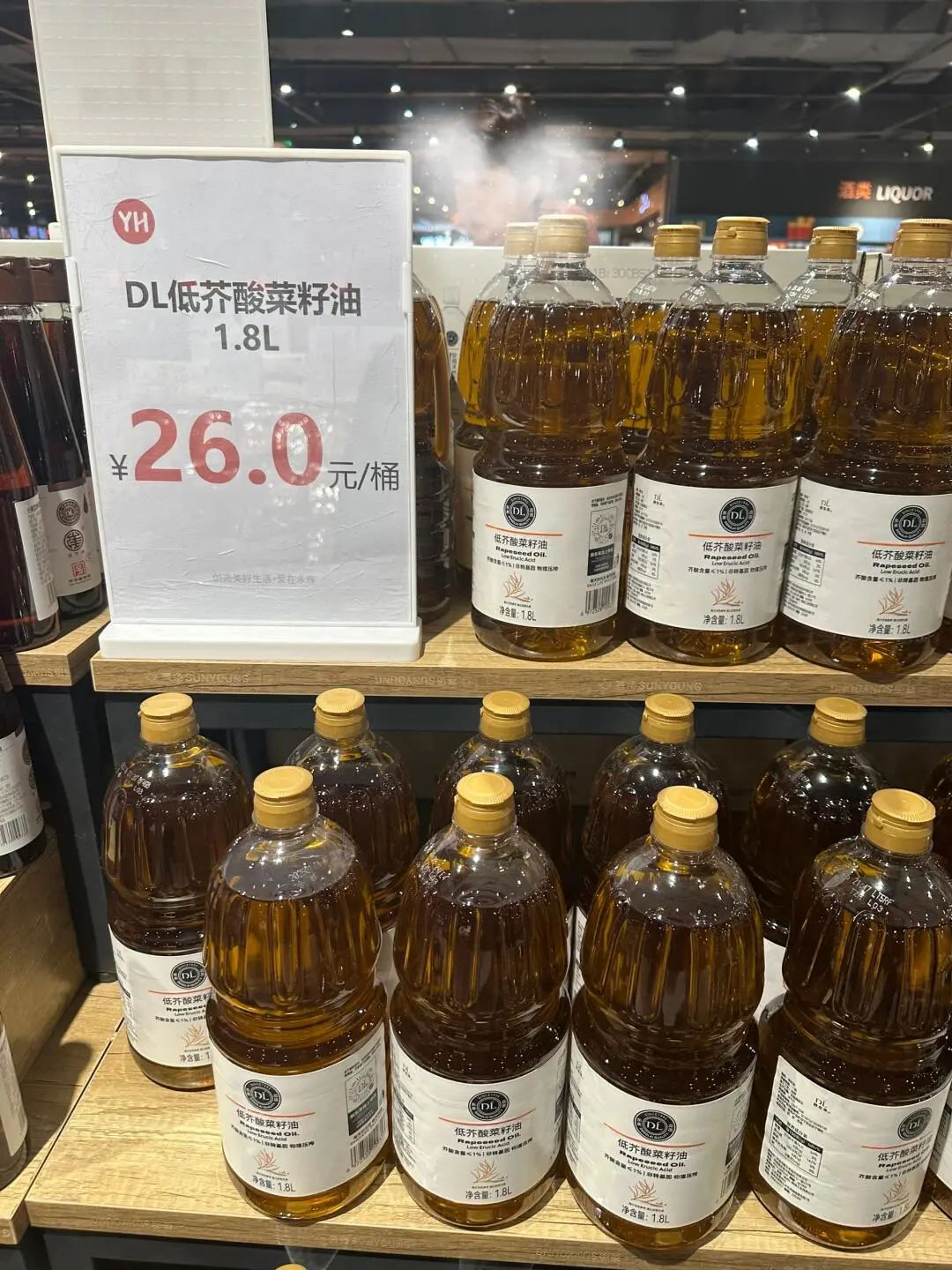
When Miniso joined hands with Yonghui last year, Luedaicankao analyzed Yonghui Supermarket's shortcoming, that is, it did not have the ability to create popular products.
The key support behind the long - lasting popularity of popular products or super single products is a strong, streamlined, and efficient supply chain.
Take Sam's Club as an example. During its 29 - year presence in China, Sam's Club has established partnerships with hundreds of core suppliers and keeps the number of suppliers at around 180. In order to get orders worth more than one billion yuan from Sam's Club every year, leading suppliers are willing to spend millions or even tens of millions of yuan each year on market research, technology improvement, and equipment renewal, and pass through Sam's three - step internal quality inspection process, just to create more new and distinctive products with better cost - performance.
In 2025, Yonghui, which is focusing on the supply chain, cannot only learn from Fat Donglai but also strengthen its own supply chain capabilities.
Therefore, at the recent shareholders' meeting, as the leader of Yonghui's reform team, one of Ye Guofu's reform strategies for Yonghui in 2025 is to gradually reduce the dependence on Fat Donglai's products and put the "elimination of the Fat Donglai influence" on the agenda.
In addition, Yonghui has also invested a large amount of funds in the construction of a central factory (the baking workshop has been put into operation, and the plan is to expand to cooked food and prepared vegetables) to improve standardization capabilities, and set a strategic goal of increasing the proportion of self - brand products from a single - digit percentage to 40%.
The last retailer with such ambition was Hema under the leadership of Hou Yi. It directly benchmarked against Sam's Club to develop self - operated products and engage in price wars, but unfortunately, it couldn't sustain it.
All companies would like to emphasize that they provide high - quality products and produce self - brand products with higher profits, but this requires long - term investment. Sam's Club also relies on the long - term investment of the Walmart Group to develop hundreds of competitive self - operated products one by one.
It is common for a company to have strategic ambitions, but the ultimate success or failure depends on the execution ability.
Yonghui is accelerating its actions.
The rapid establishment of the foreign trade special area and the rapid cooperation with more than 200 foreign trade suppliers both show Yonghui Supermarket's determination to transform and also reflect a kind of decisiveness at the execution level.
In the past year, Yonghui has been lucky enough. The supply chain reform brought about by the foreign trade setbacks has instead brought it new opportunities. But whether it can continue to deepen the supply chain reform and truly change its fate obviously still needs time to tell.
This article is from the WeChat official account "Luedaicankao", author: Fu Rao.