Global Talent
 Cultural Global
The 3.0 version of the China-ASEAN Free Trade Area unleashes new vitality for regional economic and trade cooperation.

A single platform integrates multiple transportation modes including public transit, electric mopeds and shared e-bikes, enabling one-stop services such as reservation, transfer and scan-to-ride. Relying on the "MaaS Smart Mobility +" solution, the platform can also provide intelligent dispatching services for electric vehicles and public transport for vehicle operators. In Khon Kaen, Thailand, this smart transportation project developed by Nanning Rail Transit Investment Group Co., Ltd. is being accelerated to solve the pain points of local public transport.
"The official version of the ASEAN MaaS platform is scheduled to be launched in Khon Kaen at the end of December, providing local residents with digital and intelligent travel experience, which is another practice of China-ASEAN digital economic cooperation," said Huang Xi from the Marketing Department of Nanning Rail Tech Innovation Investment Co., Ltd. The 3.0 version of the China-ASEAN Free Trade Area has broken more barriers in cross-border digital services, data collaboration and other fields, bringing more opportunities for the company to promote smart transportation solutions to ASEAN.
The Protocol to Upgrade the China-ASEAN Free Trade Area Version 3.0 will officially come into force and be implemented on December 1, 2026, further promoting the economic and trade cooperation between China and ASEAN to leap from "factor flow" to "rule coordination", and building an all-round, high-quality and sustainable cooperation pattern.
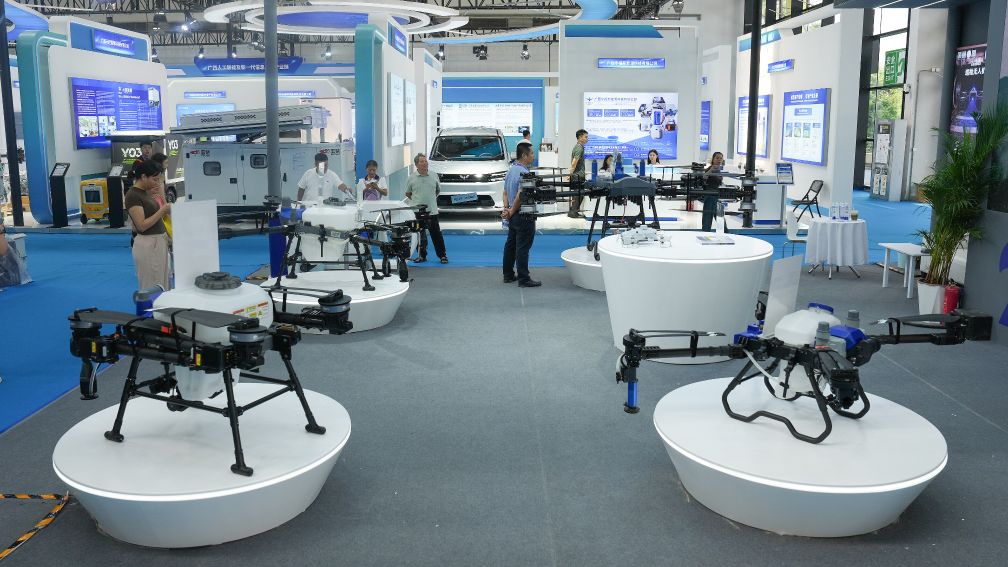
On September 21, the 23rd China-ASEAN Expo set up a Future Space Exhibition Area for the first time, focusing on displaying cutting-edge equipment such as drones and satellite navigation, putting low-altitude economic products "on the shelf", which attracted the attention of a large number of Chinese and foreign merchants and audiences. Photo by Xinhua News Agency reporter Zhang Ailin
In 2002, China and ASEAN launched the process of building the free trade area. In 2010, the 1.0 version of the China-ASEAN Free Trade Area was fully completed, and the two sides implemented zero tariffs on more than 90% of the total products. In 2019, the upgraded protocol of Version 2.0 came into full force and effect, focusing on expanding the opening of the service sector and market access for investment, pushing the economic and trade cooperation between the two sides to a new level. In October 2025, the upgraded protocol of Version 3.0 was signed, and the free trade cooperation was expanded to emerging fields such as digital, green, standards, and industrial and supply chains.
The head of the International Department of the Ministry of Commerce of China said that the 3.0 version of the China-ASEAN Free Trade Area has achieved an important upgrade from "market opening" to "institutional co-construction" on the basis of the traditional trade and investment liberalization and facilitation of Version 1.0 and Version 2.0, and the construction of the China-ASEAN Free Trade Area has entered a new stage of integration of rules and standards.
"The continuous upgrading of the China-ASEAN Free Trade Area is a two-way active choice for the two sides to jointly cope with external uncertainties relying on complementary economic structures, consolidate good-neighborly relations through institutional opening-up, and jointly expand the regional market," said He Min, associate professor of the School of International Economics, China Foreign Affairs University. The 3.0 version will promote the cooperation between the two sides to expand to wider fields and deeper levels, help regional industrial and supply chain cooperation develop in a down-to-earth and in-depth manner, and further release the growth potential of the regional economy.
With the continuous deepening of the construction of the China-ASEAN Free Trade Area, China has remained ASEAN's largest trading partner for 17 consecutive years, and ASEAN has been China's largest trading partner for 6 consecutive years. In 2025, the trade volume between the two sides exceeded 1 trillion US dollars, 18 times higher than that at the beginning of the construction of the free trade area in 2002.
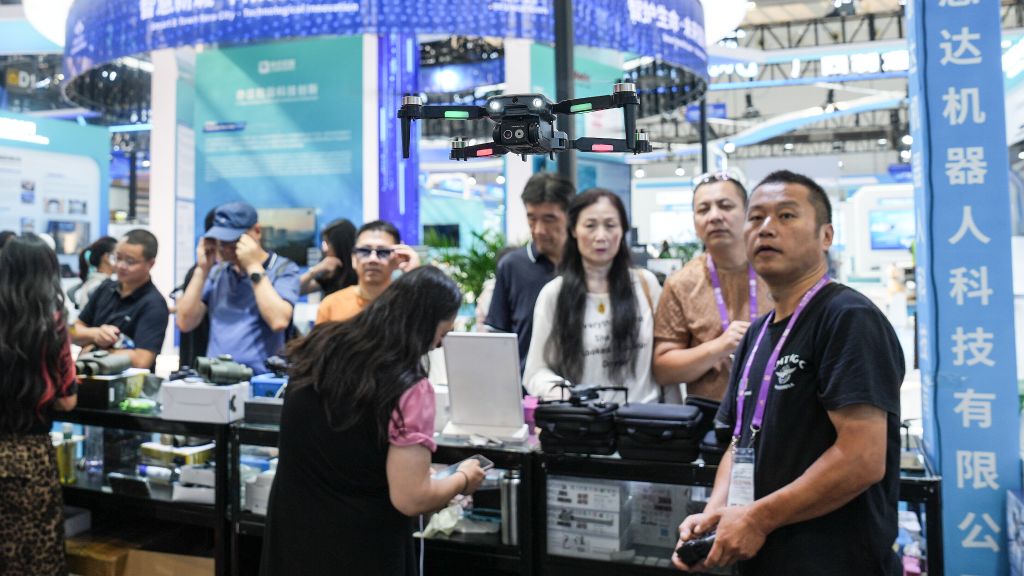
On September 21, at the Shenzhen Pavilion of Nanning International Convention and Exhibition Center during the 23rd China-ASEAN Expo, a staff member of an enterprise tested the drone purchased by the audience on site. Photo by Xinhua News Agency reporter Zhang Ailin
In Malaysia, Guangxi Beitou Information Technology Group Co., Ltd. and Malaysian Zetrix AI Berhad jointly built the Avatar AI digital human platform. The platform integrates multi-modal large model and AI Agent technology equipped with safety guardrails, and can provide all-weather intelligent response services such as multilingual intelligent assistant, social collaboration and business handling. It has helped some local merchants carry out digital operations. Small and medium-sized enterprises in China can rely on the platform to connect with ASEAN users and local social channels, carry out brand promotion, user interaction, intelligent customer service and other businesses, effectively reducing the cost and threshold of going global.
"Version 3.0 has special chapters related to micro, small and medium-sized enterprises and digital economy, creating favorable conditions for regional MSMEs to go global digitally," said Yuan Xiang, Deputy Chief Engineer of Guangxi Beitou Information Technology Group Co., Ltd. Version 3.0 will release the dividends of digital trade facilitation, lower the threshold for cross-border operation of AI agents, and help more MSMEs deeply integrate into the ASEAN industrial chain.
Liu Qing, Vice President of China Institute of International Studies, said that MSMEs are the largest business entities in the China-ASEAN market. Version 3.0 specifically strengthens support for MSMEs, and through measures such as supporting the digital transformation of enterprises and strengthening intellectual property capacity building, helps MSMEs understand free trade rules, reduce compliance costs, better integrate into the regional industrial chain and value chain, so that the dividends of free trade can truly fall on business entities, and further release the potential of the regional economy.
"The digital economy is the new engine of global economic growth. The main highlight of Version 3.0 is that the cooperation has expanded to new fields such as digital economy, green economy, and supply chain connectivity. At the same time, guided by institutional opening-up, it promotes China and ASEAN to deepen cooperation and further release new vitality of regional economy and trade," said Li Guanghui, Academic Dean of the China-ASEAN Institute of Economics, Guangxi University.
Article source: Xinhua News Agency