Cultural Global
From cross-border e-commerce to large AI models: The two global expansion journeys of a post-90s woman who spent 10 years in Europe | Global Trailbla


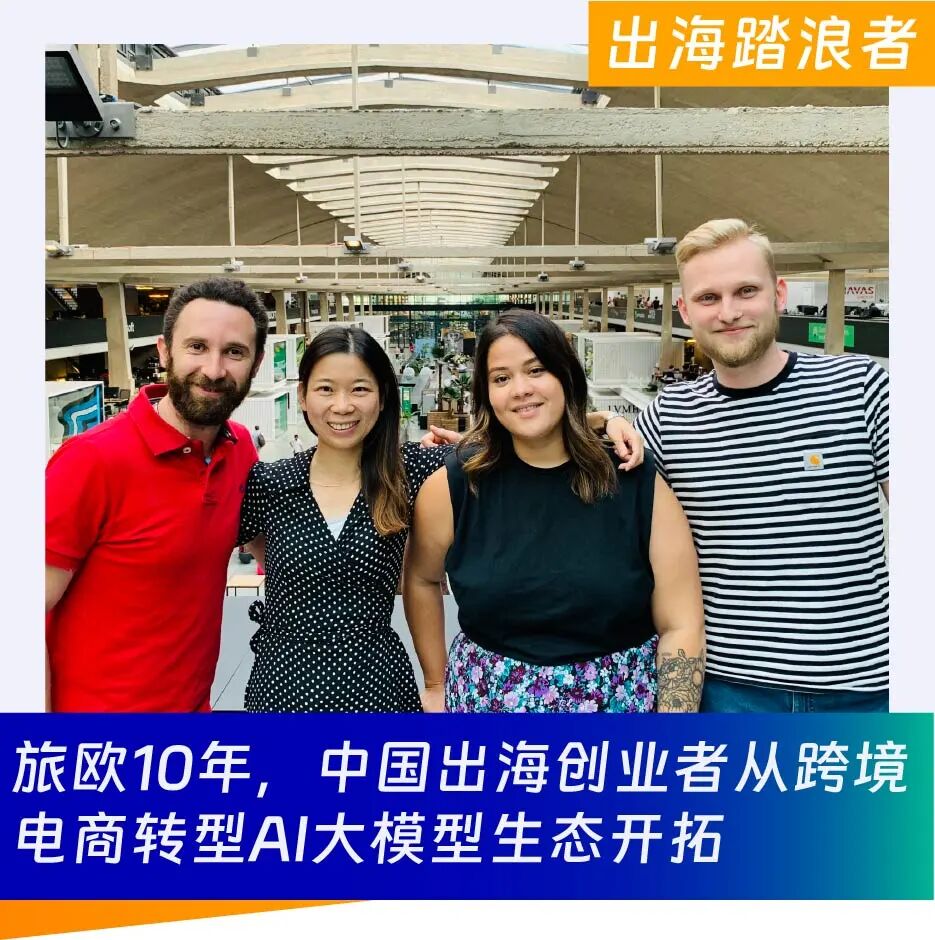
Introduction:
Looking globally to explore a second growth curve has become a definite direction, yet the question of how to expand overseas still tests the wisdom and courage of every Chinese enterprise. Brand globalization, supply chain globalization, cross-border e-commerce... there are countless paths, but no one-size-fits-all solution; North America, Southeast Asia, the Middle East, Latin America... these markets are vast, each with its own unique tides and challenges. Behind every long expedition lies the hands-on exploration of Chinese enterprises; on every distant coastline, more and more figures from China are emerging.
The "Global Trailblazers" column aims to profile overseas expansion benchmarks from various sectors, deconstruct real-world cases through a professional perspective, distill methodologies from shared consensus, and uncover new possibilities amid differences.
In the 1950s, "Made in Japan" was synonymous with low prices and third-rate products worldwide. By the 1970s, Japanese home appliances had risen to prominence, with Japanese products accounting for 30% of color TV sets in the US market at their peak. In the 1980s, Japanese automotive brands such as Toyota, Honda, and Nissan took over the baton from home appliances to go global. Later, Japanese cultural and entertainment industries including animation, games, and music began expanding overseas and grew into pillar industries.
From cheap apparel to anime and gaming, Japan's core export products have gone through several iterations over the past 70 years, which indirectly demonstrates that a country's mainstream overseas export products are never fixed, but evolve along with the nation's industrial capabilities.
This very narrative of transformation is now unfolding for today's Chinese global pioneers. In 2015, Li Luwei traveled from Ningbo to France to pursue higher education. Back then, major domestic Chinese tech giants had just started experimenting with cross-border e-commerce, Chinese goods began entering European and American markets via online channels such as Amazon, AliExpress, and eBay, and cross-border logistics networks including ocean shipping were taking shape. While still a graduate student, Li Luwei seized the opportunity and independently launched a B2B2C e-commerce platform named Import Market Sales (IMS) in 2017, connecting China's industrial belts with local European e-commerce platforms and end consumers. The platform focuses on the niche category of outdoor furniture, while also building a direct-to-consumer brand Avril Paris. Over 9 years, without any external funding, the business achieved a cumulative total sales volume of 35 million euros, established partnerships with over 20 international and local e-commerce platforms in France and the UK, and served more than 80,000 direct customers.
During a business trip to Morocco in 2025, Li Luwei noticed that many local residents were discussing Chinese AI models such as DeepSeek. She realized that the world had changed, and the opportunities for overseas expansion were shifting accordingly.
One year later, Li Luwei left Paris for London to join ByteDance, where she is responsible for developing global partnerships and ecosystems for large AI models. Recently, she shared with us her entrepreneurial journey over the past decade and her observations of the European market. Below is her firsthand account.
01
Leading a Team of 7
Achieved Cumulative Revenue of 35 Million Euros in 9 Years
When I first started my business in France 10 years ago, I was still an international student. I noticed that French people love living in houses with gardens and devote a great deal of time and effort to maintaining their gardens, which made me realize this was a large, overlooked market. Coincidentally, my hometown Ningbo has a well-established outdoor furniture industrial cluster, so I chose the outdoor furniture category as my entry point.
Back then, cross-border e-commerce was a novel yet unfamiliar concept. To target overseas markets, businesses mainly relied on trade shows to secure orders through distributors or large overseas clients. Chinese products were separated from end consumers in foreign markets by layers of importers, wholesalers, and retailers, creating a huge market distance. Although I had no shortage of supply chain resources, I did not have the capital to stock large inventories. Therefore, I pioneered an innovative e-commerce platform architecture adopting the B2B2C model to connect factories, local platforms, and end consumers. My startup provided brand licensing and marketing services, suppliers delivered the goods, and the platform earned commissions. This model was unprecedented at the time, which earned me a spot in France's renowned startup incubator Station F in 2017. I also received official recognition as an "Innovative Enterprise" from the French Tech initiative under France's Ministry of Economy in 2020.
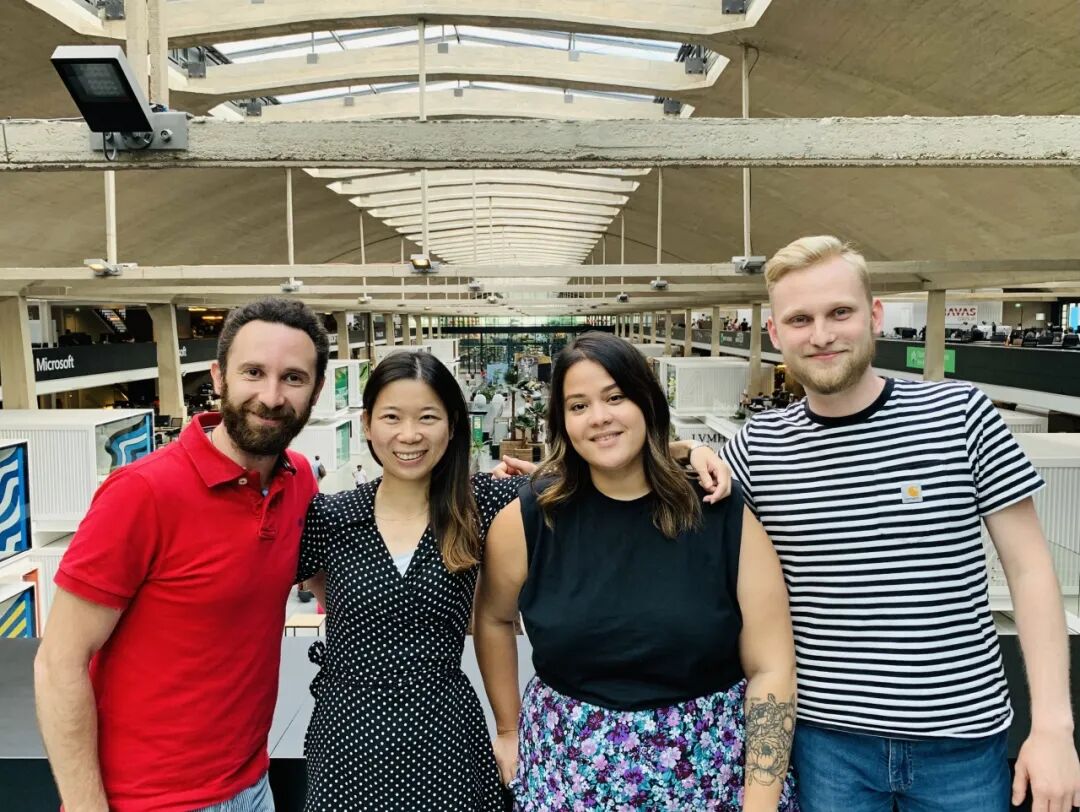
A photo of Li Luwei during her time at the Station F incubator in France
Launching a cross-border e-commerce startup in Europe covers multiple segments including supply chain, logistics, warehousing, marketing, finance, and legal compliance. I approached every French company I needed to collaborate with in each segment one by one to negotiate partnerships. In this process, marketing was the segment that demanded the highest level of local adaptation. At an e-commerce exhibition, after a conversation with the CEO of a marketing agency, I found that his expertise perfectly complemented mine, so I extended an invitation for him to join the business as a co-founder.
France is a notoriously difficult market to enter. You must speak French fluently and understand local laws, tax regulations, and culture, which requires deep immersion in local life and work. Over the years, I have been wading across the river by feeling the stones, gradually paving the way forward.
For foreign entrepreneurs, managing an international team is another skill set that requires accumulated experience. All my team members were recruited locally, and many of us have worked together for years. I have intentionally kept the team small, which helps maintain the agility of a startup. Meanwhile, we invested heavily in in-house software development (exceeding 300,000 euros in total), and I set new process automation goals every year to support scalable growth. At its peak, the team had only 7 people, yet we generated cumulative sales of 35 million euros over 9 years, with a per capita output of 5 million euros per person — an extremely high labor efficiency ratio in the pre-AI era.
02
From E-Commerce to AI
Between 2020 and 2022, driven by the surge in consumer demand for home goods and the explosion of online shopping, our business reached its peak, with a record annual sales volume of over 7 million euros and an average annual growth rate of 82%.
However, starting from 2023, France was affected by the global geopolitical situation and experienced its worst inflation in nearly 40 years, which eroded the purchasing power of French households. French consumers began cutting non-essential spending, comparing prices more carefully, and showing a preference for cheaper products. It was around that time that Temu and Shein also gained popularity in France.
Last year, a number of cross-border e-commerce brands that had focused on the US market shifted their focus to Europe due to the impact of tariff conflicts. This led to increased supply, more severe product homogenization, and fiercer market competition. Facing mounting pressure from both internal and external factors, I decided to bring my entrepreneurial journey in e-commerce to a close.
After deciding to end my e-commerce business, I began to reflect on a question: why was I able to succeed in cross-border e-commerce in the first place?
Part of the success was indeed attributed to my own judgment and execution capabilities, but in retrospect, without the online shopping boom spurred by the work-from-home trend in Europe from 2019 to 2022, without the collective embrace of cross-border e-commerce platforms by China's manufacturing sector, and without the maturation of online payment and logistics systems, no matter how hard I tried, my business might have remained a small, niche operation.
Therefore, identifying the trends of industrial transformation and the new wave of productivity is of utmost importance.
Where is the next wave?
In the spring of 2025, I flew to Morocco, originally planning to negotiate new cross-border e-commerce opportunities with leading local enterprises. However, after speaking with business leaders in the local logistics, e-commerce, and fintech sectors, I found that everyone was excitedly saying: "Your DeepSeek is really amazing." This made me realize that the world had changed, and China's advantageous industries had undergone tremendous shifts. I began to focus on researching leading AI enterprises in China and Europe, as well as the implementation status of AI in Europe.

AI in Europe not only has enormous potential, but just like cross-border e-commerce in its early days, is also on the verge of explosive growth. In the autumn of 2025, I attended Adopt AI, one of France's largest AI exhibitions, and found that 95% of enterprise CEOs wanted to leverage AI to improve organizational efficiency, yet less than 5% understood how to implement it in practice.
Different from launching a new business independently, this time I chose to join a leading large AI model company. That's how I came to London and joined ByteDance, where I work on developing global partnerships and ecosystems for large AI models.
In the European large model market, OpenAI, Anthropic, and Google are the three players with the most robust foundational model capabilities, and they are unavoidable competitors. Europe also has a number of local large model companies, such as France's Mistral, which generally secure government contracts. However, these companies are more localized and focus on individual models, so they do not directly compete with Chinese enterprises, and are more potential collaboration partners.
Unlike the past when Chinese products entered overseas markets relying on cost-effectiveness, in the AI field, as long as you have strong technological competitiveness, ensure data security, and meet local compliance requirements, the pricing of some products can even be higher than that of international enterprises.
However, compared to the United States, Europe is not a truly unified large market in the strict sense. It is a combination of many small national markets with higher compliance costs, and each country has distinct corporate procurement logics and business practices. Therefore, for enterprises developing AI models or AI products, localized adaptation is required in every individual country.
These challenges share many similarities with what I faced during my previous entrepreneurial venture. Therefore, this career transition, although seemingly spanning two different industries, is actually a leap built on the experience accumulated over the past 10 years. The required overseas expansion methodologies for the European market and in-depth local market insights are essentially the same. I am very much looking forward to collaborating with local partner enterprises in this more international market and higher-growth track, to empower local enterprises in Europe and America with the productivity benefits brought by AI.
* All views expressed herein are those of the interviewed institutions or individuals and are for reference only.
This article is from the WeChat official account "Zhejiang Enterprises Global Integrated Service Hub", authored by Zhejiang Enterprises Global.