Cultural Global
UAE: The Two Sides of a "Tax-Free Paradise" | Overseas Insights


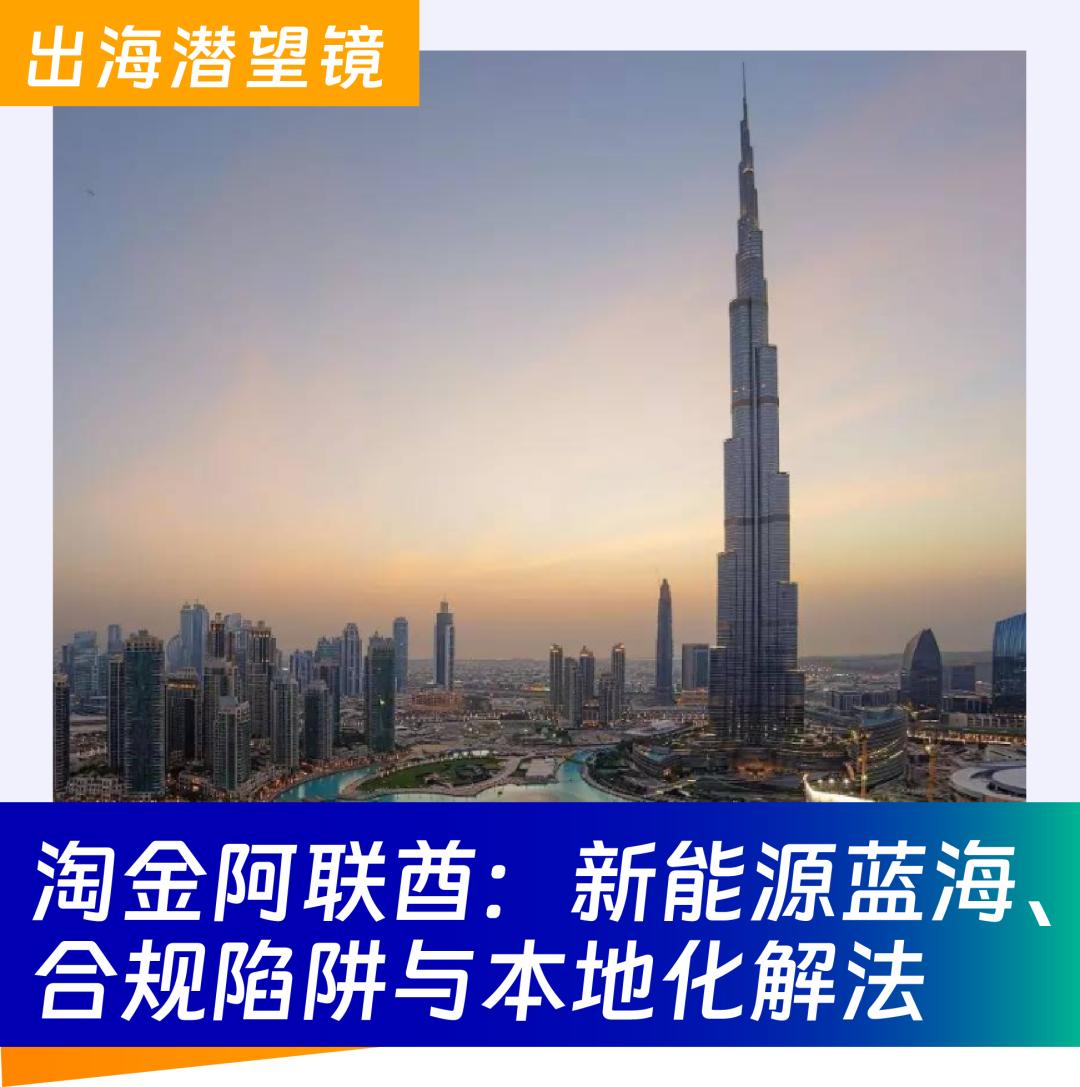
In 2025, the uncertainty brought about by the US tariff policy has cast a continuous shadow over global economic and trade exchanges, posing unprecedented challenges to Chinese enterprises going global.
In the face of each impact, Chinese enterprises always demonstrate greater flexibility and resilience, finding new ways out. From Southeast Asia to Mexico, and now to the Middle East, enterprises seek business opportunities in policy changes and look for certainty in uncertainty, turning each external impact into an opportunity to layout new markets.
In the Middle East, the UAE market stands out. It is estimated that by 2030, the bilateral trade volume between China and the UAE will reach 200 billion US dollars.
As the first Gulf country to establish a strategic partnership with China, on January 1, 2024, the UAE officially became a full - fledged member of the BRICS. In the same year, the two countries signed and exchanged 19 cooperation agreements and memorandums of understanding, to promote bilateral cooperation in the fields of the Belt and Road Initiative, investment, trade, science and technology, etc.
Against the backdrop of the increasingly close cooperation between the two countries, how can emerging economies find investment entry points in the UAE? What compliance risks in law, finance, talent, etc. need attention behind the preferential policies? How can enterprises build an organic business ecosystem locally?

With these key issues that concern overseas - going enterprises highly, on July 25, 36Kr and Qiantang Construction and Investment Group jointly held the 2025 "From 'Ingenuity' to the 'World'" Overseas - going Conference. Relevant UAE units, overseas - going service providers, and representatives of enterprises going to the Middle East discussed the investment opportunities in the UAE and overseas investment cooperation models at the parallel session "Investing in BRICS" - Country - to - Country Cooperation Matching Meeting in the afternoon of the same day.
01 Chinese Automobile Enterprises "Rush to Occupy" the "Blue Ocean" of the UAE Market
In recent years, the UAE has been promoting energy transformation. The new energy vehicle industry has also been included in the key support areas, providing broad market space for Chinese enterprises. However, from the perspective of market layout, Chinese automobile enterprises are still in the initial stage. Only three automobile enterprises, XPeng, ARCFOX, and IM Motors, have entered the UAE, and they have been in the market for less than two years, with sales of only a few hundred units. In contrast, among the top 10 automobile sales in the UAE in 2024, the traditional fuel - vehicle brand Toyota ranked first with 84,000 units, followed by Nissan and Hyundai. In the electric vehicle field, Tesla dominated with sales of 11,600 units.
In the view of Liu Yanjun, the vice - president of Zemei Automobile, the mediocre performance of Chinese automobile enterprises is reasonable to some extent. On the one hand, Chinese automobile enterprises have entered the UAE market for a relatively short time, and market penetration is still insufficient. On the other hand, the consumption driving force for new energy vehicles locally is also insufficient. Not only is the infrastructure (such as charging piles) not yet perfect, but the local fuel price is only about 4 yuan per liter in RMB equivalent, and the advantage of new energy vehicles over fuel vehicles is not obvious.
However, many local dealers have seen the strong future demand for high - end new energy vehicles. Vera Tang, the vice - president of the overseas business line of Interlip Group, observed that some local leading dealers are competing for the distribution rights of Chinese electric vehicles, and a leading Chinese luxury electric vehicle brand series (luxury electric vehicles priced over 400,000 yuan) also has a strong intention to enter the UAE market.
"In the future, the prospects of Chinese automobile enterprises in the Middle East are bright, but Chinese automobile enterprises of different sizes need to find differentiated tracks when entering the market." Compared with some leading automobile manufacturers' layout in the fields of unmanned driving and intelligence, niche brands such as Zemei Automobile choose to focus on segmented markets with lower investment costs and quick benefits in a short time.
Liu Yanjun revealed at the meeting that in the first half of 2025, Zemei Automobile invested in and built a commercial vehicle assembly plant in Saudi Arabia, with an initial production capacity of 5,000 units, focusing on 6 - 8 cubic micro - van commercial vehicles. At the same time, it also strengthened the layout of charging piles and after - sales service stations, and occupied the segmented field through the "ecosystem driving the market" model.
In addition, Liu Yanjun specifically reminded that localized technical adaptation is also an indispensable challenge for automobile enterprises going to the UAE. The extreme high - temperature weather (50 - 60°C) that often occurs in the UAE places extremely high requirements on the battery heat - resistant system, while the operating environment of domestic new energy vehicles generally does not exceed 40 degrees. The battery heat - resistant system needs to be optimized specifically.
02 Compliance "Traps" Behind Policy Dividends
Many foreign enterprises choose to invest in the UAE, largely attracted by its open and friendly investment environment. For example, some free trade zones offer preferential policies such as a corporate income tax as low as 0 - 9%, 0% personal income tax and capital gains, and exemption from corporate tax. However, many enterprises may ignore that transactions between companies registered in free trade zones eligible for 0% corporate income tax and their affiliated companies in taxable areas may be taxable. Otherwise, they are likely to be chased for back taxes and even fined.
In this regard, Bian Jiang, the vice - president of Huizhi Group, analyzed that the basic principle in the field of international taxation is to primarily follow the OECD principle. In 2023, the new tax law in Dubai introduced relevant principles of transfer pricing. If enterprises ignore the importance of transfer pricing in affiliated transactions between non - taxable areas and the mainland area, problems may arise. From a more detailed technical perspective, transactions between affiliated companies need to conform to the market fair value to avoid transferring profits from high - tax areas to low - tax areas through affiliated transactions, thus eroding the tax base.

So, how to avoid risks and achieve compliance when trading with affiliated companies? Bian Jiang, the vice - president of Huizhi Group, summarized 3 key points:
Enterprises should make pre - judgment on the rationality of local affiliated transactions and do relevant preparatory work;
Companies in non - taxable areas can act as brand - holding entities, and companies in taxable areas can act as sales entities, and the sales entities need to undertake substantial sales functions rather than simply for settlement. Otherwise, offshore companies or "shell companies" established only for book - keeping are easily investigated;
For free - trade - zone enterprises to obtain the 0% corporate income tax preference, in addition to registering a company in the free trade zone, they also need to meet the criteria for "qualified income". When it comes to transactions with taxable areas, they cannot both enjoy the tax policy and avoid fulfilling tax obligations. Since the criteria for "qualified income" allow offshore business, Bian Jiang suggested that enterprises can also introduce a third - country non - affiliated party in the sales path, such as adopting a sales path of "A to Hong Kong, and then from Hong Kong to B".
In addition to the "tax - exemption trap", Li Biliang, a partner of PwC China's international tax department, supplemented from a broader perspective of tax compliance. Enterprises need to consider the overall tax arrangement even when they have not yet made a profit in the target country. Because enterprises can often enjoy many incentive policies in the entry stage and basically do not need to pay taxes. However, the tax cost has actually been formed and will gradually become prominent in the subsequent holding, operation, and exit stages.
In addition to tax - related compliance issues, the compliance of talent employment also needs to be focused on. Vera Tang mentioned that enterprises are often cautious when establishing entities overseas. Therefore, in the pre - preparation stage, they can adopt the "employer - of - record" model that is very popular in the international market (i.e., the "nominal employer"). The business cannot stop, and talents cannot wait. This model enables enterprises to conduct business during the period of building the tax structure without establishing an entity. Through the nominal employer scheme, enterprises' overseas talent recruitment is no longer restricted by time, region, and development stage, truly achieving "talent competition" on a global scale.
For example, when a leading consumer electronics enterprise first entered the UAE and had not yet established an entity locally, it first adopted the "employer - of - record" model. Assisted by Interlip, it recruited a local person - in - charge. Within less than a year of employment, this person promoted the enterprise to become a hot - selling brand in the local consumer electronics category, helping the enterprise quickly start talent allocation and business promotion.
After enterprises complete their pre - planning, establish entities, and have strong strength, they need to pay more attention to labor law compliance in terms of employment. For example, labor contract documents are best in Arabic, and local culture and work - rest habits should be respected (Dubai implements a 4.5 - day workweek, and employees can enjoy 2.5 days of rest, etc.).
In addition to the explicit compliance requirements in tax and talent employment, enterprises also need to understand and adapt in advance to the "implicit compliance" rules behind the local religious culture. Lily, the marketing director of Middle East Bridge, emphasized that religious culture in the Middle East market is not a "soft background" but a hard requirement at the institutional level.
For example, in Saudi Arabia, Ramadan not only involves employees' dietary taboos, but the working hours of Muslim employees will be shortened to 6 hours a day, while enterprises still need to settle the full salary. In the UAE, all catering enterprises must obtain official certification, and imported food and raw materials must meet the halal standard to enter the country. Alcohol sales are strictly restricted in areas such as Abu Dhabi and Sharjah.
03 Overseas Financial Solutions: Local Currency Settlement, Overseas Cash Pools, and Islamic Bonds
In the process of enterprises "going global", challenges in the financial field such as overseas financing and cross - border settlement always follow closely. For the new energy vehicle industry going to the UAE, the cash - flow pressure caused by the long capital - chain cycle is a prominent problem. "At the front - end client side, there are difficulties in foreign exchange settlement, and at the back - end, enterprises themselves bear relatively large capital pressure," Liu Yanjun said. Different from the situation in China, in the overseas market, suppliers often do not accept payment terms, and automobile enterprises need to settle in full, which requires higher capital turnover for enterprises. It takes 45 - 60 days to transport finished vehicles from China to overseas, further exacerbating the capital - occupation pressure.
The African market, which Zemei Automobile mainly targets, has been in a trade deficit for a long time and has a shortage of US - dollar foreign exchange reserves. Coupled with the fact that automobiles are high - value commodities, customers often face the dilemma of lacking US dollars for payment.
In this situation, local currency settlement has become a supplementary solution. On May 27 this year, China and the UAE signed a memorandum to launch a pilot program for direct RMB - dirham settlement. Li Biliang of PwC said that this shows the UAE's positive willingness to deepen cooperation with China and also helps enterprises reduce settlement costs and save a large amount of expenses in the exchange process. However, it should be noted that since the dirham is closely pegged to the US dollar, the advantage of local currency settlement is not significant from the perspective of exchange - rate fluctuations. Its benefits are more reflected in the simplification of the settlement process and cost reduction.

For large multinational groups with a global layout, building an overseas cash pool can effectively reduce capital - settlement costs. Li Biliang mentioned that recently, some enterprises have reduced capital - settlement costs by establishing a treasury center in Hong Kong. However, when building such a cash pool, tax compliance needs to be taken into account. Cross - border interest flow involves withholding tax and corporate income tax. Therefore, it is necessary to find a solution to balance tax costs while reducing settlement costs and hedging exchange - rate risks.
In this round - table forum, Bian Jiang also introduced a characteristic tool suitable for the local financial environment in the Middle East - Islamic bonds, which are widely used in Islamic countries in the Middle East and Southeast Asia.
The main advantages of Islamic bonds are:
The collateral is mostly heavy assets such as real estate, infrastructure, and energy (such as ports and photovoltaic power stations), and investors have a strong ability to trace physical assets;
Due to the excess liquidity in the Islamic market, the financing cost is 10 - 15 basis points lower than that of the international standard debt market;
The bond term is usually 3 - 5 years or even more than 10 years, providing stable and continuous capital support for enterprises;
It is in line with the green development policy. Enterprises issuing green Islamic bonds can obtain better financing conditions and government support.
Bian Jiang also emphasized that Islamic bonds are just one of the enterprise financing tools. Enterprises still need to combine treasury centers, cross - border cash pools and other methods. On the premise of meeting the foreign - exchange control requirements of the home country and the host country, achieve diversified financing to reduce the pressure and cost of capital use.
04 Localization Strategies for Talent, Supply Chain, and Partners
Globalization and localization are two sides of the ultimate goal of enterprises going global. At the starting point of going global, enterprises should be clear: whether they are just "product - selling companies" that only make a superficial attempt or aim to be "globally - native enterprises". This will directly affect their future overseas tax structure, talent selection, and even overall business strategy.
Vera Tang's view on talent selection is that in the initial stage of channel - based overseas expansion, the core goal of enterprises is to open up the market and sell products. At this time, allocating Chinese marketing talents familiar with Chinese business can often promote work quickly. When it comes to the brand - based overseas expansion stage, when enterprises need to deeply cultivate the local market and enhance brand influence, they must recruit talents who understand the local culture and have local knowledge. In the mature stage of organizational - ability overseas expansion, such as building a factory overseas, enterprises need to build a complete localized team. If they are still regarded as "Chinese overseas - going companies" rather than global enterprises integrated into the local area, then the talent strategy is a failure.
Specifically in the UAE market, compared with countries like Saudi Arabia that have requirements for "local employment ratio", Dubai is more lenient in issuing work visas. Enterprises do not need to deliberately hire local employees to meet the indicators and can more flexibly select talents truly suitable for business needs.
Therefore, the core of localization is actually internationalization. In the population composition of cities like Dubai, local nationals only account for about 10%, and the rest are mostly foreign workers or expatriates holding work visas or golden visas. Therefore, the local culture, education, and language environment are highly internationalized. The sales director of Dreame mentioned above is a German who has settled locally for many years and has a deep understanding of the local market. Such "international talents" are actually the "locals" that enterprises need.
In addition to professional human - resources agencies, local channels that enterprises can seek help from in the UAE also include: reaching local nationals through government - led talent - matching platforms; cooperating with universities such as the University of Sharjah and the University of Dubai; actively using organizations such as the Dubai Chamber of Commerce and Industry to release information on local employment trends and talent recruitment needs. Lily also suggested that enterprises participate in their activities to increase local exposure.
For manufacturing enterprises, improving the supply chain and after - sales system is particularly crucial for building a localized ecosystem. Liu Yanjun believes that the core lies in in - depth participation in local market operations. Take the African market as an example. Due to the relatively low local per - capita wage (about 800 - 1,000 yuan), limited purchasing power, and insufficient charging facilities, consumers have many concerns about after - sales support and vehicle safety (such as whether the vehicle will catch fire). The acceptance of new energy vehicles in many countries is still at a low level, similar to the early stage of the development of China's new energy vehicle industry.
Facing such realistic challenges, Zemei Automobile chose to "get involved personally", laid out charging piles by itself, and improved the after - sales network. It gradually cultivated the market through heavy - asset investment such as building its own factory and holding its own assets. These practices are different from domestic enterprises' focus on product strength, creating explosive models, and deeply cultivating unmanned driving and intelligence. He shared: "In the initial stage of the overseas market, enterprises need to make long - term efforts, spend 1 - 2 years or even longer to cultivate the market, and drive supporting supply - chain enterprises to jointly improve the overseas ecosystem layout."
Obviously, building a localized ecosystem cannot rely solely on the enterprise's own strength and must rely on the resource support of local ecosystem partners. Li Biliang said that when considering cooperation methods with local partners, a joint - venture company is not the only option. The core is to clarify the enterprise's own needs - whether it needs financial support, values the partner's resources, or both.
In the former case, enterprises need to give priority to choosing representative funds or partners, such as introducing local sovereign funds. Even if the scale of such investment is limited, it can provide key support such as government credit endorsement, supply - chain resources, and customer - demand matching, helping enterprises quickly open up the market. For large - scale investment projects such as building factories, enterprises can jointly establish a joint - venture company with upstream and downstream supply - chain partners to form an interest - binding relationship. However, the setting of the equity ratio needs to be decided after comprehensively considering multiple factors such as finance, taxation, and law.
Therefore, Bian Jiang suggested that enterprises can choose diversified cooperation methods according to their own situation. From the perspective of the enterprise's overseas - going stage, for enterprises in the initial stage of going global, it is recommended to test the market through channel - based overseas expansion or cooperation with suppliers. For mature enterprises in the post - overseas - expansion stage of local operation, it is recommended to learn from the "Huawei model" and establish a database and cloud - storage management center locally in the form of "joint - venture + authorization". This can not only meet the requirements of local laws and religion but also quickly adapt to the local market. Focusing on specific industries, taking automobile - supply - chain and sales - related enterprises as an example, it is recommended to take advantage of the offshore financial advantages of Hong Kong, establish a wholly - owned subsidiary in the free trade zone through ODI (outward direct investment), and then establish a joint - venture enterprise with local partners to optimize the structure.
This article is from the WeChat official account "Hangzhou Qiantang Overseas - going Service Base for Enterprises". The author is Zhejiang Enterprises Going Global. It is published with the authorization of Qiantang.